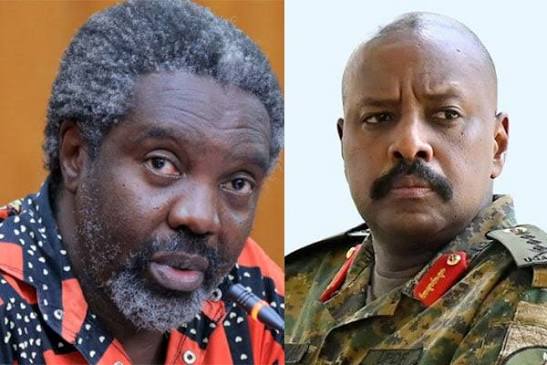
Uganda’s political space has once again been shaken by strong and mocking words from Gen Muhoozi. In his latest remark, he targeted Jimmy Akena, saying he is “just confused like his hair.” The comment, which was posted alongside Akena’s picture, quickly attracted attention across social media.
The phrase “confused like his hair” was clearly meant as an insult. It attacked not only Akena’s political stance but also his physical appearance.
Many observers believe such remarks shift the focus away from important national issues.
Muhoozi Kainerugaba has become known for his bold and sometimes controversial statements. As a senior military officer and public figure, his social media posts often create headlines.
Supporters see him as outspoken and fearless, while critics accuse him of using unnecessary personal attacks.
Jimmy Akena is also a well-known political leader in Uganda. He has been active in national politics for years and leads one of the country’s historic political parties. His political journey has made him an important figure in opposition politics.
The latest comment appears to reflect ongoing political disagreements. Differences in opinion are common among leaders, especially in competitive political environments.

However, when arguments move from policy discussions to personal mockery, public reaction tends to be strong.
Many Ugandans expressed mixed feelings about the statement. Some laughed it off, seeing it as political banter. Others felt it was disrespectful and uncalled for, especially between senior leaders.
Political debates are expected in any country, but the tone of those debates matters. Citizens often look up to leaders as examples of maturity and responsibility. When insults dominate discussions, it can reduce trust in leadership.
Social media has made it easier for political figures to communicate directly with the public. A single post can reach thousands of people within minutes. This speed increases both the influence and the consequences of any statement made.
Critics argue that focusing on someone’s appearance does not address real political questions. Uganda faces many important issues, including economic growth, employment, and service delivery. Many citizens prefer leaders to focus on these pressing matters.
Supporters of Muhoozi, however, claim that strong language is part of political competition. They believe he is simply expressing his opinion in a direct and confident way. In their view, political rivalry is not always gentle.
Jimmy Akena has built his reputation over time as a calm and steady politician. As the son of former Ugandan president Milton Obote, he carries a significant political legacy. His role in Uganda’s history makes any attack on him more noticeable.
Observers say personal mockery can deepen divisions within political circles. When leaders trade insults, cooperation becomes more difficult. This can affect decision-making and unity at higher levels.
Young Ugandans, who form a large part of the population, are particularly active online. They often respond quickly to political drama. For them, such exchanges can either entertain or disappoint, depending on their expectations of leadership.
Community and religious leaders in Uganda have frequently called for respectful political engagement.
They remind leaders that words can build or destroy relationships. Public discourse shapes the national mood.

Some analysts believe that dramatic statements are sometimes used to energize supporters.
Strong words can attract attention and dominate news cycles. However, they can also overshadow serious policy discussions.
The comment also raises questions about political maturity. In leadership, criticism is often stronger when it focuses on ideas rather than personal traits. Attacking someone’s hairstyle may win laughs, but it does little to solve national challenges.
Uganda’s political environment has long been passionate and competitive. Leaders often defend their positions strongly. What makes the difference is whether that passion is expressed respectfully.
As the story continues to circulate, many are watching to see whether Jimmy Akena will respond. Political exchanges sometimes lead to further statements, increasing the drama. Other times, they fade away without escalation.
In the end, the incident highlights the power of words in modern politics. A short sentence can create national debate.
For many Ugandans, the hope remains that leaders will choose dialogue over mockery and focus on guiding the country toward unity and progress.