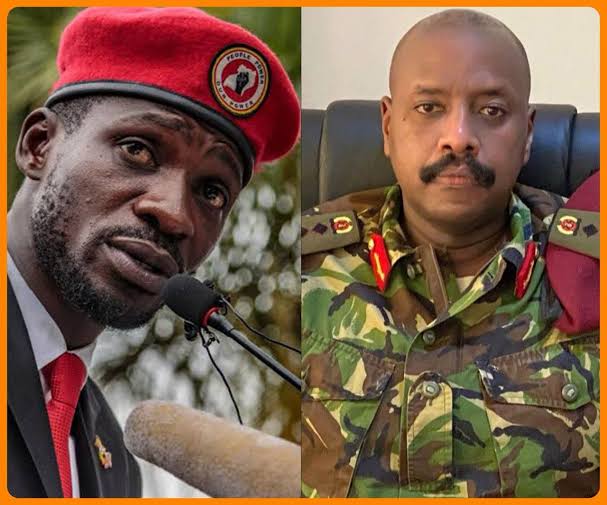
The political temperature in Uganda has risen once again after Gen Muhoozi made harsh and emotional comments about opposition leader Bobi Wine.
His words quickly spread across social media and news platforms, causing strong reactions from both supporters and critics. Many people were shocked by the language he used and the level of anger in his message.
In his statement, Muhoozi attacked Bobi Wine in a very personal way. He compared his appearance to that of an animal in an insulting manner.
He also accused foreign powers, often referred to locally as “Bazungu,” of trying to influence Uganda’s politics.
His message included vulgar language, which made the situation even more controversial.
Such strong words are not new in Uganda’s political space, but this latest outburst has drawn special attention.
Uganda has a long history of heated political exchanges, especially between leaders of the ruling establishment and opposition figures.

However, many citizens feel that personal attacks cross a line and distract from real issues affecting the country.
Bobi Wine, whose real name is Robert Kyagulanyi, has been a major opposition figure for several years. He is popular among many young people and often speaks about change, justice, and better leadership. His rise from a musician to a politician has made him a powerful voice in national debates.
Gen Muhoozi, on the other hand, is a senior military officer and an influential figure in Uganda. He has often expressed strong opinions about national politics.
Because of his position and family background, his words carry weight and attract attention both inside and outside the country.
The reference to “Bazungu” reflects a common belief among some leaders that foreign countries try to interfere in African politics.
This idea has been discussed many times in Uganda’s history. Some believe foreign governments support opposition leaders, while others argue that such claims are used to avoid addressing internal challenges.
Many Ugandans have reacted with mixed feelings. Supporters of Muhoozi defended him, saying he was speaking out of love and loyalty to his country.
They believe he was protecting national sovereignty and warning against outside influence.
At the same time, critics strongly condemned his comments. They argued that leaders should promote respect and unity instead of insults. For them, political competition should be based on ideas, plans, and policies—not personal attacks.
Political analysts say such statements can deepen division in society. Uganda, like many nations, is made up of people with different opinions and political beliefs. When leaders use harsh language, it can increase tension among citizens.
Social media played a big role in spreading the message quickly. Within hours, thousands of users were sharing and commenting on the statement.
Some turned it into jokes and memes, while others expressed serious concern about the tone of political discussions in the country.
The incident also raises questions about the future of leadership in Uganda. As the country looks ahead to future elections, many citizens are thinking about what kind of leaders they want.
They are asking whether they prefer calm and respectful debate or strong and confrontational rhetoric.
Uganda is often described as a beautiful country with rich culture, natural resources, and hardworking people.
Many citizens feel proud of their nation and want leaders who reflect that pride in a positive way. They hope for politics that focus on development, education, healthcare, and jobs.
Young people in particular are paying close attention. With a large youth population, Uganda’s future depends heavily on the choices and voices of young citizens. Many of them want peaceful dialogue and constructive competition between leaders.

International observers are also watching closely. Uganda’s political climate has often attracted global attention, especially during election periods. Statements like this can shape how the country is viewed abroad.
Some experts believe that emotional language often appears during times of political uncertainty. When competition becomes intense, leaders may speak more aggressively to energize their supporters. However, this approach can sometimes create more problems than solutions.
Religious and community leaders have in the past called for calm and respectful engagement in politics. They often remind politicians that words have power and can either build or destroy national unity. Their voices may become important again after this latest controversy.
It is also important to remember that political rivalry is common in every democracy. Disagreement is normal, and debate is healthy. The challenge comes when disagreement turns into personal attacks instead of policy discussions.
For many ordinary citizens, daily life issues matter more than political drama. They care about food prices, school fees, healthcare services, and job opportunities. They hope leaders will focus on solving these practical problems rather than exchanging insults.
As the debate continues, one thing is clear: Uganda’s political scene remains lively and passionate. Strong personalities and strong opinions shape the national conversation. The direction this energy takes will influence the country’s future.
In the end, the controversy serves as a reminder that leadership comes with responsibility. Words spoken by powerful figures can inspire hope or fuel division. Many Ugandans now wait to see whether the next chapter in this political story will bring more conflict—or a shift toward respectful dialogue and unity.