CREATOR: gd-jpeg v1.0 (using IJG JPEG v62), quality = 82
The controversy surrounding President Yoweri Kaguta Museveni’s pledge to financially support newly elected Members of Parliament (MPs) has taken a new turn, with Uganda’s Minister for Kampala and Metropolitan Affairs, Minsa Kabanda, stepping forward to defend the President’s position.
Kabanda’s statement, made during a retreat of National Resistance Movement (NRM) leaders in Kyankwanzi, has sparked a heated debate, with critics accusing the government of using taxpayers’ money for personal and political purposes.
In his address, President Museveni had promised to provide facilitation to the MPs, starting with an initial payment of Shs20 million to help them cover expenses ahead of their swearing-in ceremony. He further pledged that the remaining Shs80 million would be disbursed later, a promise that was met with loud cheers from the newly elected MPs.
The president, while making the pledge, emphasized that the money would not be derived from public funds but from his personal resources. He reassured the MPs that it was his own money that would be used to support them, a statement that has since sparked significant controversy and criticism.
“The money that I am giving you is not government money,” Museveni said during the retreat, which was aimed at aligning leadership priorities for Uganda’s transition to a higher middle-income status. “I am looking at something small for your swearing-in, and something else later. We will have institutional solutions rather than corruption solutions.”
However, despite his reassurances, the pledge has come under fire from government critics who argue that the financial support for MPs is inappropriate, particularly at a time when the country is grappling with economic challenges and increasing concerns about parliamentary corruption.

Some critics have raised concerns over the NRM government’s priorities, arguing that such large sums of money should not be dispensed to MPs, many of whom have already received significant allowances and salaries, on top of the funds allocated for their swearing-in.
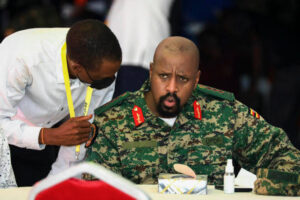
In response to these criticisms, Minister Minsa Kabanda, who is also the newly elected Member of Parliament for Kampala Central, defended the President’s pledge. Kabanda argued that the funds being allocated to MPs were not taxpayer money but were instead derived from Museveni’s private finances.
According to Kabanda, Museveni, a cattle keeper with vast agricultural holdings, would use the profits from his personal businesses, including selling milk, beef, and other farm products, to fulfill his promise.
“The money that the President dishes out is not government money: it is his money,” Kabanda said. “He is a cattle keeper, and he took us on a tour of his farm. It’s his money, not the government’s. He has farms in Kyankwanzi, Rwakitura, and Kisozi.
He owns many cows, and if he sells some, he can give us some money. Just like you can say, ‘Let me give something to my children,’ that’s what he is doing,” she continued.
Kabanda’s defense of the President was intended to quell public concern that the financial support being promised to MPs was a misuse of public funds. The Minister pointed out that the money being pledged would come from Museveni’s own bank accounts, which would be replenished through the sale of products from his farms, including milk and beef. She emphasized that the funds would not be taken from the national treasury, thus sidestepping accusations that the government was diverting taxpayer money to cover the costs of MPs’ facilitation.
However, Kabanda’s statements have not been well received by the opposition and critics of the NRM government. Many believe that such claims are an attempt to deflect attention from the larger issue of political patronage and corruption.
They argue that regardless of where the money comes from, the distribution of such funds to elected officials raises serious questions about priorities, especially when the country is struggling with economic challenges such as inflation, unemployment, and poverty.
The opposition has also pointed to the fact that each NRM MP will be receiving Shs415 million even before their swearing-in ceremony, in addition to a host of allowances and a monthly salary.
This sum, according to critics, is far too generous for individuals who already have access to substantial financial resources. The claims that the funds come from Museveni’s private business ventures have been dismissed as an attempt to obscure the larger issue of the government’s fiscal irresponsibility.

David Lewis Rubongoya, who lost to Kabanda in the 2026 Kampala Central parliamentary race, was quick to respond to Kabanda’s defense of the President’s financial promises. He accused the NRM government of engaging in “shamelessness beyond words” and pointed to the President’s control over public resources as part of a broader pattern of electoral manipulation and corruption. Rubongoya suggested that the government’s willingness to spend large sums of money on MPs was a form of political patronage aimed at buying loyalty and suppressing opposition.
Joel Ssenyonyi, the leader of the opposition in Parliament and Nakawa West MP, also condemned Kabanda’s claims, accusing the government of trying to deceive the public. He said, “They think they can hoodwink the population!” Ssenyonyi’s remarks highlight the ongoing frustration within the opposition about what they see as a politically motivated financial scheme designed to appease MPs and secure their loyalty to the ruling party.
While Kabanda’s defense may have been intended to deflect criticism, it only served to ignite further backlash. Opposition leaders and civil society organizations are questioning whether it is appropriate for the President to use his private wealth to subsidize the incomes of MPs, especially when the country’s public services are in need of more resources. Many Ugandans are concerned about the message this sends to the broader public, particularly in a country where millions are living in poverty and struggling to make ends meet.
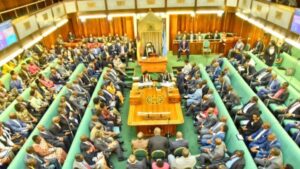
The pledge of Shs100 million for MPs, coupled with the Shs415 million allocated to each NRM legislator even before they are sworn in, has raised eyebrows in many circles. Critics argue that such expenditures are out of touch with the realities of ordinary Ugandans, who continue to face economic hardships. With the country’s GDP growth rate slowing and inflation eroding the purchasing power of many, the generosity extended to lawmakers seems disconnected from the economic struggles of the broader population.
The ongoing debate about the financial support for MPs is part of a larger conversation about parliamentary corruption and the misuse of public resources. While Museveni’s government has long argued that they are committed to eradicating corruption, the lavish support for newly elected MPs raises questions about whether the government is truly living up to its promises.
For now, the controversy continues to unfold, with both supporters and detractors of the government weighing in on the matter. Museveni and Kabanda’s defense of the financial support for MPs has only deepened the divide between the ruling NRM party and the opposition. As the issue continues to make headlines, many Ugandans are wondering whether the government’s priorities are truly aligned with the needs of the people, or whether the lavish spending on MPs is yet another example of political self-interest.
In the coming weeks, the political fallout from the President’s pledge may become clearer, as the newly elected MPs begin to settle into their roles. Whether the financial promises made by Museveni will lead to greater loyalty among lawmakers or spark further public discontent remains to be seen. One thing is certain: the debate over the allocation of resources in Uganda’s parliament is far from over.