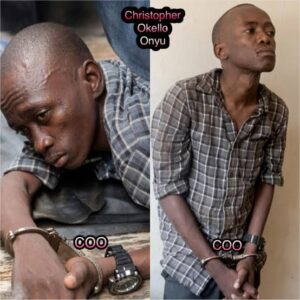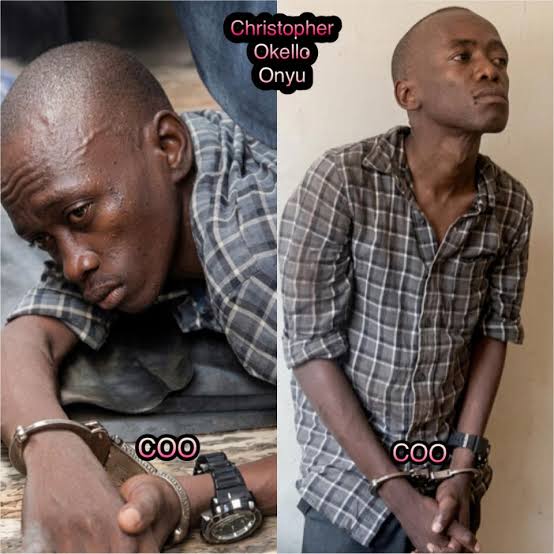
The trial of Christopher Okello, the Ggaba children murder suspect, took another dramatic turn during his latest court appearance, as the accused confidently declared his physical and mental readiness to continue with the proceedings. Despite earlier concerns regarding his health, Okello assured Judge Alice Komuhangi Khaukha that he was fit enough to face the charges against him.
His statement, “I can confirm that I am physically and mentally fit,” came after a medical report was presented, detailing his ongoing battle with sickle cell disease, which has been causing him significant health issues throughout the trial.
The trial, which has already experienced multiple delays, was momentarily interrupted when Okello’s defense team raised concerns about his health. They informed the court that he had been unwell, leading to a recess that stretched from the expected 30 minutes to nearly an hour and a half.
The prolonged break, which was granted by Judge Komuhangi, came after Okello struggled to proceed with the trial due to what his legal team described as severe physical discomfort. However, after resuming the session, Okello made the bold claim that he was ready to continue with the trial.
The case, which centers on the tragic murder of a child in Ggaba, has kept the Ugandan public on edge. The emotional toll of the case has been compounded by Okello’s medical condition.
A report submitted to the High Court indicated that Okello suffers from sickle cell disease, a chronic illness that affects the blood cells and causes periodic pain crises, extreme fatigue, and other serious complications. The medical findings also revealed that Okello had failed to take his prescribed medication for the past two months, which had contributed to his worsening health.

Despite his medical struggles, Okello’s assertion that he was “physically and mentally fit” to continue with the trial was met with mixed reactions from the courtroom. While some members of the public expressed empathy for his condition, others were skeptical, questioning whether his health was being used as a tactic to delay proceedings. Okello’s legal team had previously requested several breaks during the trial, with the accused reportedly feeling unwell at times, prompting concerns that his physical state might interfere with the fairness and progress of the trial.
The disclosure of Okello’s health issues was made public during a session that had been delayed due to a heavy downpour, which caused the start of the court proceedings to be pushed to midday. The court had requested that the Uganda Prisons Service submit a detailed health report for Okello, which was then read out in court. The report revealed that Okello was underweight and struggling to manage his sickle cell disease, a condition that had not been properly addressed due to his failure to take medication as prescribed.
Judge Komuhangi Khaukha took note of the report and acknowledged the seriousness of Okello’s condition. However, she also made it clear that the trial would proceed, and that any further medical concerns would be evaluated in due course. “We cannot allow delays indefinitely. The trial must move forward,” the judge stated, emphasizing that while Okello’s health would be taken into consideration, justice must also be served. The court was reassured that Okello had resumed his medication the evening before the session, which allowed proceedings to continue.
The interruptions in the trial process have been frustrating for all parties involved, particularly the victim’s family, who are eagerly awaiting justice. Okello’s legal team has argued that his health issues should be taken into account when determining the pace of the trial. However, the prosecution has insisted that despite Okello’s condition, the trial must proceed without unnecessary delays. As a result, the judge has been carefully balancing the need for fairness and Okello’s right to a fair trial with the demands of swift justice.
In addition to his health struggles, Okello is facing serious charges in connection with the death of a child at a school in Ggaba. The allegations have caused an outpouring of anger and grief across the country, as the tragic loss of an innocent life has raised questions about the safety of children in schools and the role of law enforcement in holding perpetrators accountable. The case has become a significant issue for both the local community and the nation as a whole, with many waiting to see whether Okello will be found guilty or acquitted.
The medical report, which was presented by the Uganda Prisons Service, revealed that Okello’s weight loss could be attributed to his ongoing battle with sickle cell disease. The condition causes episodes of severe pain that can last for days or even weeks, leading to exhaustion and a general decline in health. The report also noted that Okello had been unable to receive proper care due to lapses in his medication regimen, which led to complications that hindered his ability to participate fully in the trial.
The court was also informed that Okello had resumed his medication the evening before the hearing, which seemed to stabilize his condition enough for him to continue with the trial. Despite his earlier concerns, Okello confidently declared that he was in good enough health to proceed, a statement that caused some surprise among those present in the courtroom.
His assertion that he was “physically and mentally fit” to face the trial process left some members of the public questioning whether his health concerns were being overstated or whether they were legitimate.
However, the trial has not been without its difficulties, as Okello’s legal team continues to request breaks and accommodations for his health. At one point, a recess that was originally scheduled for 30 minutes stretched to nearly an hour and a half, as Okello appeared to struggle with his condition.
Despite these interruptions, the court has made it clear that the trial will continue, and that further delays would not be tolerated unless absolutely necessary for Okello’s health and well-being.
The defense team has argued that Okello’s health issues should be taken into account when determining the length and structure of the trial. They have expressed concern that the stress of the trial, combined with his medical condition, could adversely affect his ability to participate fully in his defense.

However, the prosecution has countered by emphasizing the need for the trial to proceed without unnecessary delays, given the seriousness of the charges against Okello.
As the case progresses, many are watching closely to see how Okello’s health will continue to impact the proceedings. His health issues have already caused significant delays, and it remains to be seen whether further medical concerns will arise that could affect the pace of the trial.
Regardless, the court has made it clear that justice must prevail, and that Okello’s right to a fair trial will be respected, while ensuring that the legal process moves forward.
The trial of Christopher Okello is now entering a critical phase, as the court moves closer to determining the fate of the Ggaba children murder suspect.
The issues surrounding Okello’s health, combined with the serious charges against him, have made this a complex and high-stakes case. As the public waits for answers, the courtroom remains a place of tension and uncertainty, with both sides working toward a resolution that will hopefully bring justice to the victim’s family and the community at large.
For Okello, his ongoing health struggles remain a key factor in the trial, as his legal team continues to advocate for the best interests of their client while also addressing the challenges posed by his sickle cell disease.
As the trial progresses, it will be interesting to see how the court handles the balance between Okello’s health and the need for a timely resolution to the case. One thing is clear: the outcome of this trial will have significant implications not only for Okello but for the broader issues of justice, fairness, and accountability in Uganda.