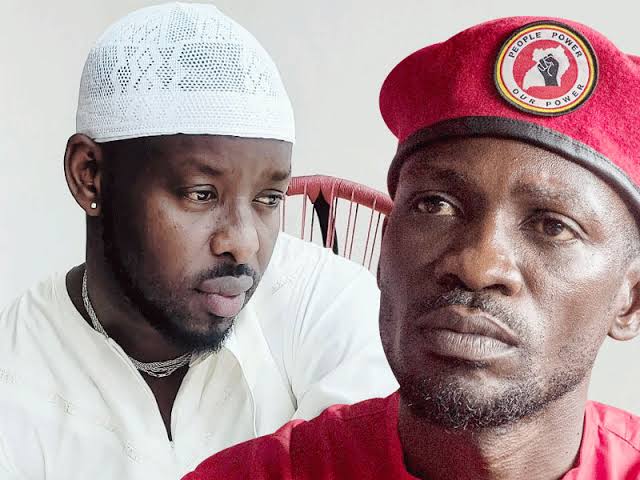
In recent comments that have stirred a significant debate across Uganda, renowned musician Eddy Kenzo opened up about the complex relationship between President Yoweri Museveni and the individuals who have benefited from his leadership.
According to Kenzo, despite Museveni’s consistent support for many Ugandans, some of those who have risen to prominence thanks to his government have turned their backs on him, criticizing him in the most vocal ways.
This is a dynamic that has raised questions about loyalty, gratitude, and the nature of political alliances in the country. Kenzo’s statements, although not entirely new, have reignited a conversation about what it means to be appreciative of the help one receives from the government while achieving personal success.
Kenzo specifically pointed to Bobi Wine, the leader of the opposition and a popular figure in Uganda’s political scene, as one of the prime examples of individuals who have received significant support from the government yet have been some of its loudest critics. Bobi Wine, born Robert Kyagulanyi, has publicly expressed his dissatisfaction with Museveni’s rule for years.
However, Kenzo pointed out that despite his opposition to the president, Bobi Wine has benefited immensely from the opportunities available in Uganda under Museveni’s leadership.
In particular, Kenzo emphasized that Bobi Wine owns valuable land in upscale locations, including in Busabala, where an acre costs about UGX 800 million.
Kenzo’s statement goes even further, noting that Bobi Wine’s residential properties, like his expansive home in Magere, stand on seven acres of land, with each acre valued at UGX 600 million.

Beyond property, Kenzo highlighted the luxurious lifestyle that Bobi Wine and his family enjoy, which includes owning yachts on Lake Victoria.
To Kenzo, these material accomplishments were made possible under a system that Museveni has fostered, and thus, Kenzo finds it hard to understand how these individuals can criticize the very system that helped them attain such wealth and success.
In addition to the material wealth, Kenzo also pointed out that Bobi Wine’s children have had the opportunity to receive a quality education, having attended university—a privilege that many Ugandans cannot afford.
This further highlighted the disparity between what these vocal critics of the government enjoy and the reality faced by the ordinary citizen, who often struggles to make ends meet.
For Kenzo, the issue at hand isn’t about disagreeing with the government, but rather about the perceived ingratitude of those who have reached the heights of success thanks to the government’s support and yet turn around to criticize it.
Kenzo’s remarks are not merely about Bobi Wine alone but reflect a broader frustration with what he perceives as the hypocrisy of many individuals who have prospered under Museveni’s leadership but have not shown enough appreciation.
The musician’s statements tap into a common narrative among some Ugandans who argue that the country’s wealthy elite often criticize the government after gaining financial success, yet fail to acknowledge the opportunities that were provided to them under the same leadership.
The sentiment that Kenzo expressed appears to resonate with many Ugandans who feel that success should come with a level of responsibility and acknowledgment of where it originated.
However, Kenzo’s position has not been universally accepted. Many people, including some prominent members of the opposition, argue that wealth should not be the measure of someone’s loyalty to the government, nor should it exempt someone from criticizing policies that they feel are detrimental to the country’s development.
Critics of Kenzo’s remarks believe that wealth accumulation is often the result of individual hard work, not necessarily government support. They also contend that individuals who speak out against injustices or poor governance should not be required to demonstrate gratitude to a regime simply because they’ve prospered.
Kenzo’s comments, while controversial, also bring to the surface the difficult relationship between power and success in Uganda. The question arises as to what extent individuals should owe their wealth and achievements to the government and, by extension, to the leadership of President Museveni. Kenzo’s frustration stems from the belief that people should not publicly decry the government if their achievements have been built, in part, due to the system that is now being criticized. This idea of political gratitude is something that many Ugandans struggle with, as the lines between political alignment, success, and gratitude can often be blurred.
Bobi Wine’s supporters argue that his wealth and success in the entertainment industry were not directly tied to Museveni’s policies. They believe that Bobi Wine’s rise to fame was primarily driven by his talent, hard work, and dedication to his craft, not by governmental favor. Moreover, they point to the fact that Bobi Wine has always positioned himself as a champion for the oppressed, using his platform to highlight the struggles of ordinary Ugandans who live in poverty, despite the wealth that Museveni and his government have accumulated over the years.
On the other hand, there are those who believe that the government, under Museveni, has played a critical role in providing stability and opportunities that have allowed individuals to grow their wealth. Kenzo’s statement essentially raises a moral question about the relationship between success and political allegiance: should someone who benefits from the system remain loyal to it, or is it their right to critique the system, even if they have prospered because of it? These are difficult questions that highlight the tension between personal achievement and political ideology in Uganda.

Kenzo’s frustration seems to stem from the belief that those who have benefited from Museveni’s leadership have an obligation to support or at least respect the system that made their success possible. This perspective aligns with the sentiment of many Ugandans who argue that political leaders who have helped others should be acknowledged, especially when those leaders’ policies have contributed to the growth of the economy and the success of individuals. The idea that people should be appreciative of the opportunities they’ve been given, rather than turning against the government, is a viewpoint that resonates with a significant portion of the population.
At the heart of this debate is the broader issue of political loyalty. Uganda’s political landscape has been characterized by a long-standing dominance of the ruling National Resistance Movement (NRM) party under Museveni’s leadership. Over the years, Museveni has been able to consolidate power, making the system that supports political elites tightly intertwined with the government. As a result, many people, like Kenzo, feel that those who have reached the top should not bite the hand that feeds them. For Kenzo, it feels almost like a betrayal when individuals who have prospered due to the government’s policies openly criticize it.
However, there is also a counterargument that argues loyalty should not be equated with blind support for a regime. Political opposition, according to this view, is a natural part of democracy. Those who criticize the government do so because they want to see a better future for Uganda, not necessarily because they are ungrateful for the material benefits they may have received. Bobi Wine, for instance, has positioned himself as a voice for the voiceless, challenging a system he believes has outlived its usefulness and is no longer serving the needs of the people.
Kenzo’s comments about Bobi Wine’s wealth and apparent ingratitude point to the complexities of the political dynamics in Uganda. His statement reveals an underlying tension: the desire for acknowledgment and respect for what the government has achieved and contributed to individual successes. However, it also raises difficult questions about the role of wealth in politics and whether those who are successful should be beholden to the government that helped them achieve their success. The discussion about political loyalty is a delicate issue, one that reflects the evolving nature of Uganda’s political culture and the ongoing struggle for a balance between power and criticism.
For many Ugandans, Kenzo’s remarks serve as a reminder of the moral responsibility that accompanies wealth and success. His assertion that those who prosper should appreciate the government’s role in their achievements has struck a chord with some members of the public, especially those who feel that many critics of the regime forget the opportunities that have been made available to them. However, the opposing view remains strong: the right to speak out against government corruption and injustices should not be limited by one’s material success or political alignment.
In conclusion, Eddy Kenzo’s comments have added fuel to the ongoing debate about the relationship between wealth, success, and political loyalty in Uganda. His criticism of figures like Bobi Wine, who have enjoyed the benefits of government policies but continue to challenge the regime, speaks to the tension between personal achievement and political ideology.
While some view Kenzo’s words as a call for gratitude, others see them as an attack on the fundamental right to dissent. The complexity of Uganda’s political environment means that this issue will continue to be a topic of discussion for years to come.