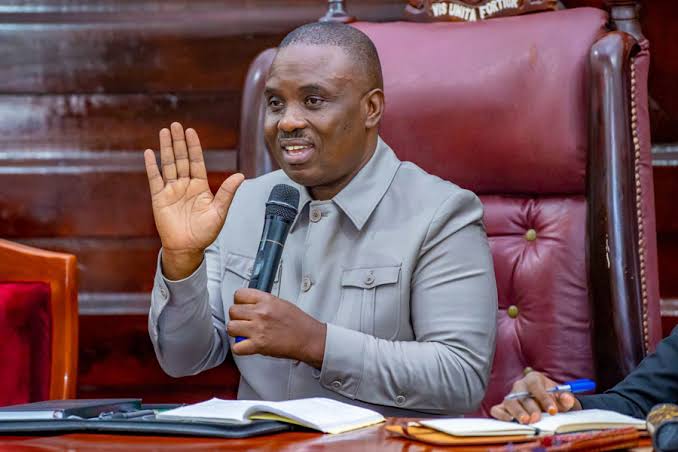
Kampala witnessed a historic shift in local politics this week as Erias Lukwago, the outgoing Lord Mayor, officially conceded defeat in the 2026 Kampala mayoral elections. After fifteen years at City Hall, his departure marks the end of an era characterized by staunch advocacy and a combative political style.
In a signed statement dated January 24, 2026, Lukwago acknowledged the results of the January 22 polls, which saw National Unity Platform (NUP) candidate Ronald Nsubuga Balimwezo declared winner of the contest. The election attracted eight candidates, highlighting the competitive and diverse nature of Kampala’s political landscape.
Despite conceding, Lukwago did not shy away from pointing out what he described as “flaws that have marred this process.” He underscored that while he accepted the outcome, questions about fairness, transparency, and accountability remain pertinent in Kampala politics.
Even in defeat, Lukwago struck a tone of personal victory regarding his tenure. He described his departure from the Lord Mayor’s Parlour as “filled with pride and elation,” asserting that he leaves with a “clean sheet” in a political environment he characterized as “bedeviled by political indecency.”
Over his fifteen-year term, Lukwago established a reputation as a vocal and fearless leader. His time in office was defined by an unwavering focus on protecting city assets, advocating for the urban poor, and holding authorities accountable for what he saw as mismanagement or abuse of power.
One of Lukwago’s notable achievements, he claimed, was asset protection. According to him, he acted as both a “spear and shield” against cartels and mafias targeting municipal property, ensuring that city resources were not siphoned off or misappropriated.
Integrity was another pillar of his leadership. Lukwago repeatedly emphasized that he maintained an “impeccable and unassailable” record during his tenure, resisting pressures that might compromise the transparency of the office he held.

Pro-poor advocacy remained central to his political philosophy. Lukwago argued that his policies and interventions consistently reflected the interests of Kampala’s marginalized populations, ensuring that the voices of the indigent and underrepresented were not ignored.
Even as he congratulated Eng. Balimwezo and wished the new leadership well, Lukwago made it clear that his political journey is far from over. He announced plans to redirect his energy toward broader national causes.
Central to his future agenda is social justice. Lukwago pledged to continue his fight for the rule of law, ensuring that governance in Uganda upholds the principles of fairness, accountability, and human dignity.
Political transition also forms a key part of his next phase. He stated that he will advocate for a “non-violent transition” from what he described as entrenched “family and gun rule” to a more constitutional and democratic order.
The former Lord Mayor expressed deep gratitude to the people of Kampala, highlighting the “strong social bond, trust, and love” he shared with citizens over the years. He vowed that his energy and resources would remain devoted to the protracted struggle for social justice.
Election results declared by the Electoral Commission confirmed Balimwezo’s victory, with the NUP candidate securing 141,220 votes. Lukwago, representing the People’s Front for Freedom (PFF), came in third with 41,915 votes, trailing behind NRM candidate Moses Kizito Nsubuga.

Democratic Party (DP) candidate Beatrice Mao finished fourth with 2,162 votes, followed by Forum for Democratic Change (FDC) candidate Ibrahim Kasozi, who garnered 1,426 votes. Other candidates, including Nabilah Nagayi Ssempala, Eddie Kibalama, and Jotham Yamurebire, trailed further behind.
The transition signals a significant reshaping of Kampala’s local governance. Balimwezo, the outgoing Nakawa East MP, inherits leadership of a city that has been shaped and defined for over a decade by Lukwago’s distinctive approach.
Political analysts note that Lukwago’s long tenure has left an enduring legacy in Kampala politics, including strong opposition to government overreach, advocacy for transparency, and efforts to fight organized malpractices affecting the city.
Observers also believe that while Lukwago has left office, his influence will continue through his PFF party and national campaigns. His focus on social justice, anti-corruption efforts, and pro-poor advocacy is expected to resonate with many urban Ugandans.
Opposition supporters have already signaled continued backing for Lukwago’s vision, viewing his pivot to national issues as a chance to expand the fight against entrenched political and economic “mafias” beyond Kampala.
The recent election also highlights the competitiveness of Kampala’s political environment, where multiple parties, movements, and independent candidates compete vigorously, reflecting a city deeply engaged in national political discourse.
In conclusion, while Lukwago may have conceded defeat in the mayoral race, his commitment to governance reform, social justice, and the fight against corrupt cartels ensures that his political voice remains prominent. Kampala—and indeed Uganda—can expect his activism to continue shaping debates and policies for years to come.