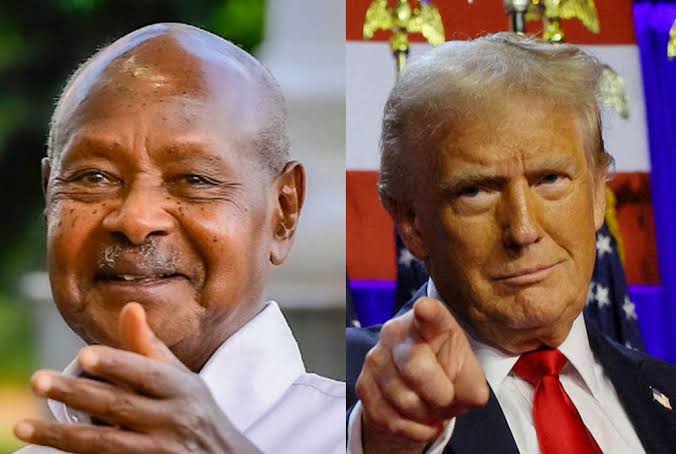
President Yoweri Kaguta Museveni has once again defended Uganda’s long-standing decision not to host foreign military bases.
He made it clear that Uganda believes in defending itself without relying on external armies.
According to him, this position is based on confidence in the country’s own military strength.
Museveni’s remarks have gained fresh attention as tensions continue to rise in the Middle East. In recent weeks, Iran has targeted United States military bases in several Arab countries, increasing fears of a wider regional conflict. The situation has renewed debate worldwide about the risks of hosting foreign troops.
Uganda, however, has consistently maintained a different path. Museveni explained that soon after the National Resistance Army took power in 1986, Western countries offered to help build Uganda’s army. But he said the government declined deeper military involvement.
He recalled that representatives from the United States and Britain approached him with offers of support.
They proposed helping Uganda strengthen its armed forces and suggested closer military cooperation.

Museveni said he rejected those offers because Uganda had already built a capable army. “We have already built the army.
That’s how we defeated the government,” he said, referring to the victory of the National Resistance Army.
According to the President, Uganda’s priority was independence and self-reliance. He stressed that while Uganda welcomes cooperation in terms of knowledge sharing and training, it does not see the need for foreign troops to be permanently stationed on its soil.
“That’s why you find that we don’t have foreign bases here,” Museveni explained. “Foreign armies, what for? We can defend ourselves. We don’t need anything from anybody.”
His comments come at a time when American military facilities in the Middle East are facing threats. The United States operates bases in countries such as Qatar, Bahrain, Kuwait, Iraq and the United Arab Emirates, where thousands of American troops are deployed.
Museveni argued that hosting foreign forces can create serious complications for the host country. One of the main issues he raised is the Status of Forces Agreement, commonly known as SOFA.
A SOFA is a legal agreement that defines how foreign soldiers are treated under local law. It determines whether foreign troops accused of crimes are tried in the host country or sent back to their home country for trial.
Museveni revealed that both the United States and Britain presented him with proposed SOFA agreements. These agreements would have allowed their soldiers to be tried in their own countries rather than in Uganda if they committed offences.
The President said he questioned this arrangement. He asked whether the agreement could be made reciprocal, meaning that if Ugandan soldiers committed offences abroad, they would also be returned home for trial.
According to Museveni, the proposal was rejected by the foreign governments. They reportedly insisted that their soldiers should not be subjected to Ugandan courts.
Museveni said this was unacceptable. He gave an example of a serious crime, such as murder or rape committed against a Ugandan citizen. In such cases, he argued, it would not be fair for the suspect to be taken abroad for trial.

“What if he kills a Ugandan or rapes a Ugandan girl?” Museveni asked. “There’s no way we can say that you take him away to be tried somewhere else.”
Because of such concerns, Uganda refused to sign any Status of Forces Agreement. Museveni emphasized that in all the years his government has been in power, Uganda has never signed a single SOFA with any country.
He clarified that foreign troops may visit Uganda for training exercises or short-term cooperation, but they do not establish permanent bases. “They just come and go. We refused,” he said firmly.
Analysts say Uganda’s policy reflects a broader philosophy of national sovereignty and independence.
By avoiding permanent foreign bases, Uganda reduces the risk of being drawn into conflicts involving global powers.
As tensions continue to rise in different parts of the world, Museveni’s stance highlights Uganda’s commitment to defending its territory through its own armed forces.
For him, the message remains simple and clear: Uganda can protect itself and does not need foreign armies stationed on its land.