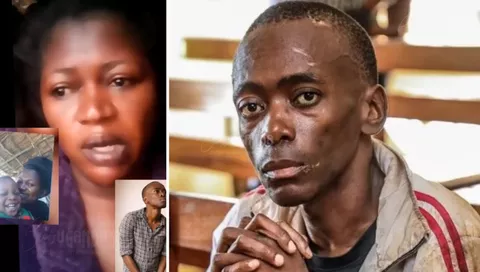
The courtroom was thrown into tension and disbelief on Wednesday when Christopher Okello Onyum, the man accused of murdering four young children in Ggaba, suddenly collapsed during a crucial moment in his trial.
The unexpected incident forced an abrupt halt to the proceedings, leaving both the prosecution and defense teams momentarily shaken.
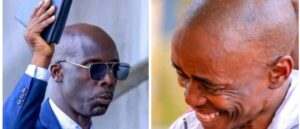
The dramatic scene unfolded as Prosecution Witness Eight, Rashid Juma, took the stand to give testimony linking Okello to events leading up to the tragic killings. Juma, a director at Trip Car Rentals-Uganda, presented detailed evidence that appeared to connect the accused to a vehicle allegedly used around the time of the murders.
According to Juma, his interaction with Okello began on March 12, 2026, when the accused approached his company seeking to hire a vehicle. The arrangement was reportedly formalized after Okello presented a United States passport along with a valid driving permit as identification.
Juma told the court that Okello paid 388,000 Ugandan shillings through mobile money to secure the car for a two-day rental period scheduled for April 1 and April 2. The timeline presented in court immediately drew attention, as it closely aligns with the date the four children were reportedly killed.
The witness further explained that Okello sent him a Google Maps location directing him to a residence in Kyanja, where the vehicle was to be delivered. This level of coordination, Juma noted, did not initially raise suspicion at the time of the transaction.
He recounted meeting Okello at around 8:00 p.m. on March 31, during a heavy rainstorm. The exchange took place at a gate under a shelter, where the accused finalized the car rental process. Juma described the interaction as brief but straightforward.

However, events took a different turn the following day when Okello reportedly complained about mechanical issues with the vehicle. In response, Juma said he dispatched a mechanic to inspect the car at a location identified as a school in Mpunga, where Okello was believed to be at the time.
As Juma continued to provide these details, the courtroom atmosphere grew increasingly tense. His testimony painted a timeline that appeared to place the accused in critical locations shortly before the alleged crime occurred.
It was during this intense narration that Okello visibly began to lose composure. Observers noted signs of distress as he struggled to remain calm while the witness linked him to the sequence of events under investigation.
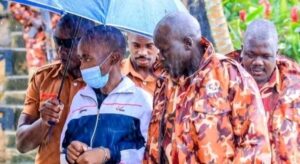
Moments later, Okello collapsed in the dock, prompting immediate concern from his legal team. His defense lawyers quickly rose and informed the presiding judge that their client was emotionally overwhelmed and unable to continue with the session.
Justice Alice Komuhangi Khaukha briefly adjourned the court to allow the accused to recover. Court officials and security personnel moved swiftly to manage the situation and ensure that order was maintained.
When proceedings resumed shortly after, Okello appeared visibly shaken and weak. His voice was barely audible as he attempted to respond to questions from the judge regarding his condition.
In a surprising moment, the accused was heard murmuring the words, “It’s a script,” before trailing off. The unclear statement sparked murmurs in the courtroom, with many left wondering what he meant.
Despite being offered water and time to regain his composure, Okello insisted that he was not in a position to proceed with the trial. His defense team supported his request for more time, citing emotional distress.

The judge, maintaining calm authority, ordered that a medical report be compiled to assess the accused’s condition before the trial could continue. The case was then adjourned to Thursday, April 16, 2026.
The incident raised eyebrows among court observers, particularly because Okello had previously been declared mentally fit to stand trial. His sudden breakdown has now introduced a new layer of complexity to the case.
Meanwhile, the prosecution remains focused on presenting its evidence, which includes witness testimonies that seek to establish a clear chain of events leading to the deaths of the four children.
Okello is facing charges related to the murder of Keisha Agenrwot Atim, Gideon Eteku, Ignatius Sseruyange, and Rhan Odeke, all of whom were pupils at Ggaba Early Childhood Development Centre.
Earlier in the day, the court also heard from other witnesses, including a school caretaker and the school coordinator. Their testimonies provided additional background on the events surrounding the tragic incident.
The case has captured national attention due to the young age of the victims and the disturbing nature of the allegations. Many members of the public continue to follow the proceedings closely, seeking justice for the children.
As the trial resumes, all eyes will be on both the medical findings regarding Okello’s condition and the strength of the prosecution’s case. The courtroom drama seen on Wednesday has only deepened public interest in what remains one of the most shocking cases in recent times.