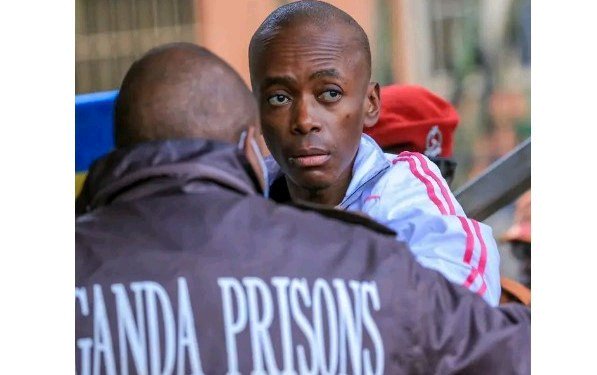
The High Court in Kampala has continued to hear the case against Christopher Okello Onyum, the suspect in the brutal Ggaba daycare murders, with fresh testimonies from a former landlord and a car hire dealer. As the trial gathers momentum, key details have emerged, revealing more about Okello’s behavior and his life before the tragic murders.
The court proceedings are drawing significant public attention, as many eagerly await answers about the accused’s mental state and the evidence against him.
On Thursday, presiding Judge Alice Komuhangi Khaukha ruled that Okello is fit to stand trial. The ruling followed medical reports presented in court, which indicated that Okello is stable and responding well to treatment for sickle cell disease. Okello himself confirmed his condition, stating in court, “I’m in a stable state of mind and body,” which cleared the way for the trial to proceed.
This ruling was crucial in allowing the court to move forward with the hearing, as it addressed concerns raised by the defense regarding his mental fitness.
As the session progressed, Makai Joel, a landlord from Kyanja, took to the witness stand to provide his testimony. Joel recalled how he first met Okello in March of this year, when the accused was introduced to him by a house broker.
Following their introduction, Okello and Joel formalized a tenancy agreement, with Okello paying four months’ rent in advance. According to Joel, the rent for the property was set at sh400,000 per month, amounting to a total of sh1.6 million. Of this amount, sh1.5 million was deposited into the bank as per the instructions, while the remaining sh100,000 was given in cash as a broker’s fee.

Joel’s description of Okello during his time as a tenant painted a picture of a man who was well-liked and behaved appropriately. He described Okello as a “good tenant” who interacted well with the neighbors and was especially fond of playing with children.
This seemingly harmless behavior, however, contrasts sharply with the horrific events that would later unfold at the Ggaba daycare. Joel’s testimony was part of a broader attempt by the prosecution to establish a picture of Okello’s character leading up to the killings.
However, the defense team raised objections to some of the documentary evidence presented by the prosecution. Specifically, they challenged the validity of the tenancy agreement and a letter from Okello’s Local Council (LC1), arguing that the documents did not bear Okello’s signature and should therefore be disregarded.
This move by the defense is likely to complicate the prosecution’s case, as they will need to establish the authenticity of the evidence before the court.
In another pivotal testimony, a car hire dealer provided insight into Okello’s behavior before the murders. The dealer described Okello as appearing mentally stable and suggested that he exhibited clear and coordinated actions. According to the car hire dealer, Okello had contacted him online, inquiring about car hire services and making payments via mobile money. Additionally, the dealer noted that Okello drove the vehicle himself, which was an indication of his mental stability at the time.
Under cross-examination, defense lawyers questioned the car hire dealer’s competence in assessing Okello’s mental health. They challenged the dealer’s qualifications and experience, arguing that he was not qualified to make such a judgment about the accused’s mental state. This line of questioning is likely to form a key part of the defense’s argument that Okello may not be fit to stand trial due to potential mental health issues.
The prosecution, however, is steadfast in its position that Okello is mentally stable and capable of standing trial. They have indicated that several more witnesses are expected to testify in the coming days, which will help to further solidify their case. Among the witnesses anticipated are medical professionals, who will provide expert testimony regarding Okello’s mental state and the potential impact of any underlying mental health conditions on his ability to commit the murders.
The case continues to unfold under intense scrutiny, and it remains to be seen how the legal proceedings will develop. The next steps in the trial will likely focus on the balance between mental health considerations and criminal responsibility, a complex issue that could have significant implications for the final verdict.
The court’s decision on whether Okello will be held fully responsible for the Ggaba daycare murders will depend on both the psychiatric evidence presented and the testimonies from key witnesses who have interacted with the accused in the past.

As the trial progresses, public interest remains high, with many seeking justice for the four innocent children who lost their lives in the tragic Ggaba daycare attack.
The prosecution is expected to continue its efforts to paint a detailed picture of the suspect’s actions leading up to the murders, while the defense will likely continue to emphasize Okello’s potential mental health issues as a mitigating factor.
The case has brought to the forefront important issues surrounding mental health and criminal responsibility. The court will be tasked with carefully examining the evidence and testimonies to determine whether Okello’s actions were influenced by mental illness or whether he should be held fully accountable for the deaths of the young children.
The trial also highlights broader societal concerns about the safety of children in daycare facilities and the need for more rigorous safeguards to protect vulnerable individuals. In the wake of the tragedy, many have called for reforms in the daycare industry, advocating for stricter regulations to ensure that such horrific incidents never happen again.
As the trial moves forward, the public’s interest in the case shows no sign of waning. The courtroom is filled with spectators eager to hear each new piece of testimony, while the families of the victims continue to wait for justice. The road to a verdict will likely be long, but the outcome will have profound implications not only for Okello but for the future of criminal justice in Uganda.
For now, the trial remains in progress, with the fate of Christopher Okello Onyum hanging in the balance. Whether he will be found guilty of the heinous murders or whether his mental health will serve as a mitigating factor remains to be seen.
However, one thing is certain: the lives of the four children lost in the Ggaba daycare attack will never be forgotten, and the quest for justice continues.