In the early hours of April 11, 2026, a statement from General Muhoozi Kainerugaba sent shockwaves through Uganda’s political and infrastructural landscape. At precisely 2:20 AM East African Standard Time, Muhoozi, the Commander of the Uganda People’s Defence Force (UPDF) and Senior Presidential Advisor on Special Operations, posted a declaration on X (formerly Twitter). In his message, Muhoozi boldly announced:
“I’m going to say this today and it will NEVER change. All and every road contract in Uganda need MY approval from now on! Those who doubt my instructions will discover truth.”
The proclamation was direct, decisive, and left little room for ambiguity. The implications of this statement were immediate and far-reaching, sparking a wave of reactions from various stakeholders across Uganda.
For some, it signaled strong leadership in a sector notorious for inefficiencies and corruption. For others, it raised serious concerns about governance, accountability, and the concentration of power in the hands of one individual, especially one so closely linked to the President.
The timing of Muhoozi’s statement, in the early hours of the morning, suggests it was designed to capture maximum attention. And indeed, it did. Among the first to respond was Sam Mwes Kakagye, a prominent Ugandan figure, who wrote:

“For too long, road contracts in Uganda have been awarded without sufficient oversight, leading to inflated costs, substandard work, and endless delays. By requiring your personal approval on every road contract, you are establishing a clear line of accountability. Yebare Afande.”
This exchange encapsulates the core of the debate surrounding Muhoozi’s proposal. For some, it presents a bold move to tackle the longstanding issues of inefficiency and corruption within Uganda’s road sector. For others, it suggests a troubling shift toward authoritarian control over critical infrastructure decisions.
Muhoozi’s latest declaration is not an isolated incident but part of a broader trend of his growing influence in Uganda’s governance. As the Commander of the UPDF and Senior Presidential Advisor on Special Operations, Muhoozi already occupies a unique position at the intersection of military authority and civilian governance.
His proximity to President Yoweri Museveni, his father, has allowed him to exert significant influence in both military and civilian matters.
Over the years, Muhoozi’s role has expanded beyond that of a military leader. He has been directly involved in several infrastructure projects in Uganda, particularly in the capital, Kampala.
He played a key part in the development of the Hoima City Stadium, one of the venues for the upcoming Africa Cup of Nations, and has been associated with significant changes at Uganda Airlines. His involvement in these high-profile national projects has allowed him to solidify his position as a central figure in Uganda’s infrastructure development.

Insiders close to Muhoozi suggest that his access to President Museveni enables him to bypass the bureaucratic bottlenecks that often delay decision-making in government. This proximity, they argue, allows him to act quickly and decisively, ensuring that directives are implemented efficiently. While some view this as an advantage, critics warn that it could lead to the erosion of institutional checks and balances.
Muhoozi’s recent announcement, therefore, seems to signal a further extension of his influence, this time over Uganda’s massive road infrastructure sector, which is a critical component of the country’s economic growth strategy. Whether this move will lead to improved outcomes or exacerbate governance challenges remains to be seen.
Uganda’s road sector has long been plagued by inefficiencies, corruption, and mismanagement. In the upcoming national budget for the financial year 2025/2026, approximately Shs4.17 trillion has been allocated to the road subsector. This represents a significant increase from the previous year’s allocation of just over Shs3.6 trillion. While the increase in funding reflects the government’s commitment to improving infrastructure as a driver of economic development, it has not yet translated into improved outcomes.
In fact, the road sector has been plagued by scandals, particularly in relation to the Uganda National Roads Authority (UNRA). Investigations have revealed that up to Shs4 trillion has been misappropriated or poorly accounted for in road-related expenditures. The mismanagement of these funds has attracted the attention of development partners, including the World Bank, which has warned the government that continued inefficiencies could undermine confidence in Uganda’s infrastructure program.
Experts argue that the combination of rising budgets and persistent inefficiencies in road projects makes the sector particularly vulnerable to corruption. Even small inefficiencies in execution can result in billions of shillings being lost, leading to delays and substandard work. This backdrop of financial mismanagement and inefficiency has made Muhoozi’s proposal all the more controversial.
Supporters of Muhoozi’s proposal argue that the road sector’s challenges are not due to a lack of funding, but rather to poor execution. They claim that centralizing approval under Muhoozi’s direct oversight could reduce bureaucratic delays, enforce discipline among contractors, and ensure that projects are completed on time and to standard.
Insiders familiar with Muhoozi’s involvement in Kampala’s road projects say that he has demonstrated an ability to cut through administrative red tape and align multiple agencies to accelerate implementation.
However, critics caution that the concentration of power in one individual could undermine the integrity of Uganda’s procurement system. The Public Procurement and Disposal of Public Assets Authority (PPDA) is responsible for ensuring transparency and competition in the procurement process. Critics argue that centralizing approval could bypass these safeguards, increasing the potential for corruption and reducing the transparency that is essential for good governance.
Others believe that procurement decisions should remain based on technical expertise and established criteria, rather than being subject to the personal authority of one individual. They worry that centralizing approval could create new bottlenecks, as all contracts would need to be approved by a single person, potentially slowing down the process rather than speeding it up.
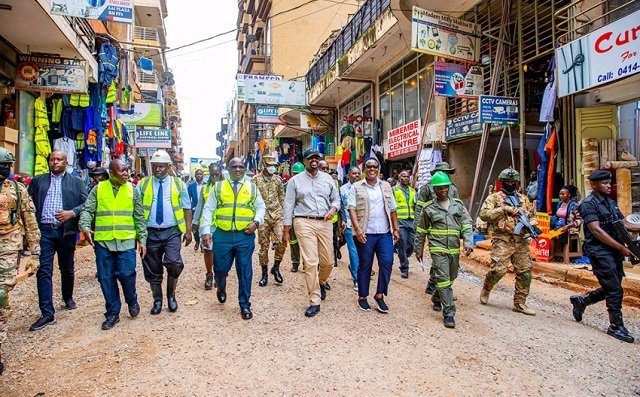
Recent comments from Prime Minister Robinah Nabbanja have highlighted the urgency of addressing the inefficiencies in Uganda’s road sector. In March 2026, Nabbanja conducted an inspection of roadworks in Kampala and expressed her frustration with the slow pace of progress. She openly criticized contractors and implementing agencies for their failure to meet deadlines and deliver quality work, which she claimed made the government appear incompetent.
During her inspection, Nabbanja noted that contractors had reported a high rate of completion, while physical verification revealed a much lower level of actual progress. She ordered value-for-money audits and demanded that contractors fix defects such as poor drainage and unsafe road structures. Her criticism echoed concerns raised by Members of Parliament, who have called for stricter enforcement of contracts and faster execution of road projects.

Development partners, including the World Bank, have also raised concerns about the weak contract management in Uganda. Reports indicate that despite significant financial support from international donors, Uganda continues to face challenges in planning, executing, and maintaining its road networks. These concerns have underscored the need for comprehensive reform in the sector, but the method of implementation remains a contentious issue.
Muhoozi Kainerugaba’s declaration about overseeing all road contracts is a bold move that reflects a broader debate about the future of Uganda’s infrastructure sector. On one hand, centralizing approval could speed up decision-making, reduce inefficiencies, and combat corruption. On the other, it could concentrate too much power in one office and erode the institutional checks that are necessary for good governance.
As Uganda continues to prioritize infrastructure development, the country will need to find a balance between efficient execution and maintaining institutional integrity. The road sector is at a crossroads, and the direction it takes will have significant implications for the country’s economic future.
Muhoozi’s proposal has added fuel to an already heated debate about governance, power, and accountability. While some view it as a necessary step toward fixing a broken system, others worry about the risks of unchecked authority. As Uganda moves forward with its ambitious infrastructure agenda, the question will be whether the reforms introduced will truly address the challenges facing the sector or simply exacerbate them.
For now, all eyes will be on the upcoming budget and the decisions made in response to Muhoozi’s declaration. Will it lead to a more efficient road sector, or will it create new challenges for Uganda’s governance and procurement systems? Only time will tell.