A senior member of the United States Senate has stirred political debate after calling Uganda an “exporter of brutality.” The senator, Jim Risch, is urging the administration of Donald Trump to consider sanctions against Ugandan President Yoweri Museveni.
His remarks came after a report from a United Nations human rights commission raised serious concerns about Uganda’s role in the conflict in South Sudan.
The report by the United Nations Commission on Human Rights in South Sudan accused Ugandan forces of assisting the government of President Salva Kiir in carrying out aerial attacks in opposition-controlled areas.
According to the commission, the attacks caused civilian casualties and destruction in communities believed to support the opposition movement.
These findings have triggered international concern because Uganda has long been seen as a key security partner in the region. For many years, Kampala has cooperated with Western countries on counter-terrorism and regional peacekeeping missions.
However, the recent accusations suggest that Uganda’s involvement in South Sudan may have contributed to worsening the conflict.
The report says Ugandan troops were deployed in March 2025 to support South Sudan’s government forces in their fight against the Sudan People’s Liberation Army‑In Opposition.

This group is linked to opposition leader Riek Machar, who has long been a political rival of President Salva Kiir. The conflict between the two leaders has been a major source of instability in South Sudan for years.
According to the commission, government forces carried out widespread and systematic attacks on civilian populations in areas believed to support the opposition. These included unlawful killings and heavy aerial bombardment of homes and medical facilities. Such actions, the report said, could violate international humanitarian law.
The commission’s chairperson, Yasmin Sooka, warned that the situation represents a serious setback for peace efforts. Just months earlier, South Sudanese leaders had promised that the country would not return to war. Instead, the violence appears to have intensified, raising fears of a new cycle of conflict.
One of the most controversial parts of the report was its claim that joint aerial attacks were conducted by the Ugandan People’s Defence Forces and the South Sudan People’s Defence Forces. These operations reportedly targeted areas populated mainly by members of the Nuer ethnic community, which is widely seen as supportive of Riek Machar.
The attacks were reported in several counties including Nasir, Longochuk, and Ulang. Witnesses described repeated bombings that killed and injured civilians, including children. Some victims reportedly suffered severe burns, which investigators said were consistent with the use of incendiary weapons.
The report also noted that external military intervention had strengthened the South Sudanese government during the fighting. Uganda’s involvement, it said, gave the government of Salva Kiir a significant military advantage at a time when tensions were already rising.
Another issue raised by investigators involved the types of aircraft used during the attacks. The report mentioned that the South Sudanese military operates several Mi-24 attack helicopters and fixed-wing aircraft. It also cited evidence that aircraft linked to Uganda were present during some bombing operations.
According to investigators, Bell 412 helicopters equipped with rocket pods were observed in conflict areas during 2025. Officials from the Ugandan military confirmed operating aircraft in South Sudan but insisted that their operations were aimed strictly at military targets.
Flight tracking data also raised questions about the extent of the operation. Investigators said a Cessna Caravan aircraft was seen circling over an area during one of the bombing raids after departing from Juba. The aircraft had reportedly arrived earlier from Uganda.
The report highlighted statements made by Uganda’s military leadership, including comments posted on social media. These statements were cited as evidence that Ugandan forces had conducted airstrikes against opposition fighters in South Sudan.
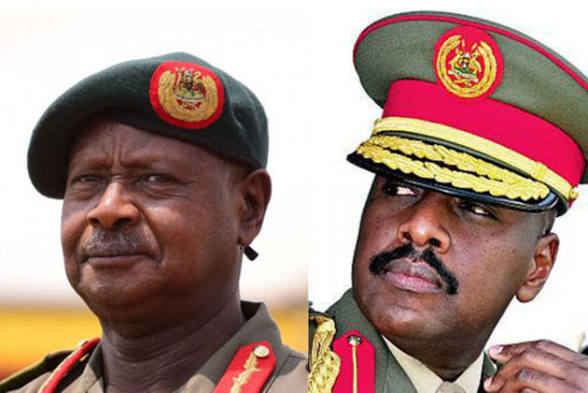
Uganda’s Chief of Defence Forces, Muhoozi Kainerugaba, publicly declared that Ugandan forces had bombed opposition targets. Some of his posts were interpreted by investigators as encouraging violence against communities associated with the opposition.
These claims quickly attracted international political attention. Senator Jim Risch argued that the evidence presented in the report should force the United States to rethink its relationship with Uganda. In his view, Uganda had shifted from being a reliable security partner to a country exporting violence beyond its borders.

Risch said the United States has previously imposed serious penalties on individuals responsible for atrocities in South Sudan. Because of this precedent, he argued that similar consequences should be considered if the allegations against Uganda are confirmed.
The debate also drew reactions from Ugandan opposition figures. Winnie Byanyima, the wife of opposition leader Kizza Besigye, welcomed the senator’s comments. She called on the international community not to ignore reports of human rights abuses.
Byanyima said General Muhoozi had previously made statements that appeared to celebrate military action in South Sudan. She also accused him of making threatening remarks toward Ugandan opposition figures and critics of the government.
The situation has further intensified political tension within Uganda. Critics of President Museveni argue that the growing role of his son, Muhoozi Kainerugaba, in both military and political matters raises concerns about the country’s future leadership.
The controversy also comes at a time when regional politics in East Africa are under intense international scrutiny. The United States has already imposed sanctions on members of the military in Rwanda and placed visa restrictions on some government officials there.
As diplomatic pressure grows, the accusations against Uganda could affect its international relationships and security partnerships.
Whether the United States will actually impose sanctions remains uncertain, but the debate has already placed Uganda’s military actions and political leadership under a global spotlight.