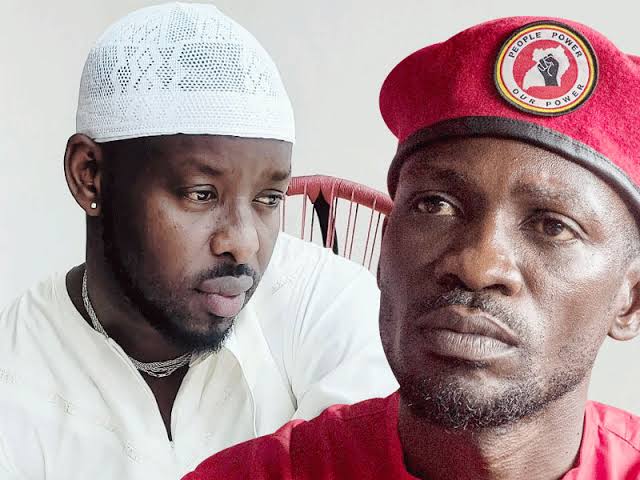
Eddy Kenzo, a celebrated Ugandan musician, has recently sparked a heated debate with his comments about the relationship between Uganda’s President Yoweri Museveni and those who have benefitted from his government.
Kenzo expressed his frustration over individuals, including Bobi Wine (Robert Kyagulanyi), who have enjoyed significant wealth and success due to the opportunities provided under Museveni’s leadership but have turned against the president by openly criticizing him. Kenzo, known for his candidness, pointed to Bobi Wine’s material wealth as a prime example of this perceived ingratitude.
Kenzo’s statement highlighted Bobi Wine’s significant land holdings in Uganda, particularly in Busabala, where each acre is valued at a staggering UGX 800 million. Kenzo argued that Bobi Wine owns over 10 acres in this prime location, a clear indication of his financial success.
He also mentioned Bobi Wine’s home in Magere, which stands on seven acres of land, with each acre in the area costing over UGX 600 million. For Kenzo, the fact that someone so wealthy would still publicly criticize the government raises questions about the loyalty of individuals who have prospered under Museveni’s rule.
In his remarks, Kenzo pointed out that Bobi Wine’s wealth does not end with his land holdings. According to Kenzo, Bobi Wine also owns yachts on Lake Victoria, a luxury that many Ugandans can only dream of. This further reinforced Kenzo’s argument that Bobi Wine’s success is deeply tied to the stability and opportunities provided by the government.
Despite this, Bobi Wine has been one of the most vocal critics of Museveni, calling out the president’s policies and leadership style, especially as they pertain to the opposition.
Kenzo’s frustration lies in what he sees as the ungratefulness of people who have gained so much from the system but choose to oppose it once they have reached a certain level of success. Kenzo emphasized that Bobi Wine’s wealth and lifestyle are a direct result of the opportunities created by the government, yet he continues to criticize the very system that enabled him to thrive.

For Kenzo, this kind of behavior is not new in Uganda, as many people who benefit from government policies eventually turn against those who helped them along the way.
The issue Kenzo raises touches on a broader question about loyalty and gratitude in Uganda’s political landscape. While some argue that political opposition is an important part of a democratic society, others believe that individuals who have enjoyed the privileges of government support should show some level of appreciation.
Kenzo’s comments serve as a reminder of the moral responsibility that comes with wealth, particularly when it has been accumulated through opportunities provided by the state.
In discussing Bobi Wine’s success, Kenzo made it clear that he does not deny the opposition leader’s hard work and talent. However, he believes that it is unfair for someone who has prospered under Museveni’s rule to continue criticizing the government without acknowledging the role that the system played in their achievements.
Kenzo’s frustration seems to stem from the idea that individuals should not bite the hand that feeds them, especially when they have gained so much from it.
Bobi Wine, who rose to fame as a musician and businessman, has indeed built an empire over the years. Beyond his real estate investments, he has also been a vocal advocate for the rights of Ugandans, especially those who feel marginalized or oppressed by the current government. Bobi Wine’s critics argue that his criticism is often inconsistent, given that much of his wealth was accumulated in part due to the stability and economic policies promoted by Museveni’s government.
Despite his success, Bobi Wine has frequently condemned the government for its handling of various issues, including corruption, unemployment, and the lack of political freedoms. His outspoken nature has led to multiple confrontations with Museveni’s administration, culminating in his presidential run in 2021.
While some Ugandans view Bobi Wine as a beacon of hope for change, others question the sincerity of his opposition, particularly given his material wealth and the lifestyle he enjoys.
Kenzo’s argument, however, is that those who have amassed wealth, especially from resources tied to the government, should recognize the role that the administration has played in their prosperity. He seems to be suggesting that it is unfair for someone like Bobi Wine to ignore the government’s role in shaping the environment that allowed him to become successful while also criticizing the same system. For Kenzo, it’s not just about politics—it’s about acknowledging the broader context in which one’s success occurred.
The divide between Kenzo and Bobi Wine supporters illustrates the complexities of political discourse in Uganda. Bobi Wine’s supporters argue that his wealth should not detract from his message of political reform, and that his criticisms of the government are driven by a genuine desire to see positive change in the country. They argue that the ability to prosper under Museveni’s leadership does not mean one must be silent about the government’s shortcomings. They believe that Bobi Wine, as a political figure, speaks for the marginalized and disadvantaged people in Uganda.
On the other hand, Kenzo’s perspective reflects a viewpoint held by some Ugandans who feel that the wealthy should not be so quick to criticize a system that has enabled them to become successful.
To Kenzo, Bobi Wine’s ability to live a life of luxury, including sending his children to university, speaks volumes about the opportunities available to people under Museveni’s rule. Kenzo believes that the success of figures like Bobi Wine should be acknowledged, not just for personal achievement, but as a product of a political system that allowed them to flourish.

The debate over Bobi Wine’s wealth and political opposition is reflective of the larger conversation surrounding the role of the government in Uganda’s economy and society.
There are those who argue that Museveni has created a stable environment that has allowed many Ugandans to become wealthy, and that individuals who have benefited should be more appreciative of the opportunities provided by the government. Others, however, believe that wealth and success should not prevent someone from criticizing a system that may be flawed or unjust.
Kenzo’s comments are also a reflection of the broader issue of political loyalty in Uganda. Over the years, Museveni has been accused of consolidating power and suppressing political opposition, leading to concerns about the democratic process in the country.
Bobi Wine’s rise as a prominent opposition leader has been viewed by many as a challenge to Museveni’s long-standing rule, but some critics question whether his opposition is driven by genuine concern for the people or by personal ambition.
For Kenzo, the issue is about consistency and fairness. If someone has benefitted from the government, particularly in the form of wealth and opportunities, they should not be so quick to turn against it. He believes that public figures, especially those who have attained success through the government’s policies, should show some level of gratitude rather than biting the hand that fed them. Kenzo’s frustration seems to stem from the belief that people who criticize the government should be mindful of the privileges they have enjoyed because of it.
In conclusion, Kenzo’s comments about Bobi Wine’s wealth and criticism of the government highlight the tensions between political opposition and gratitude in Uganda’s complex political landscape. While some view Bobi Wine as a symbol of hope for change, others, like Kenzo, feel that individuals who have prospered under the current system should acknowledge their debt to it. The ongoing debate over political loyalty, wealth, and criticism of the government will likely continue to shape Uganda’s political discourse for years to come.
Whether one agrees with Kenzo’s views or not, his statements offer valuable insight into the contradictions and challenges faced by those navigating Uganda’s political environment.