Robert Kyagulanyi Ssentamu, widely known as Bobi Wine, has once again spoken out about the intense security operations that targeted him in Uganda.
In a recent statement, he described the efforts by Uganda’s security forces to locate him as both massive and ultimately futile, alleging that billions of taxpayer shillings were spent on the operation.
According to Bobi Wine, the government deployed extensive resources in a nationwide hunt, including roadblocks, checkpoints, and raids, all in an attempt to capture him.
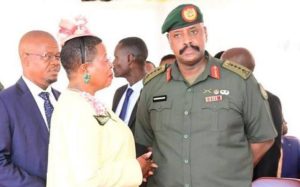
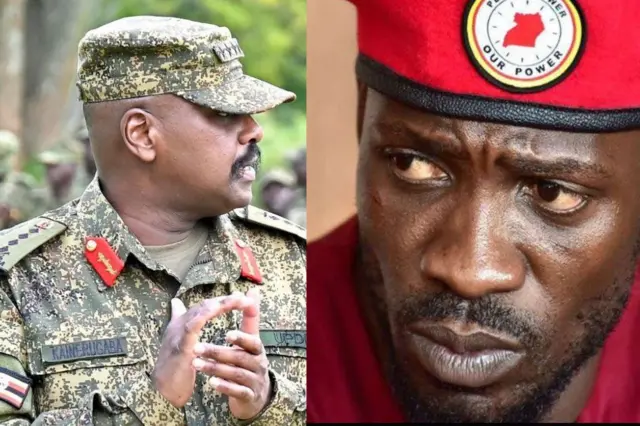
He said the operation involved both the Uganda Police Force and the Ugandan People’s Defence Forces, operating under orders he attributes to Muhoozi Kainerugaba, the son of President Yoweri Museveni.
Bobi Wine described the hunt as “laughable” because, despite the massive investment of public funds, the security forces failed to find him.
He credited ordinary Ugandans with shielding him and helping him evade capture, saying that the public’s support had been a crucial factor in his ability to remain safe.
He further explained that roadblocks were erected across major highways and local streets. Officers stopped vehicles, pulled over motorcycles, and even forced passengers to remove helmets, creating traffic congestion and widespread inconvenience—all as part of the operation to locate him.

The opposition leader alleged that these measures were not only disruptive but also specifically targeted to intimidate people who might be assisting him. He said that security operatives also raided homes in search of him, sometimes detaining or harassing individuals close to him.
One specific incident he highlighted involved his assistant, Sharif Najja. Bobi Wine claimed that Najja’s house was raided, and when the authorities failed to find him, they seized Najja’s wife. He stated that she remained missing for a period after the raid, raising further concerns about the security forces’ conduct.
Bobi Wine also revealed that nine police officers who had previously been assigned to him during the presidential campaign were arrested for refusing to spy on him. He said the officers were later dismissed from the police force for their refusal to participate in operations that targeted him personally.
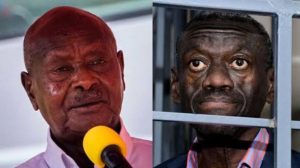
These claims come after the 2026 presidential election in Uganda, in which Bobi Wine finished second with over two million votes, compared to the incumbent president’s seven million votes. Despite his loss, he has continued to assert that the election was rigged and that the government has targeted him as part of a broader effort to suppress political opposition.
He alleged that the harassment of his family and supporters began shortly after the election. On January 16, according to Bobi Wine, security forces raided his home while he managed to escape. Subsequent raids reportedly involved assaults on family members, destruction of property, and theft of valuables.
Bobi Wine said that these attacks created a climate of fear, forcing him to remain in hiding for about two months. The NUP leader emphasized that his temporary absence from public view was a safety measure and not an indication of surrender.
He also criticized the use of public resources for personal political purposes. Bobi Wine said that billions of Ugandan shillings had been spent in an attempt to locate him, calling it a misuse of taxpayer money and a demonstration of the government’s priorities.
In his statement, he highlighted the role of ordinary Ugandans in protecting him. He expressed gratitude to citizens who provided shelter and assistance, suggesting that widespread public support made it impossible for the security forces to achieve their objectives.
Bobi Wine’s allegations point to a high level of coordination within Uganda’s security apparatus, which reportedly included intelligence gathering, road surveillance, and direct action teams. Despite this, he claimed the operations consistently failed due to both public assistance and careful planning on his part.
He also discussed the psychological impact of being hunted. Bobi Wine stated that living under constant surveillance and threat posed a serious challenge, but that it also strengthened his resolve to continue advocating for political change in Uganda.
The opposition leader has framed his temporary relocation abroad as part of a broader political strategy. By moving overseas, he hopes to engage the international community and build support for his campaign against alleged abuses by the Museveni government.

Bobi Wine said that his international efforts will focus on highlighting human rights violations, calling for sanctions, and advocating for democratic reforms. He suggested that these actions could pressure the Ugandan government to respect political freedoms.
He reassured supporters that his absence does not mean the end of political activity. Bobi Wine said that his deputy, Dr. Lina Zedriga, would take charge of the NUP while he is abroad, ensuring continuity of leadership and political strategy.
The opposition leader emphasized that his goal remains to return to Uganda after completing his international work. He stated that he intends to continue engaging with both Ugandans and international partners to advance democratic reforms and ensure political accountability.
In closing, Bobi Wine condemned what he described as the excessive use of public funds for personal political objectives. He called on citizens and international observers to hold the government accountable for its use of taxpayer money and the treatment of opposition figures.
Through these revelations, Bobi Wine has highlighted the challenges facing opposition leaders in Uganda, underscoring the tension between government forces and political dissenters. His account provides insight into both the scale of government operations against him and the level of public support that enabled him to evade capture.
The story has sparked national and international debate about governance, political freedom, and the use of state resources in Uganda.
Analysts say it also illustrates the continuing struggles between the ruling party and opposition forces ahead of upcoming political cycles.