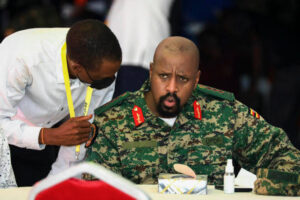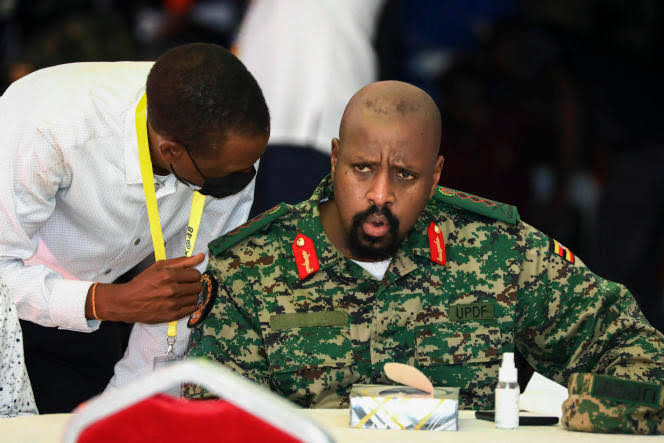
In a bold and unwavering statement, General Muhoozi Kainerugaba, a prominent figure in Uganda’s military and politics, has declared that the Uganda People’s Defence Forces (UPDF) is a divine institution, stating that it cannot be defeated by anyone.
In his comments, Muhoozi emphasized that the power and strength of the UPDF are derived from a higher power, specifically from God, through the leadership of Uganda’s president, who he described as God’s anointed leader.
Muhoozi’s declaration highlights his belief in the invincibility of the UPDF, which has long been considered one of the most powerful military forces in East Africa. The statement is also a reflection of the deep personal conviction he has regarding the role of religion in the country’s military and political spheres.
His reference to Jesus Christ as the source of the army’s power reflects both his faith and the importance he places on the divine in shaping Uganda’s political and military destiny.
The general’s remarks have sparked significant discussion both within Uganda and beyond its borders. While supporters of the government and the military have applauded Muhoozi’s statement as a show of strength and national pride, others have raised concerns about the militarization of religion in Uganda’s political discourse.
Critics argue that framing the military as a “divine force” could have profound implications on the country’s political landscape, potentially intertwining the military’s actions with religious justification, thus blurring the lines between state and religion.
Gen Muhoozi’s words come at a time when the role of the UPDF in Uganda’s governance and politics has been a topic of increased scrutiny. The UPDF has been instrumental in the country’s political stability under President Museveni’s leadership, and its influence has extended far beyond military operations.

The army has also played a significant role in Uganda’s foreign policy, including its involvement in peacekeeping missions across Africa, particularly in South Sudan and the Democratic Republic of Congo.
Muhoozi’s statement also underscores his growing prominence within the Ugandan political and military establishment. As the son of President Museveni, Muhoozi has been seen as a potential successor to his father, and his comments reflect a sense of confidence in his leadership and in the UPDF’s ability to maintain power.
By invoking divine authority, Muhoozi aligns himself with a long-standing narrative of the Museveni family as being divinely ordained to lead Uganda, further reinforcing the idea of political continuity within the country.
The general’s use of religious language is not new, as President Museveni has also frequently referenced divine guidance in his political rhetoric. Both father and son have often framed Uganda’s leadership as being part of a larger, God-given mission to lead the country and the region toward stability and prosperity.
However, Muhoozi’s most recent comments take this narrative to a more direct level, with the general explicitly stating that the UPDF’s power comes from God, positioning the military as an invincible force under divine protection.
The UPDF, under the leadership of President Museveni and, by extension, Muhoozi, has been instrumental in consolidating the ruling National Resistance Movement’s (NRM) hold on power. The military has played a key role in maintaining peace and security in Uganda since the NRM came to power in 1986, following a five-year insurgency led by Museveni. Over the years, the UPDF has grown into a well-equipped and influential force, both within Uganda and in the broader African context.
Despite its military successes, the UPDF has not been without controversy. It has faced accusations of human rights abuses, particularly in the context of operations against insurgent groups in northern Uganda and in neighboring countries. These issues have led to criticism from international human rights organizations and opposition groups within Uganda. The UPDF’s prominent role in the country’s political landscape has also raised concerns about the balance of power between the military and civilian institutions.
In light of these concerns, Muhoozi’s comments are being seen by some as an attempt to further solidify the military’s position as a central pillar of Uganda’s power structure. By casting the UPDF as a “God’s army,” Muhoozi is positioning it as a force beyond reproach, one that is not just military in nature but also divinely protected.
This rhetoric could serve to increase the military’s legitimacy in the eyes of its supporters, but it also risks alienating those who view the military as an instrument of oppression.

The declaration has also triggered reactions from various political analysts, who suggest that Muhoozi’s remarks reflect the increasing centralization of power within the military and the ruling family.
By framing the UPDF as an invincible force backed by divine will, Muhoozi is sending a clear message that the army’s role in Uganda’s politics is not only crucial but also sacred. This could have long-term implications for Uganda’s democratic processes, particularly if Muhoozi continues to gain political influence.
While Muhoozi’s comments have garnered support from his political allies, including key figures in the UPDF and NRM, the opposition has expressed concern over the militarization of politics. Critics argue that the military’s growing involvement in politics undermines the principles of democracy and civilian rule. They fear that such statements could embolden the military’s influence over political affairs, making it more difficult for opposition forces to challenge the government.
Some political analysts also view Muhoozi’s invocation of religious language as a strategic move to bolster his image ahead of potential future political campaigns. By aligning himself with divine authority, Muhoozi may be seeking to build a stronger connection with Uganda’s religious communities, many of whom have long been a key base of support for the ruling NRM. The religious tone of his statements could help to cultivate a sense of national unity, particularly in times of political unrest or division.
As the political landscape in Uganda continues to evolve, Muhoozi’s comments about the UPDF being “God’s army” will likely remain a point of contention. Supporters will see it as a bold affirmation of Uganda’s military strength and divine protection, while detractors will view it as an unsettling attempt to further entrench military power in the country’s governance. Regardless of the interpretation, Muhoozi’s declaration has certainly made waves, reinforcing his place as a central figure in Uganda’s future political trajectory.
In conclusion, Gen Muhoozi’s assertion that the UPDF is “God’s Army” that cannot be defeated by anyone is a powerful statement that reflects both his confidence in Uganda’s military strength and his belief in divine guidance. The rhetoric surrounding the invincibility of the UPDF and its connection to religious faith will likely continue to shape Uganda’s political discourse.
As Muhoozi’s influence grows, his use of religious language and military symbolism will play a significant role in determining his place in Uganda’s political future, potentially positioning him as a leader who represents both military strength and divine will.