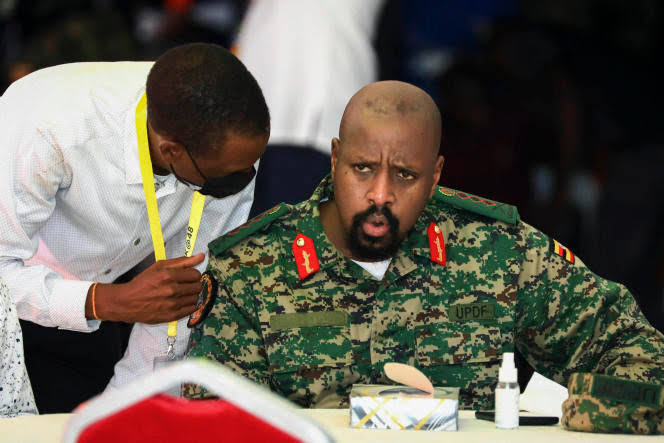
Ugandan General Muhoozi Kainerugaba has issued a stern warning to Iran, urging the country to apologize to Uganda before any further diplomatic engagement can occur.
In a recent statement, Gen Muhoozi said, “Once Iran apologizes to us, I’ll give them free advice. Never threaten us again.”
The comments come amid rising tensions in regional diplomacy, highlighting Uganda’s commitment to safeguarding its sovereignty.
He emphasized that Uganda will not tolerate threats, regardless of the source, and that any country wishing to maintain cordial relations must respect international norms.
Gen Muhoozi framed his statement in both a firm and strategic tone, signaling that Uganda is prepared to engage diplomatically, but only on terms of mutual respect.
“Respect is not optional. We will defend our nation and our people against intimidation,” he said, adding that Uganda values both peace and security.
Observers note that his remarks may reflect growing frustration with repeated diplomatic misunderstandings or perceived slights against the country.

The general also indicated that Uganda is open to constructive dialogue, but only after acknowledgment of prior mistakes.
“Apologies pave the way for collaboration. Without them, any engagement is meaningless,” Gen Muhoozi stated.
He highlighted the importance of national dignity, noting that Uganda’s leaders are committed to protecting the country’s reputation on the international stage.
“Leadership is not just about domestic affairs. It’s about standing firm when your country is challenged abroad,” he said.
Analysts suggest that Gen Muhoozi’s statement sends a clear message to both regional and global actors: Uganda is assertive, prepared, and confident in its foreign policy.
He framed his potential “advice” to Iran as a gesture of goodwill, contingent on an apology, which signals a willingness to engage diplomatically if mutual respect is observed.

“This is not about arrogance. It’s about ensuring the right values guide international relations,” Gen Muhoozi explained.
The general’s remarks have drawn reactions from political commentators, with many noting the balance between firmness and diplomacy.
Some analysts view his approach as a calculated method to assert Uganda’s sovereignty while maintaining the possibility of dialogue.
Gen Muhoozi also used the statement to reinforce national unity, reminding Ugandans that protecting the country’s interests is a shared responsibility.
“Every Ugandan should know that we will not back down when our nation is threatened,” he said, appealing to national pride and solidarity.
He reiterated that Uganda is open to cooperation with all nations, but only when interactions are based on equality and mutual respect.
As the situation develops, Uganda’s stance, articulated by Gen Muhoozi, underscores the importance of accountability in international relations and the country’s resolve to defend its dignity.