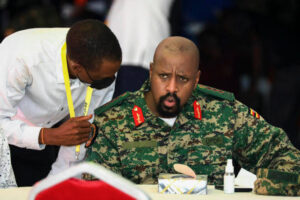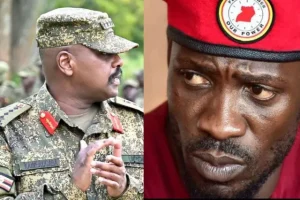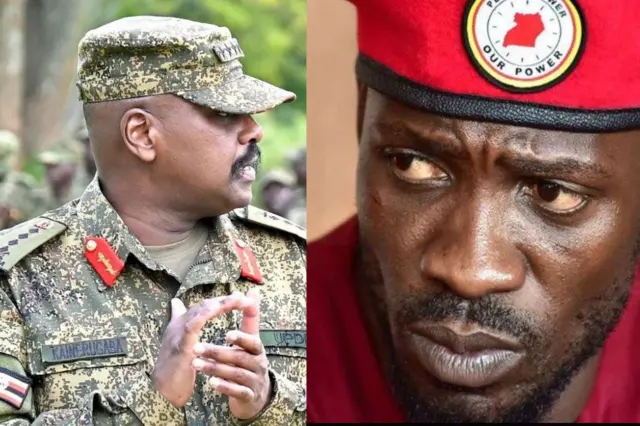
Ugandan General Muhoozi Kainerugaba has sparked debate after making a controversial statement regarding opposition leader Bobi Wine.
In a recent interview, Gen Muhoozi said, “I think the only way I can defeat Uganda’s enemies is by arresting the traitor, Bobi Wine, and taking him to the basement.”
The remark has drawn attention both domestically and internationally, as Bobi Wine, also known as Robert Kyagulanyi, is a prominent political figure and former presidential candidate.
Gen Muhoozi framed his statement in the context of national security, asserting that certain actions are necessary to protect Uganda from perceived threats.
Observers note that the language used by the general has raised concerns about political tolerance, freedom of expression, and the treatment of opposition leaders.
“This is about safeguarding our nation. Some people have undermined Uganda from within, and they must be held accountable,” Gen Muhoozi said.
He emphasized that his focus is on Uganda’s enemies, implying that the opposition may sometimes play a role in undermining stability.

Political analysts have pointed out that statements like these can exacerbate tensions between the ruling government and opposition supporters.
Bobi Wine’s party, the National Unity Platform (NUP), has previously condemned what it describes as harassment and intimidation of opposition figures.
“The statement is concerning because it hints at punitive measures against political rivals rather than democratic engagement,” said one political commentator.
Gen Muhoozi defended his remarks, stating that security measures must sometimes be firm to prevent harm to the nation.
“National security is not negotiable. Leaders must ensure the country is safe from internal and external threats,” he added.
The general also argued that his approach is informed by his experience in the military and understanding of strategic defense.
He noted that Uganda has faced multiple security challenges over the decades and that vigilance remains essential to maintaining order.

Supporters of Gen Muhoozi have praised his firm stance, viewing it as a commitment to protecting Uganda’s sovereignty and stability.
Critics, however, warn that targeting political opponents risks undermining democracy and could create deeper divisions in society.
The statement has reignited discussions about the balance between security and political freedom in Uganda, especially in the context of upcoming elections.
Some analysts suggest that the rhetoric may be aimed at rallying support from certain segments of the population who prioritize security and law and order.
Others caution that such comments could fuel protests, backlash, or international scrutiny over human rights and political freedoms.
As the conversation unfolds, Uganda faces a complex situation in which national security, political rivalry, and democratic principles intersect.
Gen Muhoozi’s statement, regardless of interpretation, underscores the ongoing tensions and challenges in managing both governance and opposition relations in the country.