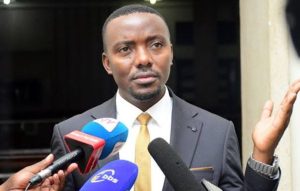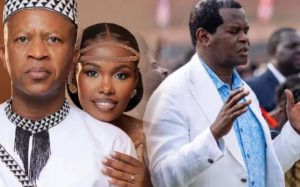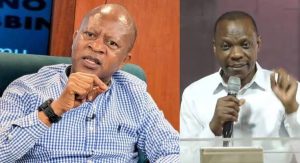
As Uganda’s 2026 elections approach, two prominent figures from the Democratic Front, Hon. Abed Bwanika and Mathias Mpuuga, are facing increasing pressure after failing to attract large crowds during recent processions to rally their supporters. Despite their efforts to energize their bases and build momentum for their campaigns, both candidates have been met with disappointing turnout during their rallies, a situation that has raised concerns about their ability to secure mass support ahead of the upcoming presidential race.
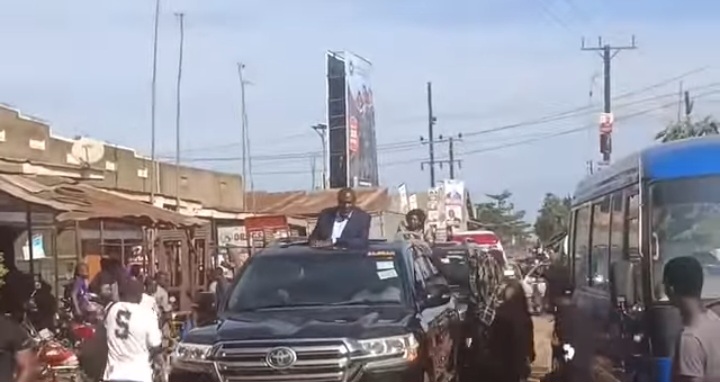
During a recent series of processions and public rallies in key districts, both Bwanika and Mpuuga were visibly frustrated by the lower-than-expected numbers of supporters who turned up to hear their speeches. The rallies, which were aimed at energizing the party base and galvanizing support ahead of the elections, seemed to fall flat as the streets remained less crowded than anticipated.
In several locations, only a handful of supporters could be seen waving Democratic Front flags, and in some cases, the candidates struggled to get their message across to a full audience. As political leaders who have long been at the forefront of opposition politics, their inability to draw in large crowds has been seen as a significant blow to their campaigns. Both Mpuuga, who leads the Democratic Front, and Bwanika, a veteran politician with strong grassroots connections, were hoping to capitalize on their reputations and previous political experience to gather widespread support. However, recent events have raised doubts about their ability to mobilize Ugandans for the crucial 2026 election.
The disappointing turnout has sparked debate within the party, with some insiders questioning the effectiveness of the current campaign strategies. While Mpuuga remains a respected figure within the opposition, particularly for his vocal criticism of the ruling government, it seems that his appeal is not as widespread as it once was. Similarly, Bwanika’s long-standing presence in Ugandan politics has not translated into the kind of mass support he hoped for in this new electoral cycle.
Observers have pointed to several factors that may be contributing to the weak turnout. The Democratic Front, while active in the political scene, has struggled to carve out a unique identity distinct from other opposition groups, particularly Robert Kyagulanyi’s NUP, which has a strong youth base and a more visible presence on the ground. Kyagulanyi’s charisma and popularity have made it difficult for other opposition figures to gain the same traction, and it’s possible that many of the people who might have supported Bwanika and Mpuuga are instead rallying behind the NUP leader.
Furthermore, the current political environment in Uganda remains heavily polarized, with many citizens feeling disillusioned by years of unfulfilled promises and political instability. For some, the failure of previous opposition leaders to mount a serious challenge to President Museveni’s long reign has led to a sense of apathy or even skepticism about the prospects of change. This mood may be affecting voter enthusiasm, making it harder for candidates like Bwanika and Mpuuga to generate the kind of excitement needed to secure a significant voter base.
The lack of significant support is also a reflection of the struggles the Democratic Front has faced in building a broad-based coalition that can effectively challenge the incumbent government. While Mpuuga has been a vocal critic of the ruling NRM, his party’s efforts to unite the opposition under one banner have so far yielded limited success. Unity has been a recurring issue within the opposition, with various factions vying for leadership and control of the political narrative. This division has left the Democratic Front with a fragmented base that has struggled to coalesce into a unified front capable of challenging the powerful NRM.
In contrast, NUP’s Kyagulanyi continues to dominate the political discourse, with massive rallies and a growing wave of support, especially among young Ugandans. His grassroots mobilization and focus on issues such as unemployment, corruption, and human rights abuses have resonated with a broad section of the population. Kyagulanyi’s ability to draw large crowds and energize his base has made him the clear frontrunner among opposition candidates, which could make it even more difficult for candidates like Bwanika and Mpuuga to catch up.
The failure to attract large numbers of supporters is also a challenge for fundraising and securing the resources necessary for a successful campaign. Political rallies are not only a means of galvanizing support but also of raising awareness and securing donations. Without the visibility that comes with large crowds, both Mpuuga and Bwanika may find it harder to fund their campaigns and build the infrastructure needed to mount a serious challenge in 2026.
In response to the disappointing turnout, both candidates have vowed to continue pressing forward with their campaigns. Mpuuga has emphasized that the Democratic Front is committed to bringing about change in Uganda, regardless of the challenges they face. “We may not have the largest crowds today, but the people who are with us are those who believe in the change we bring. We will continue to fight for a better Uganda,” he said at one of his rallies.
Similarly, Bwanika has vowed to keep working on the ground, insisting that the slow start to the campaign is just a temporary setback. “The road to change is never easy,” Bwanika said. “We will continue to engage the people and build a movement that truly represents the interests of all Ugandans.”
As the 2026 election draws nearer, both Mpuuga and Bwanika will need to reevaluate their strategies and find ways to connect with a broader base of voters. For now, their failure to draw large crowds may be seen as a warning sign, and the pressure is on for them to come up with a more compelling message that resonates with Ugandans seeking real political change. The outcome of their campaigns will depend on their ability to convince voters that they, not the NUP or the NRM, are the true alternative to the current government.