Uganda’s political environment has once again been shaken following remarks that opposition leader Bobi Wine could face treason charges. The claims were made during a radio appearance by a senior government minister, creating fresh debate across the country.
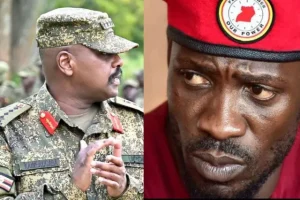
Robert Kyagulanyi Ssentamu, popularly known as Bobi Wine, is the president of the National Unity Platform (NUP). He recently addressed African Union leaders in Geneva, where he reportedly spoke about alleged injustices, brutality, and human rights concerns in Uganda.
The address was widely shared on social media and quickly reached millions of viewers. In his speech, Bobi Wine criticized what he described as actions by government agents before, during, and after the January 15, 2026 elections. He claimed that his supporters and other citizens seeking change faced unfair treatment.
On Thursday morning, Henry Okello Oryem appeared on 88.8 CBS FM during a news segment. During the interview, he suggested that Bobi Wine risks being charged with treason because of statements made abroad about Uganda.
According to the minister, seeking sympathy from foreign leaders was unnecessary and would not change Uganda’s political direction.
He stated that President Museveni would not lose sleep over such actions, arguing that the election results had already spoken.
Yoweri Museveni was declared winner of the 2026 elections with 71% of the vote, according to the Electoral Commission. Government officials maintain that the election reflected the will of the people.

Treason is a very serious charge under Ugandan law. It involves acts considered to threaten the security or stability of the state. Legal experts note that proving treason requires clear evidence and must follow due legal process.
Supporters of Bobi Wine argue that speaking to international leaders about human rights concerns is part of political advocacy. They believe opposition leaders have a right to raise issues they feel affect citizens.
On the other hand, government supporters insist that taking domestic political matters to foreign platforms can harm the country’s image. They view it as unpatriotic and potentially damaging to Uganda’s international relations.
The debate has quickly spread beyond radio discussions. Social media platforms have been filled with reactions from both sides of the political divide. Some citizens express concern about freedom of speech, while others emphasize national sovereignty.
Comparisons have also been made to past opposition figures, including Kizza Besigye, who has faced legal battles during his political career. His experiences are often referenced in discussions about opposition politics in Uganda.
Legal analysts caution that public statements alone do not automatically amount to treason.
They stress that any charges would need to be carefully examined in court. The judiciary plays a key role in determining such matters.
Human rights organizations are likely to watch developments closely.
Uganda has often been under international attention during election periods, especially when opposition leaders raise concerns.
Within the National Unity Platform, members have defended their leader. They argue that raising issues of governance and accountability is part of democratic practice. For them, engaging international institutions is not a crime but a strategy for advocacy.

Meanwhile, government officials emphasize that Uganda is a sovereign state. They maintain that internal issues should be resolved through local systems and institutions.
Ordinary citizens appear divided. Some worry about rising political tension, while others say such debates are common in competitive political systems. Many hope that disagreements will remain within peaceful and lawful boundaries.
Political commentators suggest that the situation reflects deeper tensions following the recent elections. Emotions often run high after closely watched national polls.
As of now, no official treason charge has been formally announced in court. The statement remains a warning rather than a confirmed legal action. Observers are waiting to see what steps, if any, authorities will take.
In the coming days, responses from Bobi Wine and his legal team may shape the next phase of this story. Public statements from both sides will likely continue to influence the national conversation.
In the end, this development highlights the fragile balance between political speech, national security, and legal accountability.
Uganda’s institutions will be tested in how they handle the matter. Many citizens hope that whatever happens next will respect the rule of law and maintain peace in the country.