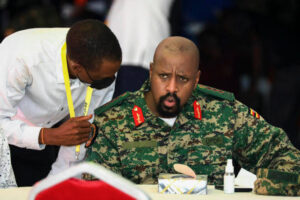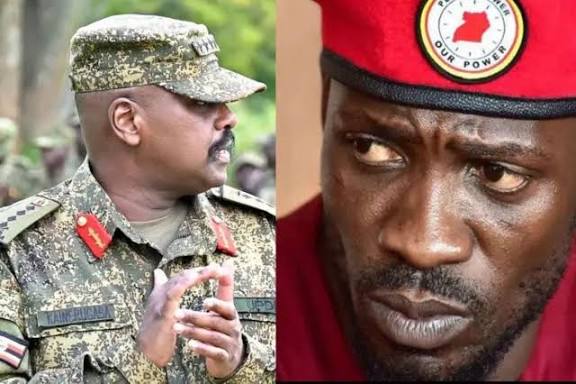
Uganda’s political scene has once again been shaken by strong remarks from General Muhoozi Kainerugaba.
In a statement that has caused heated debate, he reportedly said that Bobi Wine is “too ugly to be president” and even claimed that he “makes Idi Amin look handsome.” The comments quickly spread across social media, drawing mixed reactions from the public.
Many Ugandans were surprised by the strong language used. Politics in Uganda has often been tense, but personal attacks about appearance have added a new layer to the rivalry.
Supporters and critics from both sides have shared their views online and in public discussions.
Bobi Wine, whose real name is Robert Kyagulanyi, is a well-known opposition leader and former musician.
Over the years, he has built a strong following, especially among the youth.
His supporters see him as a symbol of change and hope for a new political direction in Uganda.

On the other hand, General Muhoozi is a senior military officer and an influential public figure.
He is known for speaking his mind, especially on social media. His statements often attract attention and sometimes spark controversy.
The comparison to Idi Amin, Uganda’s former president, also stirred strong emotions. Idi Amin remains one of the most talked-about leaders in the country’s history.
For many people, mentioning his name in political debates brings back memories of a difficult period in Uganda’s past.
Political analysts say that such remarks show how heated the competition for leadership has become. As the country moves closer to future elections, tensions between different political camps are likely to rise. Words spoken by leaders carry weight and can influence public opinion.
Some citizens have criticized the general’s comments, saying leaders should focus on policies and national issues rather than personal insults. They argue that discussions about leadership should be based on ideas, experience, and plans for the country.
Others, however, defend his right to express his opinion. They say politics is a competitive field, and strong words are sometimes used to challenge opponents. Still, many agree that respect should remain part of public debate.
The incident has also raised questions about the tone of political discourse in Uganda. Many observers believe that personal attacks can distract from important national conversations such as the economy, youth unemployment, education, and healthcare.
Religious and community leaders have often called for peaceful and respectful dialogue among politicians. They remind leaders that their words can either unite or divide the nation. In a country with a young population, the example set by leaders matters greatly.
Bobi Wine’s supporters quickly responded to the remarks. Some described them as unfair and unnecessary. They argued that leadership is not about physical appearance but about vision, courage, and service to the people.
The opposition camp has often accused government figures of trying to discredit their leaders. Incidents like this add to claims that political competition in Uganda is becoming more personal and emotional.
Meanwhile, supporters of the general say he was simply expressing frustration. They believe that politics in Uganda is entering a new phase where leaders openly challenge each other without fear.
Social media platforms were filled with debates after the comments went public. Hashtags, memes, and video clips circulated widely, showing how fast political messages spread in the digital age.

Young people, who make up a large part of Uganda’s population, are paying close attention. Many of them want leaders to address real-life issues that affect their future rather than trade insults.
Political observers note that public image is important in politics, but it should not be the main focus. Voters often care more about integrity, honesty, and the ability to deliver change.
The situation also highlights how personal rivalry can shape national conversations. When top leaders exchange harsh words, it often sets the tone for supporters and followers.
As Uganda continues its political journey, many citizens hope for mature and issue-based campaigns. They want leaders who will debate ideas, policies, and solutions instead of attacking personal traits.
The recent remarks have once again shown how lively and sometimes dramatic Uganda’s political environment can be. Whether the comments will have a lasting impact remains to be seen.
For now, the debate continues, with Ugandans discussing what qualities truly make a good president.
Beyond appearances and sharp words, many believe the future of the country depends on unity, respect, and strong leadership built on meaningful ideas.