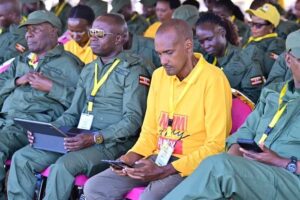
Deputy Spokesperson of the National Unity Platform (NUP), Alex Waiswa Mufumbiro, appeared before the Kawempe Chief Magistrate’s Court today, seeking temporary bail to bury his late wife. His plea, however, was denied, leaving him and supporters devastated.
The court appearance follows a previous rescheduling of his hearing, which had already raised concerns among his supporters and the public about delays in justice.
Waiswa made an emotional appeal during the hearing, requesting a brief release so that he could attend to his late wife’s burial rites, an act of deep personal and cultural significance.
Despite the tragedy, the magistrate cited legal precedent and the need to follow procedure as reasons for denying bail, emphasizing the importance of consistency in the judicial process.
The ruling has sparked widespread conversation about the tension between strict adherence to the law and compassionate consideration for personal circumstances.
Many of Waiswa’s supporters expressed disappointment, highlighting the emotional toll the decision takes on someone already coping with immense personal loss.
“It is a deeply human situation,” one observer noted. “We must ask whether the justice system can balance fairness with empathy for someone in extraordinary grief.”

The magistrate’s decision reflects the court’s deliberate caution, especially in high-profile cases where exceptions could set legal precedents for future bail considerations.
Sources close to Waiswa indicate uncertainty about whether he might be granted temporary release in the coming days, but no official decision has been made.
Waiswa’s legal team had prepared a thorough plea, emphasizing both his personal tragedy and his community contributions, but the court was unmoved, insisting on adherence to the law.
The ruling prolongs the emotional strain on Waiswa, who must continue to navigate legal processes while grappling with grief and loss.
Public reactions have been varied, with some urging the court to show compassion, while others emphasize that the rule of law must prevail, regardless of individual circumstances.
Observers note that this case underscores the challenge courts face in balancing legal integrity with humanity, particularly in situations involving personal emergencies.
The denial of bail has left supporters debating whether the judicial system is adequately equipped to consider emotional and humanitarian factors alongside legal ones.

Waiswa himself appeared visibly affected during the hearing, reflecting the weight of personal loss intertwined with legal battles.
Political analysts say the case could have broader implications, not only for Waiswa personally but for how the justice system handles requests for bail under extraordinary circumstances in Uganda.
Legal experts point out that while the denial may appear harsh, the magistrate’s ruling is consistent with a cautious approach to setting legal precedent.
The situation has also raised questions about the intersection of law and cultural obligations, particularly regarding burial rites, which are highly significant in many Ugandan communities.
For many, the case highlights the human dimension often overlooked in public discussions about justice, illustrating how personal tragedy interacts with procedural law.
As the case moves forward, both supporters and observers will continue to monitor developments closely, waiting to see whether the court will eventually allow temporary release or maintain a strict stance on procedure.
Ultimately, Waiswa’s case underscores the delicate balance courts must strike between justice, compassion, and the integrity of legal processes, leaving the nation to reflect on how humanity fits within the law.