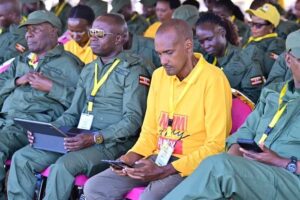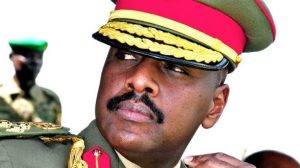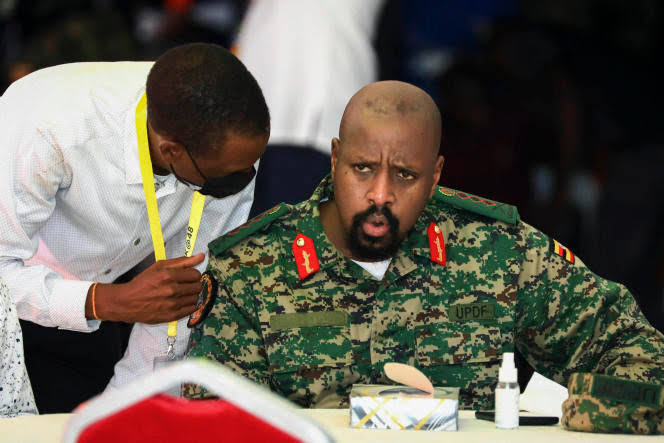
In a statement that has sparked significant discussion across both African and international political circles, General Muhoozi Kainerugaba, the son of Ugandan President Yoweri Museveni and a rising political figure in his own right, expressed a strong defense of Israel’s sovereignty, asserting that “no one will touch Israel” and that Africa will stand as her protector.
He further declared that the Jews are the “first children of Africa,” a statement that has both intrigued and surprised many due to its boldness and implications for Africa’s foreign relations.
Muhoozi’s comments came during a speech where he not only expressed unwavering support for Israel but also positioned Africa as a continent with a deep, historical connection to the Jewish people.
His declaration is likely to shift the narrative around Africa’s position on Israel, particularly given the continent’s complex and varied relationships with the Middle Eastern country.
“No one will touch Israel. Africa will protect her,” Gen Muhoozi declared, reinforcing his sentiment that Africa stands in solidarity with the Jewish state. This statement comes at a time when tensions in the Middle East, particularly in Israel and Palestine, have reached new heights.
While several African nations have taken neutral or sympathetic stances toward Palestine, Muhoozi’s remarks signal a departure from the traditional rhetoric, instead positioning Africa as an ally of Israel, regardless of the global geopolitical landscape.
The General went on to make a claim that has sent ripples through both African and Jewish communities: “The Jews are the first children of Africa.” This statement, though surprising, is rooted in ancient history, as Muhoozi’s words may be an allusion to the historical and biblical connections between Jews and Africa.
Many scholars have long debated the roots of the Jewish people and their possible connections to Africa, especially with regard to the ancient Kingdom of Kush and the historical migration patterns of early civilizations. In Muhoozi’s view, the Jews’ ancestral roots in Africa are fundamental, and this connection, according to him, justifies Africa’s protective stance toward Israel.
“From the earliest days, our history has been intertwined,” Muhoozi explained, referring to the long-standing historical and cultural ties between Africa and the Jewish people, from ancient Egyptian influences to the spread of Judaism across parts of North Africa and the Middle East. He went on to suggest that Africa’s bond with Israel is not just political, but deeply rooted in shared history and culture.
This proclamation is particularly striking considering the broader geopolitical trends. Many African nations have traditionally been aligned with the Palestinian cause, in part due to solidarity movements against colonialism and occupation, which resonate strongly across the continent.
However, Muhoozi’s remarks indicate a shift in this narrative, with Uganda — under both his father’s and possibly his own future leadership — positioning itself as a defender of Israel. Uganda itself has had a complex relationship with Israel, having had diplomatic relations with the Jewish state at various points in history, but it has also been influenced by broader African sentiment toward Palestine.
Muhoozi’s support for Israel also aligns with the growing trend of African nations re-evaluating their foreign policies, particularly in regard to their relationships with the Middle East. While countries like Egypt and South Africa have been vocal in their support for Palestinian statehood, others such as Ethiopia, Rwanda, and now Uganda (through Muhoozi’s statements) seem to be veering towards stronger ties with Israel, particularly in the fields of security, technology, and agriculture.
“Israel’s contributions to Africa in terms of technology, agriculture, and security are invaluable,” Muhoozi continued, underscoring the strategic benefits of an alliance with Israel.
Israel has been involved in numerous projects across Africa, particularly in agricultural development, water conservation, and counterterrorism efforts. Israel’s expertise in these areas has helped to transform many African economies, and Muhoozi’s statements may also reflect a desire to foster stronger partnerships in these sectors.
At a broader level, Muhoozi’s remarks seem to reflect a shift in Uganda’s foreign policy, moving towards a more assertive, independent stance. While Uganda has historically aligned itself with the Non-Aligned Movement and has played a balancing role in international politics, Muhoozi’s defense of Israel signals a more definitive policy orientation — one that places Uganda firmly in the camp of nations willing to engage closely with Israel and provide diplomatic, economic, and political backing.
Muhoozi’s comments are also a challenge to the broader African Union (AU) stance, which has often been more cautious in its approach to Israel due to the solidarity with the Palestinian cause.
However, Muhoozi’s statements are not entirely isolated; other African leaders, such as Rwanda’s Paul Kagame, have also expressed more favorable views towards Israel, even as they continue to maintain ties with the Palestinian people. This divide within African countries may continue to grow as Africa’s foreign policy evolves, influenced by economic interests, security concerns, and geopolitical alliances.

The general’s comments on Israel have also sparked conversation within Uganda itself, with some praising his boldness and others questioning the implications of such a strong stance. The debate highlights the broader generational divide in African politics, where younger leaders like Muhoozi are more willing to challenge conventional views and align with powerful, economically advanced nations like Israel, while older, more traditional figures within Africa continue to uphold longstanding solidarity with the Palestinian cause.
Moreover, Muhoozi’s remarks appear to be an extension of his growing political influence in Uganda. His rising prominence, particularly in the context of speculation about his future political ambitions, suggests that his statements are part of a broader effort to define Uganda’s foreign policy under his potential leadership.
While his father, President Museveni, has been the face of Uganda’s foreign policy for over three decades, Gen Muhoozi’s increasing assertiveness in international matters could signal a shift in Uganda’s diplomatic direction should he take on a more prominent role in the country’s governance.
While Muhoozi’s statements about Africa’s role in protecting Israel may be seen by some as controversial, it is clear that they reflect a larger trend within the African political landscape towards pragmatism and a rethinking of traditional alliances. For many African countries, Israel’s technological prowess and security expertise are too valuable to ignore, and Muhoozi’s rhetoric underscores a willingness to engage with Israel in a manner that could benefit Africa’s development.
In conclusion, General Muhoozi Kainerugaba’s assertion that “no one will touch Israel” and his claim that “the Jews are the first children of Africa” represent a bold, historic stance on Uganda’s foreign policy. His remarks suggest a deeper relationship between Israel and Africa, rooted in both ancient history and modern-day strategic interests.
As Uganda continues to shape its foreign relations, Muhoozi’s words may signal a shift in the country’s role within Africa and its broader stance in international politics. Whether or not this marks the beginning of a broader trend in Africa’s engagement with Israel remains to be seen, but Muhoozi’s comments undeniably add a new layer to the conversation about Africa’s geopolitical future.