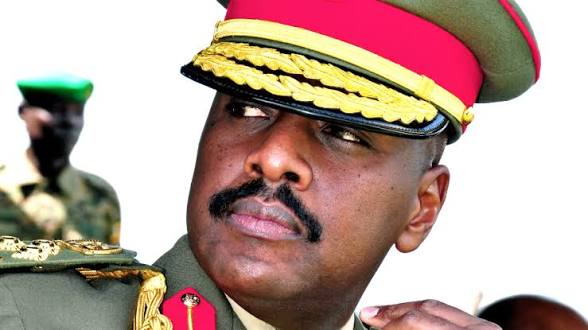
In a bold and defiant statement, General Muhoozi Kainerugaba, the senior military officer and son of Uganda’s long-serving President Yoweri Museveni, declared that the recent elections had marked the end of any efforts by Western embassies in Uganda to influence or “bully” the country’s security system.
Gen Muhoozi’s remarks, delivered during a public address, have drawn significant attention both within Uganda and internationally, underscoring the tense political atmosphere in the country.
Muhoozi, who has become an increasingly prominent figure in Ugandan politics, particularly regarding security matters, made his comments following the conclusion of the most recent general elections. According to him, the elections represented a turning point in Uganda’s relations with Western powers, particularly those represented through their diplomatic missions in the country.
He suggested that for too long, Western embassies had attempted to exert influence over Uganda’s internal security policies, but now, with the outcome of the election, such efforts would no longer be tolerated.
“One thing we finished forever in this last election is Western embassies in Uganda trying to bully our security system into anything,” Gen Muhoozi declared, emphasizing that Uganda’s sovereignty and control over its security apparatus were no longer open to external influence.
His words, though directed at foreign diplomatic missions, were also a message to Ugandans, especially those who may have hoped for greater international intervention or support for political change during the election period.

The remarks are seen as a continuation of the hardline stance that Gen Muhoozi and his supporters have adopted toward Western countries, particularly in the aftermath of the election.
Over the years, Uganda’s relations with Western nations, especially those in the European Union and the United States, have been marked by tensions over human rights issues, press freedom, and the conduct of elections.
These diplomatic strains have often led to criticism from Western governments regarding Uganda’s democratic practices and the role of the security forces in maintaining political control.
Gen Muhoozi’s declaration reflects the ruling government’s increasing resolve to push back against what it perceives as undue foreign interference in Uganda’s internal affairs. This has become a recurrent theme in President Museveni’s speeches and political rhetoric, where he has repeatedly warned against foreign influence in African politics.
His son, Gen Muhoozi, has now echoed these sentiments, asserting that the results of the election should be seen as a reaffirmation of Uganda’s independence in deciding its political future without the pressure of external influence.
The statement also highlights the growing influence of the military in Uganda’s political landscape. Gen Muhoozi, who is widely believed to have ambitions of succeeding his father as president, has been increasingly vocal about his views on Uganda’s security and foreign relations.
His position within the military and his close ties to President Museveni put him in a unique position to influence policy decisions, and his comments suggest that Uganda’s security forces, which have long been seen as loyal to the president, will continue to play a central role in the country’s governance.
Muhoozi’s remarks come in the wake of widespread international scrutiny of Uganda’s political environment. Western diplomats and human rights organizations have long criticized the Ugandan government for its treatment of opposition figures, restrictions on the media, and the use of the security forces to quell dissent.
In the lead-up to the elections, some embassies had voiced concerns about the fairness of the electoral process, warning that the country’s democracy could be at risk if the government continued to clamp down on political opposition.
Despite these criticisms, Gen Muhoozi’s statement suggests that the Ugandan government is resolute in its stance and no longer willing to accept outside pressures. He emphasized that Uganda’s sovereignty and the security system that underpins it are non-negotiable, and that any attempts by foreign actors to influence these areas will be firmly rejected.
“We will not allow anyone to come into our country and tell us how to run our security or our elections,” he added, signaling a clear warning to both domestic and international critics of the government.

The General’s statement has sparked mixed reactions within Uganda. Supporters of the government, especially those in the ruling National Resistance Movement (NRM), have praised his remarks, viewing them as a strong affirmation of Uganda’s independence and resistance to foreign interference. For them, the statement reflects the country’s desire to chart its own course without the constant pressure from external forces.
However, critics of the government, both within Uganda and abroad, have expressed concern over the growing authoritarian tendencies within the regime. Some fear that the continued resistance to external criticism may lead to further suppression of dissent and a narrowing of political space. Human rights groups, in particular, have raised alarms about the potential for increased crackdowns on opposition groups and civil society organizations, especially if Uganda continues to resist international scrutiny.
The role of Western embassies in Uganda’s political and security affairs has long been a point of contention. The Ugandan government has accused foreign diplomats of attempting to impose their values on Uganda, particularly regarding issues like democracy, human rights, and governance. Gen Muhoozi’s statement comes as a direct challenge to this perceived meddling, asserting that Uganda will not be swayed by external pressures, especially when it comes to matters of national security and political sovereignty.
In the international arena, Gen Muhoozi’s comments are likely to raise further questions about the direction Uganda is taking under the leadership of the Museveni family. While Uganda has been a key partner in regional security, particularly in efforts to combat terrorism and instability in the Great Lakes region, the country’s domestic political situation has increasingly drawn the ire of Western governments. The recent election, which saw the re-election of President Museveni amid allegations of voter suppression and irregularities, has only deepened the divide between Uganda and many of its Western allies.
The relationship between Uganda and the West will likely be tested in the coming months, particularly as the international community weighs how to respond to Gen Muhoozi’s increasing political influence and the broader political dynamics within the country. With Uganda’s security apparatus firmly under the control of the ruling government, including Gen Muhoozi’s leadership within the military, it remains to be seen how the country’s relationship with Western embassies will evolve in the wake of these tensions.
In conclusion, Gen Muhoozi’s statement marks a significant moment in Uganda’s political landscape, signaling the country’s continued resistance to foreign influence in its internal affairs. His declaration that Western embassies’ attempts to “bully” the security system are over is a clear message that Uganda will not tolerate external pressures on its sovereignty.
As tensions between Uganda and the West continue to rise, the political future of the country, particularly under the leadership of the Museveni family, remains uncertain. However, it is clear that Gen Muhoozi and the ruling NRM are committed to maintaining their grip on power, regardless of international criticism.