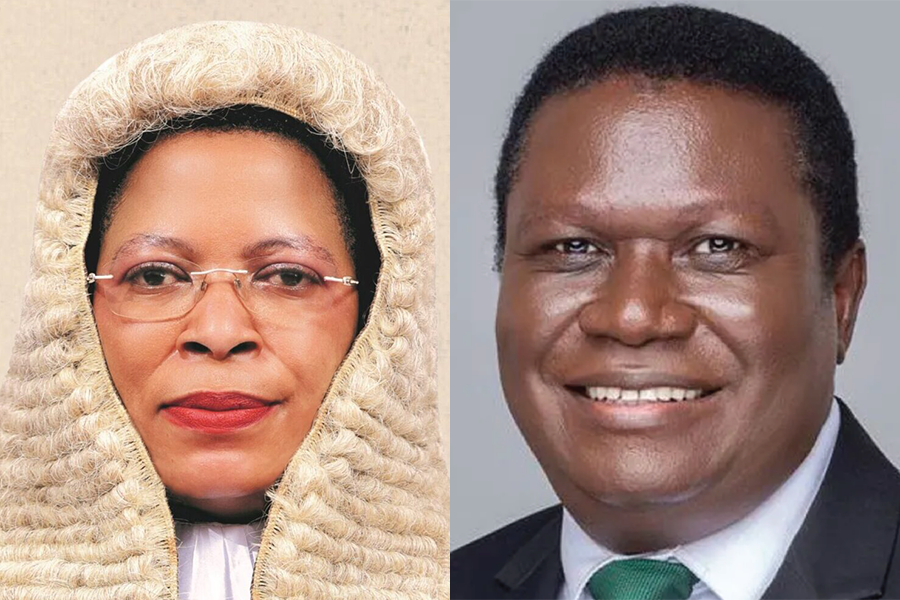
The race for the Speaker of the 12th Parliament has taken a sharp turn as Minister of Justice and Constitutional Affairs Norbert Mao publicly fired back at Speaker Anita Among, responding to her remarks about political cooperation and boundaries.
Mao’s remarks, delivered in a metaphorical tone, framed parliamentary politics as a household, emphasizing authority, hierarchy, and respect. He said, “Only the head of the family has the final word on who can access which room in the home. He doesn’t need lectures from a recently adopted child! Above all, when you insult your father’s visitors, you’ve insulted your father.”
The public exchange comes weeks before MPs are expected to vote for the next Speaker, placing Mao and Among in direct competition for one of Uganda’s most influential parliamentary positions.
The disagreement stems from previous comments by Among, who warned opposition figures engaging in NRM activities to respect limits. Her metaphor about staying in the “compound” rather than entering the “bedroom” was intended to draw boundaries between cooperation and political integration.
Mao’s response, however, turned the metaphor back on Among, portraying her as an outsider attempting to dictate terms within the political household. His language highlighted both defiance and a call for recognition of his legitimacy as a political actor.
Observers note that Mao’s choice of metaphorical framing underscores the personalized nature of Uganda’s politics, where political contests are often expressed through familial and household imagery.
Mao, who recently won the parliamentary seat for Laroo-Pece, is positioning himself as a credible contender for the Speakership, challenging Among, who has held the role since 2022 following the death of former Speaker Jacob Oulanyah.

Among’s rise from the opposition Forum for Democratic Change (FDC) to the ruling NRM, and her eventual election as Speaker, has placed her at the center of parliamentary leadership. Her comments about boundaries were widely interpreted as a warning to political figures like Mao, who are seen as both ambitious and influential within opposition circles cooperating with the NRM.
The contest has been further complicated by a legal challenge to Mao’s parliamentary election. Former NRM candidate Tonny Kitara has petitioned the High Court in Gulu, alleging irregularities including voter bribery and misuse of state resources. The outcome of this case could impact Mao’s eligibility for the Speakership.
Mao’s statement, labeling Among a “recently adopted child,” drew attention for its strong rhetoric, which mixes personal insult with political argumentation, emphasizing respect for hierarchy and established authority.
Political analysts suggest that Mao’s metaphor reflects a broader strategy of asserting dominance while framing Among as overstepping her authority in judging cross-party cooperation.
The exchange has ignited debate among MPs and political commentators, with many noting that the choice of language and imagery is unique, blending family dynamics with political rivalry.
Mao’s rhetoric also underscores his claim to legitimacy, suggesting that his political efforts and alliances deserve recognition without interference or judgment from Among.
Observers have pointed out that this is not the first time personal and familial metaphors have been used in Uganda’s political discourse, where political positioning often mirrors household power dynamics.
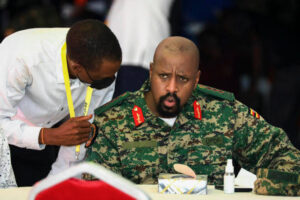
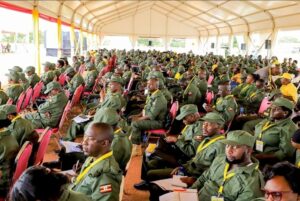
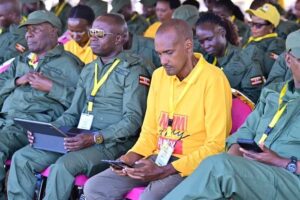
The tensions at Kyankwanzi, where the exchange gained prominence, are symbolic of larger questions about cooperation between the NRM and other parties, including the Democratic Party led by Mao.

Mao’s remarks serve as a rebuke to Among’s earlier statements about keeping opposition figures in the “compound,” signaling that he intends to assert his own influence and challenge the incumbent’s authority.
Political commentators have described the spat as indicative of the high stakes surrounding parliamentary leadership and the lengths candidates will go to assert legitimacy.
Amid these exchanges, questions arise about the role of political etiquette, respect, and boundaries in Uganda’s legislative environment, where metaphor and symbolism are powerful tools of persuasion.
The public nature of Mao’s statement also suggests a strategic calculation: by framing the debate in household terms, he appeals to both party loyalists and undecided MPs who may see him as a strong, principled contender.
As the parliamentary vote approaches, the rivalry between Mao and Among is expected to intensify, with both parties using rhetoric, alliances, and public perception to influence the outcome.
Ultimately, Mao’s declaration reflects a blend of personal pride, political strategy, and metaphorical messaging, positioning him as a contender unwilling to be confined by the boundaries set by his rival.
This high-profile clash highlights the intersection of ambition, respect, and political maneuvering in Uganda’s legislative politics, signaling that the upcoming Speakership contest will be closely watched by both insiders and the public.