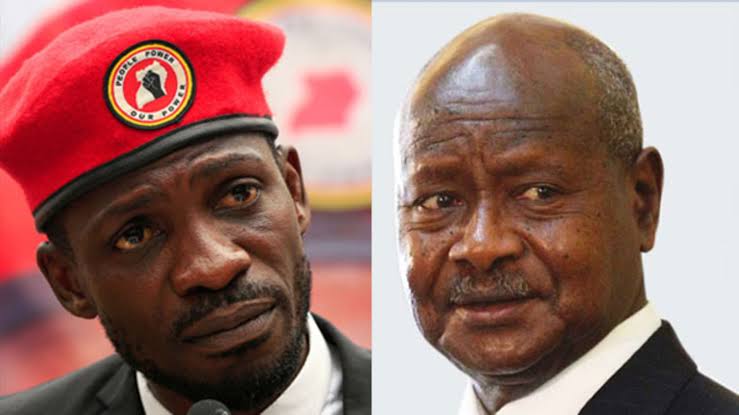
In a statement that continues to stir political discourse across Uganda, opposition leader Bobi Wine has accused President Yoweri Museveni of once again seizing power from the will of the Ugandan people in the most recent presidential election.
Speaking in a social media address, Bobi Wine described the election process as a farce, claiming that it was hijacked at gunpoint and that the true will of the citizens was suppressed by force.
“Two months ago, Museveni yet again usurped the will of the people of Uganda and declared himself president at gunpoint,” Bobi Wine said, referring to the results of the 2026 Ugandan General Election, which saw Museveni claim a sixth term in office.
Despite the official results, which showed Museveni securing 71.65% of the vote, Bobi Wine maintained that the election was fraudulent and that it was not reflective of the true sentiments of the Ugandan electorate.
The National Unity Platform (NUP) leader has long been a vocal critic of Museveni’s leadership, and he believes that the victory claimed by the incumbent president was the result of widespread electoral malpractice, including vote rigging, intimidation, and suppression of opposition voices. According to Bobi Wine, the government used its security apparatus to ensure Museveni’s continued hold on power.
In his statement, Bobi Wine also emphasized his belief that the election results were neither free nor fair. He described the entire process as one where the people of Uganda were denied the opportunity to express their democratic choice.
He pointed to the heavy presence of security forces and the crackdown on opposition figures and supporters as key signs that the election was manipulated.

“One cannot call it an election when the people of Uganda are not allowed to vote freely, when they are intimidated, harassed, and silenced. When the media is restricted, when our people are chased away from polling stations, and when the results are announced before the voting even ends. This is not democracy,” he said.
Following the election, Bobi Wine claims that security forces stormed his residence in an attempt to either arrest him or harm him.
This raid, according to the opposition leader, came just hours after the results were declared, signaling an attempt to intimidate and silence the opposition.
“The security forces raided my home, and I had to go into hiding. I was forced to leave my family behind and seek refuge in the shadows,” Bobi Wine said. He described how his family was also subjected to harassment, with raids conducted on the homes of his colleagues and close associates in an effort to intimidate him and other opposition members.
Despite the pressure and ongoing efforts by the government to capture or silence him, Bobi Wine credited the ordinary Ugandans who stood by him and provided shelter during this time of crisis. He said that it was the support of the people that allowed him to evade capture. “They couldn’t find me because the people of Uganda sheltered me, protected me, and kept me safe,” he added.
Bobi Wine’s comments come as he confirmed that he had temporarily left the country following the events of the election and the aftermath. He stated that his departure was not permanent, but was a strategic decision to allow him to seek international support for the Ugandan cause. Bobi Wine indicated that he would be engaging with global allies to discuss the political situation in Uganda and rally for increased international pressure on the Museveni regime.
“I will be engaging with our friends and allies all over the world. This is temporary. I will return to Uganda and continue the fight for freedom and democracy. The struggle is not over,” he assured his supporters.
As the leader of the opposition, Bobi Wine has long been a symbol of defiance against the Museveni administration, which has been in power for more than 35 years. His bold stance on political freedom, human rights, and democracy has gained him significant support from Ugandans, especially the youth, who have expressed growing frustration with the lack of political change in the country.
Bobi Wine also announced that during his absence, Lina Zedriga Waru, a prominent figure within the National Unity Platform, would assume the role of acting president of the party. This move, Bobi Wine explained, was part of a broader effort to ensure that the NUP remains strong and unified during his time away.
“My absence should not deter the people’s movement. Lina Zedriga Waru will lead the party in the meantime. We remain united, and the struggle continues,” Bobi Wine stated.
Bobi Wine’s comments about his departure were met with mixed reactions, both domestically and internationally. While some see his move as a temporary retreat, others view it as a strategic recalibration for the next phase of the struggle.

His supporters, particularly the youth and grassroots groups, have expressed unwavering support for his mission, calling for peaceful protests and civil disobedience as a means of resisting what they see as an illegitimate regime.
On the other hand, critics of Bobi Wine argue that his departure could be seen as an abandonment of the Ugandan people who continue to face oppression under Museveni’s rule. However, Bobi Wine’s supporters maintain that his international engagement will help bring much-needed attention to the ongoing political crisis in Uganda and garner support for future efforts to remove Museveni from power.
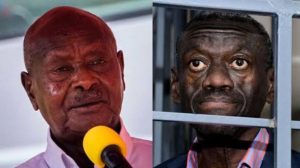
The Museveni administration, meanwhile, has maintained that the election was fair and transparent. In a recent statement, Museveni’s office dismissed Bobi Wine’s claims of election rigging, calling them baseless and politically motivated. The president has continued to assert that the Ugandan people overwhelmingly support him, pointing to his victory as evidence of his popularity.
Nevertheless, the opposition remains adamant that the election was marred by fraud and manipulation. Bobi Wine’s allegations are likely to fuel ongoing tensions between the government and opposition, with both sides preparing for a prolonged political struggle in the coming months.
In his final remarks, Bobi Wine urged his supporters to remain resolute in their fight for a free and democratic Uganda. “The people of Uganda have spoken, and we will not rest until their voices are heard. We will not be silenced. We will continue the fight, no matter the cost,” he declared.
The struggle for democracy in Uganda is far from over, and with Bobi Wine’s continued leadership, both at home and internationally, many believe that the fight for political change in Uganda will only grow stronger.
The international community is closely watching the situation, and the coming weeks and months could prove crucial in shaping the future of Uganda’s political landscape.