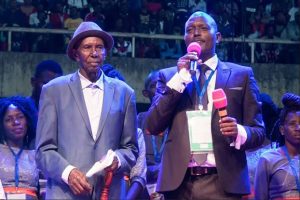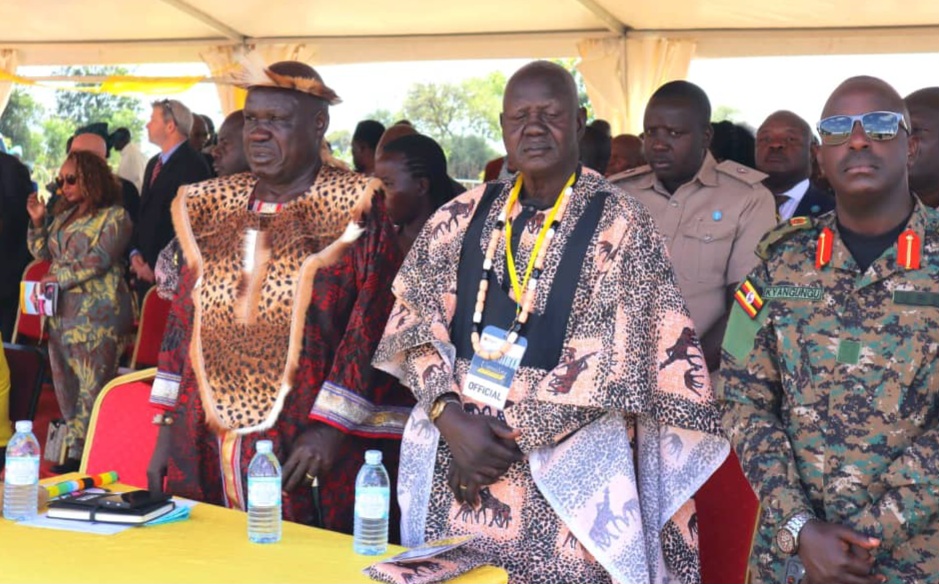
On November 23, 2025, a historic milestone for education, peace, and socio-economic progress was achieved in Karamoja with the official launch of the Karamoja Peace and Technology University (KAPATU) at a vibrant ceremony in Losilang, Kotido. Although President Yoweri Museveni could not personally attend, Prime Minister Emeritus Rt. Hon. Amama Mbabazi conveyed his strong endorsement of the project, highlighting its pivotal role in the region’s development. The ceremony, which featured a mass led by Archbishop Emeritus Rt. Rev. John Baptist Odama, drew thousands of residents, community leaders, and development partners, signifying a collective hope for a brighter future for a region long plagued by conflict and underdevelopment.
In his address, Rt. Hon. Mbabazi emphasized that KAPATU is more than just a university; it represents a vital part of Uganda’s broader vision for national development. He spoke about the university’s alignment with the government’s peace-building and industrialization objectives, noting that KAPATU will serve as a beacon for progress in Karamoja and the surrounding Ateker region. The university’s founding marks a pivotal moment for a region that, despite its abundant natural resources, has struggled for decades with insecurity, poverty, and a lack of educational opportunities.
The establishment of KAPATU comes at a time when Karamoja, despite its wealth of minerals and pastoral potential, has been stunted by conflict and socio-economic stagnation. Local leaders, including Mr. Charles Ichogor, the RDC of Kotido, voiced optimism that the university would be a catalyst for change in the region. By focusing on peace education, modern technology, and community resilience, KAPATU aims to equip young people with the skills necessary to rebuild their communities and break the cycle of violence that has long defined the area.
Bishop Dominic Eibu of Kotido Catholic Diocese, who will serve as the proposed president of KAPATU, described the university as a vital tool for regional transformation. He spoke passionately about the importance of providing youth with access to education that emphasizes peace, technology, and human rights. KAPATU is designed to not only create skilled graduates but also to promote the rehabilitation and reintegration of former warriors and communities affected by conflict. Rev. Fr. Prof. Callisto Locheng, the Vice Chancellor-designate, echoed these sentiments, commending the government’s support and underscoring the collaborative efforts that have made the university’s launch a reality.
Local MPs, such as Hon. Loki Peter Abrahams, also expressed their full support for the initiative, viewing KAPATU as a solution to the region’s chronic unemployment and lack of opportunities for higher education. He highlighted how the university will play a central role in government programs like the Parish Development Model and will help address the emerging challenges in Karamoja. In a remarkable gesture of reconciliation, Hon. Abrahams shared that President Museveni had recently indicated a willingness to pardon 900 Karacunas—youth involved in cattle rustling—offering them a chance to reintegrate into society through education and constructive engagement.
The arrival of KAPATU has been welcomed by many as the long-awaited answer to the region’s educational needs. Historically, students from Karamoja have been forced to travel long distances to central Uganda to pursue higher education, often facing financial and social barriers. With the launch of KAPATU, the region’s youth now have access to quality education on their doorstep, bringing hope for a future where they can thrive without leaving their communities behind. Hon. Lokii John Baptist, the NRM vice-chairperson for Karamoja, called the university’s unveiling historic, marking the first time the region has had a public university of its own.
For local leaders like Kotido District Chairperson Lote Paul, the university represents a significant leap forward. He spoke of KAPATU as a “beacon of hope” that will not only offer new educational opportunities but also help address the root causes of conflict in Karamoja, particularly cattle rustling. Lote acknowledged the immense support of international partners, including the Ethiopian government, and emphasized that the university’s potential to foster peace and development in the region is immeasurable.
The university’s vision extends beyond academic excellence; it integrates peace-building, human rights, and technological innovation to create a holistic platform for social change. KAPATU is designed to empower marginalized groups such as women, former warriors, and vulnerable households, providing them with the tools to become active participants in the region’s growth. Experts believe that KAPATU’s focus on blending technical education with peace studies will address many of the underlying issues that have fueled conflict in the region, offering new paths for both individual and community-level transformation.
With over $200 million already committed to the KAPATU ERUPE Presidential Initiative—an ambitious project to bring water from Lake Bisina to Karamoja—the university is poised to play a central role in the region’s development. As Rev. Dr. Mugisha Kagume of the National Council for Higher Education confirmed, the university has already received the necessary permissions to begin infrastructure development, and its formal licensing process is underway. As KAPATU takes its first steps into the future, it stands as a powerful symbol of hope, innovation, and the enduring belief that education can transform even the most challenging of circumstances.