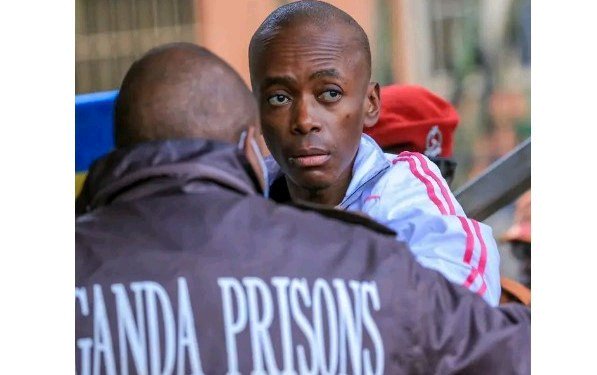
The trial surrounding Christopher Okello Onyum continues to unfold with intense public attention, as new testimony sheds more light on what happened immediately after the tragic incident in Ggaba. The case remains one of the most talked-about in the country due to the shocking nature of the accusations.
At the center of the case is the heartbreaking incident at Ggaba Early Childhood Development Program, where four young children lost their lives. The tragedy has left families devastated and raised deep concerns about safety in places meant to protect children.
In court, a key witness, Detective Assistant Superintendent of Police James Eserait, gave a detailed account of his first encounter with the accused. Eserait, who is attached to Kabalagala Police Station, told the court that he was the first officer to arrive at the scene.
According to his testimony, he found Christopher Okello Onyum still at the location when he arrived. This initial interaction has now become a crucial part of the prosecution’s case.
Eserait revealed that during their first conversation, the suspect allegedly admitted responsibility for the act. He told the court that the accused claimed he had been driven by a desire for wealth.

The detective further explained that the suspect said the act had not been spontaneous. Instead, he allegedly spent time planning before carrying it out.
One of the most disturbing revelations in court was about the weapons involved. Eserait testified that the accused admitted to purchasing several knives before the incident.
These items, according to the detective, were allegedly used during the commission of the crime. This detail has strengthened claims that the act may have been premeditated.
The court also heard that the accused later showed signs of regret. Eserait said that during their exchange, Okello expressed sorrow for what had happened.
In his testimony, the detective quoted the accused as acknowledging the consequences of his actions. He reportedly said he understood that he could either face imprisonment or be attacked by the public.
One striking detail from the testimony was the claim that the accused contacted police himself. According to Eserait, Okello said he called the emergency line 112.

He allegedly made this call after noticing an angry crowd gathering at the scene. The fear of being attacked by residents appears to have influenced this decision.
The detective told the court that the accused explained he became afraid when he saw people approaching. This moment, according to the testimony, came shortly after the incident.
Beyond the immediate events, the case has drawn national attention and sparked wider discussions. Many Ugandans are closely following the proceedings as more details continue to emerge.
Following public concern, Yoweri Museveni directed that the trial be conducted openly. This decision was aimed at ensuring transparency and allowing the public to witness the justice process.
As a result, hearings are taking place at Ggaba Community Church grounds. The location has attracted large crowds of residents, officials, and media.
Despite the serious accusations, the accused has pleaded not guilty. This has made the trial even more significant, as both sides present their arguments in detail.

Additional reports presented in court have touched on the accused’s health and personal history. These include claims related to mental health and other medical conditions.
Some testimonies have also attempted to describe his past behavior, with different individuals giving varying accounts of his character.
The combination of confessions, forensic evidence, and witness statements is shaping a complex case. Each new testimony adds another layer to the ongoing proceedings.
As the trial continues, the country remains watchful. Many hope that the court process will provide clarity, accountability, and justice for the victims and their families.