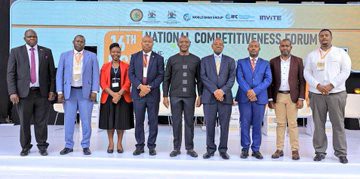
Uganda is ramping up efforts in value addition, industrial competitiveness, and agro-processing as part of its strategy for economic growth and regional integration, officials said at the 16th National Competitiveness Forum (NCF) held at Golf Course Hotel, Kampala.
Hon. Amos Lugoloobi, Minister of State for Finance (Planning), stressed that exporting raw materials without processing is no longer sustainable. “Investing in value addition is no longer optional,” he said. “We must improve high-quality processing, standardization, and packaging for food and feeds to ensure our products can compete in regional markets.”
Despite progress under the Tenfold Growth Strategy, Lugoloobi noted that Uganda still lacks adequate capacity to produce high-quality processed foods and animal premixes, resulting in continued import dependence. He called for strategic discussions to identify gaps and enhance sector competitiveness.
The government is also prioritizing market intelligence and export facilitation to help the private sector navigate demand patterns, trade routes, regulatory updates, and competition. As part of this, Uganda recently launched the Economic and Commercial Diplomacy (ECD) Strategy, leveraging foreign missions to attract investment, promote exports, and boost tourism.
Significant funding has been secured to strengthen industrial competitiveness, including a USD 96 million loan under the INVITE Project, a USD 104 million grant, and USD 18 million from a Multi-Donor Trust Fund. These resources aim to enhance exports of manufactured goods and overall competitiveness.
In his keynote address, Mr. Patrick Ocailap, Acting Permanent Secretary and Secretary to the Treasury, highlighted growing African demand for processed foods and animal proteins driven by urbanization and rising incomes. He encouraged Uganda to utilize locally available raw materials such as maize, soybeans, sunflower, cassava, and fish meal to produce high-quality, affordable animal feeds.
Uganda currently exports 58% of its products to African markets, with a large portion of animal feed heading to the region. The African Continental Free Trade Area (AfCFTA) offers further opportunities, providing access to 1.4 billion consumers with a combined GDP exceeding USD 3 trillion.
The Parish Development Model (PDM) continues to support grassroots production, with UGX 3.209 trillion disbursed to over 3.25 million beneficiaries in sectors including coffee, poultry, piggery, maize, beef cattle, bananas, goats, and cassava. These programs create linkages with smallholder farmers and pave the way for value addition.
To boost financing for agro-industrial businesses, the INVITE Trust recently received USD 46.9 million from the World Bank’s International Development Association. The Trust will provide working capital loans, credit guarantees, invoice discounting, and patient capital, enabling businesses to access affordable funds below market rates.
Uganda’s manufacturing sector shows strong potential: food processing accounts for 40% of manufactured products, with 40% of processed foods exported across Africa. The global animal feed market, projected to reach USD 816.8 billion by 2030, presents an opportunity for Uganda to fill regional gaps and promote import substitution.
Through these measures, Uganda aims to strengthen its industrial base, boost regional competitiveness, and create a sustainable growth path for agro-processing and value addition over the next decade.