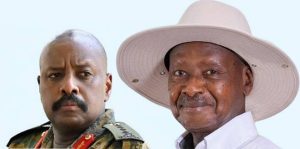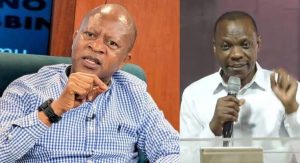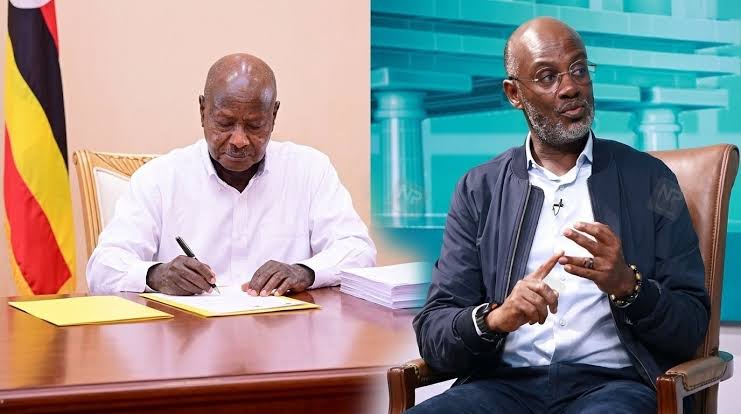
Yoweri Museveni has intensified his war of words with outspoken political commentator Andrew Mwenda in a fiery statement that has sent shockwaves through Uganda’s political landscape. The president accused Mwenda of spreading negativity, sabotaging national projects, and misleading the public about Uganda’s economic transformation agenda.
In one of his strongest public criticisms yet, Museveni described Mwenda and people like him as “do-nothingers” who spend their time making noise and attacking government programs instead of contributing meaningful solutions to the country’s development.
The Ugandan leader accused Mwenda of constantly portraying government-backed projects as failures while ignoring the long-term benefits of industrialization and economic independence. According to Museveni, critics who oppose such initiatives are helping maintain Africa’s dependence on foreign economies.
Museveni further alleged that some individuals deliberately discourage local innovation and investment because they are tied to what he described as neo-colonial interests. In his view, these critics fear seeing Uganda become economically self-sufficient and industrialized.

The president did not hide his anger as he accused Mwenda of acting like a foreign agent whose mission is to undermine Uganda’s progress. He declared that he would never be intimidated or diverted by critics whom he believes do not genuinely care about the country’s transformation.
According to Museveni, Uganda’s future depends on value addition, manufacturing, and industrial growth rather than remaining trapped in the export of cheap raw materials to wealthier nations.
He argued that many critics only focus on temporary setbacks within government projects while deliberately ignoring the larger economic vision behind those investments. To Museveni, development requires patience, persistence, and strategic planning.
The president pointed to several sectors that he says have experienced major growth under his leadership, including coffee, dairy farming, steel production, mineral processing, and agro-industrialization.
Museveni insisted that despite constant criticism, Uganda has continued registering economic progress and attracting investment in areas once considered impossible for local industries.

He also accused intellectual elites and media commentators of sometimes discouraging innovation simply because they lack understanding of long-term national planning. According to him, doubters often ridicule projects before eventually benefiting from their success.
The president particularly defended state-supported industrial ventures, arguing that every developed country once invested heavily in strategic sectors before achieving economic stability.
Observers believe Museveni’s latest remarks reflect growing frustration within government circles over increasing criticism targeting major national projects and economic programs.
Political analysts say the conflict between Museveni and Mwenda is no longer just personal but ideological, centered around competing views on governance, economic priorities, and state involvement in development.
The president maintained that Uganda cannot afford to follow voices that constantly preach failure and pessimism. He argued that patriotism requires citizens to support national transformation efforts even when challenges arise.
Museveni further suggested that some critics only emerge publicly when there is an opportunity to attack government programs but rarely offer practical alternatives capable of improving people’s lives.
The confrontation has generated mixed reactions among Ugandans. Supporters of the president praised him for aggressively defending local industries and confronting what they describe as elitist criticism against national projects.

Critics, however, warned that branding dissenting voices as traitors or foreign agents risks weakening democratic debate and discouraging accountability within government systems.
Despite the controversy, Museveni remained firm in his belief that Uganda is moving in the right direction economically and that future generations will appreciate the industrial groundwork being laid today.
Many observers noted that the president’s language reflected the revolutionary tone that has long defined his political career, especially when confronting critics whom he believes threaten his vision for Uganda.
As the public exchange continues dominating political discussions, the feud between Museveni and Andrew Mwenda has evolved into a major national debate about patriotism, economic transformation, criticism, and the future direction of Uganda’s development path.