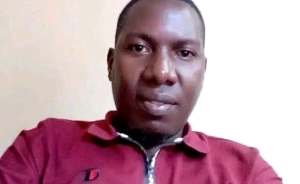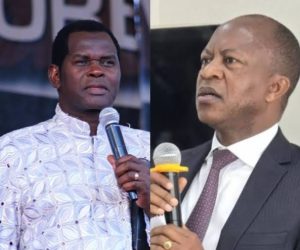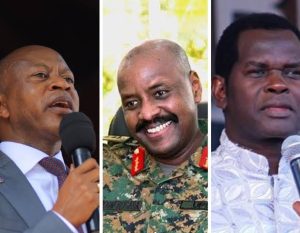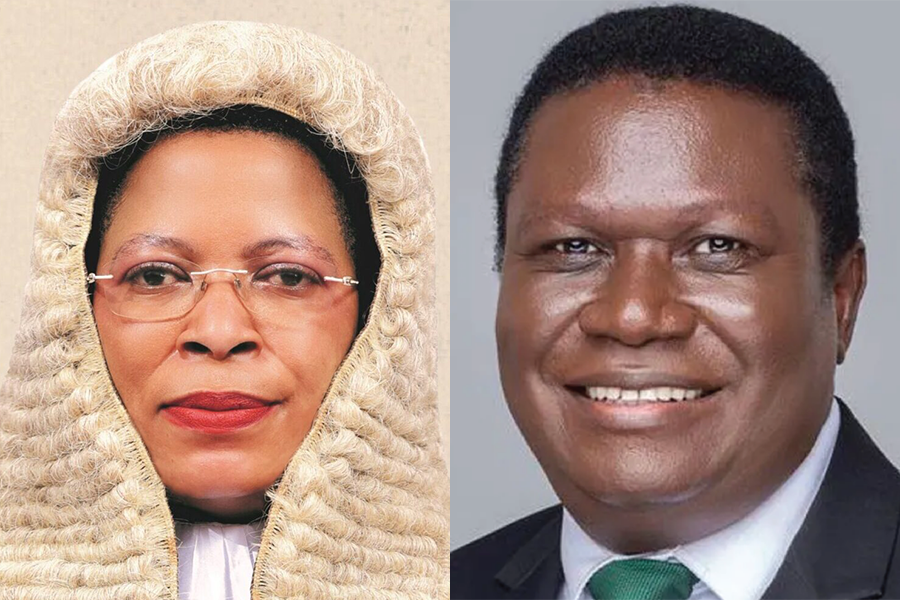
Former legislator and outspoken political commentator Odonga Otto has stirred fresh political debate after making a controversial comparison while discussing Democratic Party president Norbert Mao’s chances in the race for Speaker of Parliament. Otto dismissed Mao’s prospects in dramatic fashion, saying they were “almost like someone saying the chances of Full Figure becoming Miss Uganda.”
The remarks quickly spread across political circles and social media platforms, drawing mixed reactions from supporters and critics alike. While some people viewed the statement as a blunt assessment of political reality, others condemned it as unnecessarily provocative and disrespectful.
Otto made the comments during a political discussion surrounding the highly contested speakership race that eventually saw Jacob Marksons Oboth Oboth emerge victorious with a landslide win. According to Otto, Mao entered the race with very little numerical backing and stood almost no realistic chance against the ruling party’s preferred candidate.
He argued that Uganda’s parliamentary politics are heavily influenced by party strength and voting blocs, making it extremely difficult for opposition or smaller party candidates to overcome the dominance of the ruling National Resistance Movement in major parliamentary contests.

Otto claimed that despite Mao’s experience and long-standing political career, the Democratic Party leader lacked the parliamentary numbers needed to mount a serious challenge. He suggested that the race was practically decided before voting even began.
The former MP further stated that many lawmakers had already aligned themselves with the ruling establishment long before the official sitting at Kololo Ceremonial Grounds. In his view, the outcome merely reflected political arithmetic rather than individual capability.
Mao, one of Uganda’s most recognizable opposition figures, joined the race alongside National Unity Platform candidate Paul Mwiru and NRM-backed Jacob Oboth Oboth. However, the final results revealed a huge gap between the candidates.
Oboth Oboth secured 441 votes to claim the powerful office of Speaker, while Paul Mwiru obtained 60 votes. Mao finished with only 15 votes, a result that many analysts interpreted as evidence of DP’s weakened influence within Parliament.
Otto’s comparison involving presidential adviser and socialite Full Figure immediately became one of the most talked-about political soundbites following the election. Supporters of Otto described the statement as humorous political criticism, while opponents accused him of crossing the line.
Several political commentators argued that Otto’s remarks reflected the increasingly theatrical nature of Ugandan political discourse, where sharp analogies and sensational statements are often used to attract public attention and dominate headlines.

Others noted that the comment exposed deeper tensions within opposition politics, particularly concerning strategy, alliances, and relevance in a Parliament where the ruling party continues to command overwhelming numbers.
Some Democratic Party supporters defended Mao, insisting that his participation in the race was about representing democratic values and offering an alternative voice, even if victory appeared unlikely from the start.
Mao himself has long positioned himself as a leader focused on dialogue, constitutionalism, and institution-building, often taking political positions that differ from more confrontational opposition figures. His critics, however, frequently accuse him of being too conciliatory toward the government.
The speakership election was attended by President Yoweri Museveni and presided over by Chief Justice Flavian Zeija, underscoring the constitutional significance of the event and the high political stakes involved.
Political observers say the massive margin in Oboth Oboth’s victory highlighted the continued strength of the National Resistance Movement within Parliament, where party loyalty and organizational discipline remain decisive factors.
Otto’s comments have also reignited discussions about the role of smaller opposition parties in Uganda’s political landscape, with many questioning whether they still possess the influence they once enjoyed decades ago.

At the same time, others believe the remarks overshadowed important conversations about leadership, parliamentary independence, and the expectations Ugandans have for the new Speaker and the 12th Parliament.
Despite the backlash and controversy surrounding his statement, Odonga Otto remains known for his blunt political style and willingness to make explosive public remarks, traits that have kept him relevant in Uganda’s political debates even after leaving Parliament.
Meanwhile, Oboth Oboth now assumes one of the most influential offices in the country, tasked with guiding parliamentary business, maintaining order in the House, and balancing the interests of government and opposition lawmakers.
As reactions continue pouring in, Otto’s controversial analogy has once again demonstrated how political commentary in Uganda can rapidly become a national talking point, especially during moments of major political transition.