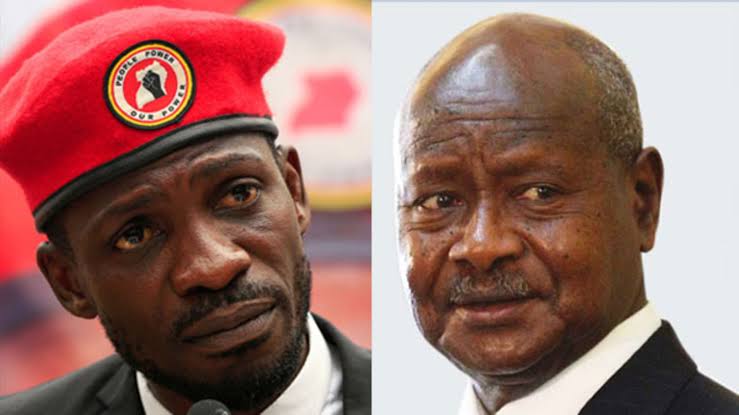
President Yoweri Museveni, one of Africa’s longest-serving leaders, has shifted his focus from the issue of leadership overstaying in power to what he believes is the current crisis facing the continent: a widespread culture of complacency and lethargy.
For decades, Museveni, who has ruled Uganda since 1986, frequently pointed to the problem of African leaders overstaying in power as the root cause of the continent’s stagnation.
But now, as he reflects on his 40 years in office, Museveni argues that Africa’s true challenge is the widespread “sleeping” of its people.
His comments came during the launch of the Kisumu–Malaba Standard Gauge Railway (SGR) Phase 2C in Kenya, where Museveni joined his Kenyan counterpart, President William Ruto. The launch marks a significant step in the development of East Africa’s regional railway network, which spans Mombasa, Nairobi, Naivasha, Kisumu, Malaba, and eventually connects to Uganda’s capital, Kampala.
This infrastructure project is expected to bolster trade connectivity among East African countries and improve access to the Port of Mombasa. However, Museveni’s remarks on Africa’s “sleeping” problem quickly stole the spotlight.
The 81-year-old Ugandan president acknowledged that while Africa has immense resources, including economic potential and human capital, it has been slow to tap into these advantages due to widespread complacency.

“The problem with Africa is sleeping. We love sleeping, but we are slowly waking up,” Museveni stated, emphasizing the need for Africans to shake off this lethargy and actively engage with the challenges of the modern world.
This shift in focus from the overstaying leadership problem comes at a time when Museveni himself has surpassed four decades in power.
His long tenure has drawn both admiration from his supporters and significant criticism from detractors who argue that his leadership has contributed to the political and economic stagnation of Uganda.
For Museveni to pivot from highlighting leadership longevity to the issue of Africa’s collective inertia might seem ironic to many, given his own position as one of Africa’s most enduring presidents.
During his speech at the Kisumu event, Museveni praised the ongoing SGR project, highlighting how it would enhance regional connectivity and facilitate trade within East Africa. The project’s Phase 2C, which stretches 107 kilometers from Kisumu to the Ugandan border, is expected to significantly boost trade between Uganda, Kenya, Rwanda, Burundi, South Sudan, and the Democratic Republic of the Congo.
Museveni emphasized the importance of reducing transport costs, electricity prices, and improving financing in order to make African goods more competitive in the global market.
“History will say my grandmother was also here when Africa was waking up,” Museveni said, trying to frame the railway project as a pivotal moment in the awakening of Africa’s potential.
His rhetoric portrays the SGR project as part of a broader movement toward regional cooperation and development that will resonate for generations to come.
However, his shift from focusing on leadership overstaying to emphasizing Africa’s “sleeping” problem is a surprising change in tone. For many years, Museveni had diagnosed Africa’s problems as rooted in the fact that too many leaders were clinging to power for too long, preventing economic progress and political freedom.
This was particularly true in the 1990s and early 2000s when Museveni spoke out against presidents who overstayed their mandates, such as Zaire’s Mobutu Sese Seko and others in Africa. But now, he seems to have resigned to the fact that the problem may be deeper than just leadership; it is about the mentality of the people themselves.
By labeling the problem as “sleeping,” Museveni hints that Africans, as a collective, have been inactive or passive in confronting their economic challenges. “We love sleeping,” he noted, implying that Africa’s historical challenges of underdevelopment and poverty can partly be attributed to a lack of urgency and action on the part of its people. His message seems to be one of self-reflection, urging Africans to rouse themselves from complacency and begin making active efforts to address their own issues.
While some may interpret this as a profound insight into Africa’s current predicament, others may see it as a deflection from deeper issues that still persist across the continent. Museveni’s comments could be viewed as an indirect commentary on his own leadership style, with critics suggesting that his long tenure may have contributed to a broader political culture of passivity and lack of accountability.
For them, Museveni’s shift in focus from overstaying leaders to “sleeping” is a way of sidestepping the fact that his own presidency has been marked by increasingly authoritarian rule and political repression.
Kenyan President William Ruto, who joined Museveni at the Kisumu event, appeared to agree with his Ugandan counterpart’s assessment of Africa’s problems. Ruto remarked, “We in Kenya woke up a long time ago. We still have a few who are still asleep, and we have told them to stop sleeping.” This statement suggests that while some African nations have made strides in improving their economies and political systems, there are still leaders and populations who are not fully engaged in the pursuit of development and reform.
Despite Museveni’s own long tenure, he has often portrayed himself as someone who works tirelessly, emphasizing his dedication to Uganda’s development. He has frequently claimed that he is poorly paid and has missed work only once in his 40 years as president, presenting himself as a committed leader.
His focus on hard work contrasts with his mention of “sleeping” as a problem. In this context, his statements about sleeping could be interpreted as a broader call for African leaders and their citizens to step up and actively work toward the continent’s growth and progress.
Museveni’s comments on “sleeping” also come at a time of increasing frustration with his government’s economic policies and alleged corruption. As Africa’s infrastructure projects, including the Kisumu–Malaba railway, move forward, there is concern about the management of funds and whether the economic benefits will reach the people.
Uganda, like many other African nations, faces growing public dissatisfaction due to high levels of poverty, inequality, and perceived mismanagement of resources. In this light, some may see Museveni’s statements as an attempt to divert attention from the more pressing challenges facing Uganda.
The remarks about “sleeping” also raise questions about the role of leadership in Africa’s development. While Museveni may be calling for Africans to wake up, it is important to recognize the significant role that political leadership plays in fostering an environment conducive to growth. In countries where leadership is seen as stagnant or oppressive, it becomes much harder for the populace to engage actively in the national project of development.
As Uganda moves into its next election cycle, with Museveni still in power, the question of leadership remains central to the political discourse. His presidency has been marked by allegations of corruption, human rights abuses, and the stifling of opposition voices.

His remarks about “sleeping” are likely to raise questions about his own leadership and whether the issues he addresses today have been exacerbated by his long rule.
Meanwhile, Museveni’s focus on African complacency could also be a commentary on the state of political opposition in Uganda. While Museveni may be calling for Africans to awaken, his government has been accused of suppressing dissent, making it difficult for genuine political engagement and activism to thrive.
Opposition figures in Uganda have long complained of harassment, imprisonment, and intimidation, which may contribute to the sense of political lethargy that Museveni now identifies.
Despite the optimism in his comments, there is no denying that Museveni’s long reign has coincided with significant challenges for Uganda and many other African countries.
The rhetoric of awakening and the challenge of overcoming complacency must be balanced with an honest assessment of the role that governance plays in shaping the development path of a nation. For Africa to truly wake up, the question may not just be about the people but also about the leaders who guide them.
Museveni’s reflection on “sleeping” offers an intriguing perspective on the challenges facing the continent, but it also raises uncomfortable questions about his leadership. Whether Africa will truly awaken remains to be seen, and much of the continent’s future depends on the willingness of both leaders and citizens to confront their collective challenges.