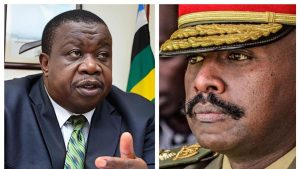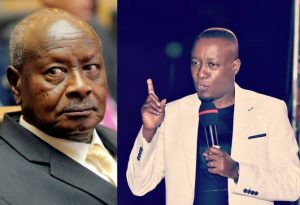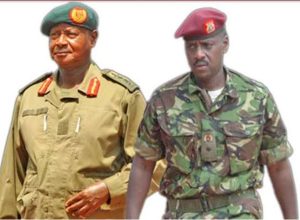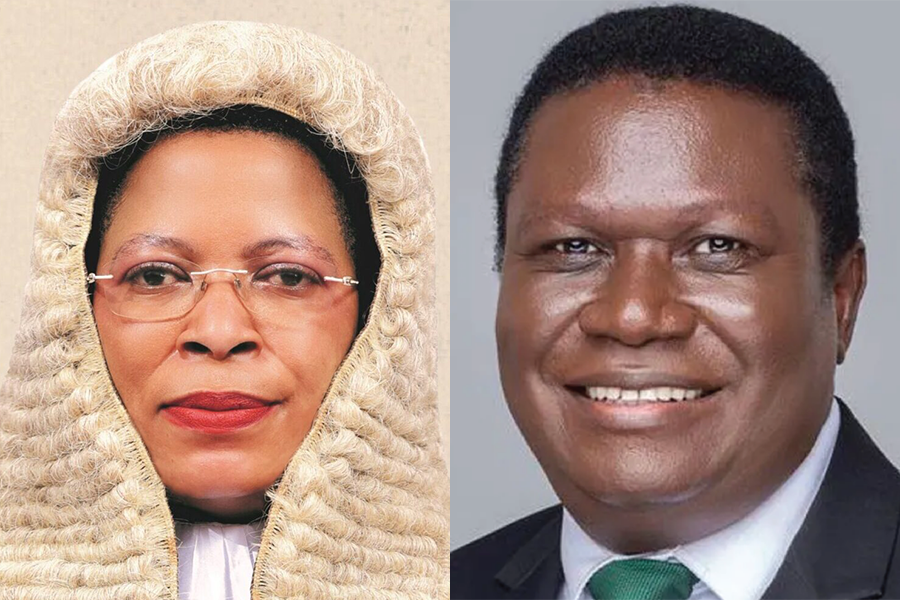
Justice and Constitutional Affairs Minister, Norbert Mao, has reaffirmed his commitment to contesting the Speakership of Uganda’s 12th Parliament, directly addressing circulating claims that he had been pressured to withdraw from the race.
Speaking at a press briefing held at the Democratic Party headquarters in Mengo, Mao emphasized that his bid is rooted in principle, reform, and the desire to make Parliament a more effective and accountable institution.
Mao began by acknowledging the rumors that have swirled around his candidacy, including suggestions that powerful political and military figures were encouraging him to step aside.
He firmly rejected these claims, insisting that no external pressure or influence has shaped his decision to remain in the contest.
“I am still in the race, and I am in it to ensure Parliament truly serves the people,” Mao declared, emphasizing that his decision is guided solely by his commitment to public service, institutional reform, and democratic principles rather than by political expediency or alliances.
He underscored that the Speakership is a crucial office that must be approached with integrity, accountability, and transparency.
Mao argued that Parliament should not be a platform for personal gain or partisan maneuvering, but rather a space where national interests and citizens’ voices guide legislative priorities.

Addressing the perception that his candidacy is influenced by high-ranking figures such as Gen Muhoozi Kainerugaba or Gen Salim Saleh, Mao stressed that his campaign is entirely independent.
He noted that while he maintains personal and professional relationships with a variety of national figures, these associations do not equate to endorsements or political control over his ambitions.
Mao pointed out that his longstanding connections with development and humanitarian initiatives, including the Salim Saleh Foundation for Humanity and the Uganda Development Forum, have often been misinterpreted as political patronage. He clarified that these engagements have always focused on societal development rather than political advancement.
He also addressed questions about attending social or ceremonial events hosted by prominent figures, explaining that such interactions are normal for public figures and should not be politicized. Mao emphasized that attending events like birthdays or community ceremonies does not imply political backing or obligation.
On the matter of his legislative vision, Mao highlighted a comprehensive reform agenda aimed at strengthening Parliament’s credibility and functionality. He proposed modernizing voting processes by introducing electronic voting systems to ensure that MPs’ positions are transparent and accountable.
“Members of Parliament should vote electronically so that their positions are clear and indisputable. This will eliminate tendencies of denying responsibility,” Mao explained, emphasizing the importance of technological modernization in fostering legislative accountability.
Mao further advocated for increased public participation in law-making processes. He suggested that Parliament should actively seek citizens’ input on proposed legislation, thereby bridging the gap between legislators and the people they serve. “Parliament must become a platform where the voices of the people are heard,” he said.
He also proposed translating parliamentary proceedings into local languages to increase accessibility and allow citizens from diverse backgrounds to understand legislative debates and decisions. Mao argued that language inclusivity is critical to fostering an informed electorate.
In addition, Mao recommended increasing the number of parliamentary sitting days to at least 150 annually, noting that extended sessions would enable deeper scrutiny of national issues, improve oversight, and ensure that legislation reflects informed deliberation rather than rushed decision-making.
He emphasized that his platform is principle-driven, aiming to transform Parliament into an institution that upholds democratic norms, accountability, and transparency while addressing the pressing needs of Ugandans.
Mao dismissed any notion that his candidacy is part of political schemes or alliances orchestrated by the ruling National Resistance Movement or other influential figures. He made it clear that his motivations are guided by a desire to reform and strengthen parliamentary processes.

The minister also addressed the competitive nature of the Speakership race, noting that Parliament is expected to attract multiple credible contenders, including incumbent Anita Annet Among and others such as Lydia Wanyoto, Persis Namuganza, Florence Akiiki Asiimwe, and Alion Odria. Mao’s emphasis on reform, however, seeks to distinguish his candidature from others.
Mao expressed concern about declining public trust in legislative processes and argued that leaders must actively demonstrate transparency and accountability to restore confidence in Parliament. He highlighted that leadership should be evaluated on competence, integrity, and service delivery rather than political patronage.
He also stressed that maintaining independence in the Speakership race is crucial to ensuring that decisions and policies enacted in Parliament reflect the interests of the people rather than the directives of powerful individuals or groups.
Mao reiterated that his bid is intended to create a Parliament that is responsive, accessible, and accountable, ensuring that every citizen feels represented in the legislative process.
He concluded by urging Ugandans to judge his candidacy on the merit of his proposals, vision, and commitment to institutional reform, rather than unverified rumors or perceptions of external influence.
Ultimately, Mao’s statement reinforces his position as a reform-focused contender, committed to transforming Parliament into a more transparent, accountable, and citizen-centered institution while navigating the complexities of a highly competitive and politically charged Speakership race.
His firm insistence on remaining in the race, combined with a clear reform agenda, signals a commitment to principle over politics and underscores his determination to ensure that Uganda’s legislative body truly serves the people it represents.