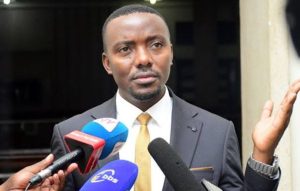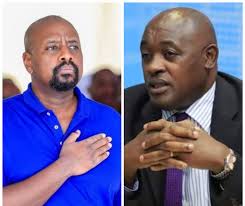
Dr. Chris Baryomunsi, Uganda’s Minister of ICT and National Guidance, has issued a strong public statement in response to personal attacks and insinuations circulating on social media.
The minister’s message, directed indirectly at General Muhoozi Kainerugaba and his critics, underscores his sobriety, focus, and personal discipline.
“My father trained me to believe in myself. He restrained me from taking alcohol. I am sober 24/7 and focused,” Baryomunsi said in a post on his official X account.
The statement also emphasized his personal maturity and self-discipline, attributes he associates with his upbringing and family values.
He continued, asserting that he is free from what some commentators have called “Peter Pan Syndrome,” a term used to describe adults who fail to assume responsibility.
“He let me free, and I don’t suffer from Peter Pan Syndrome,” Baryomunsi said, directly addressing critics who have questioned his maturity or capability.
The post highlights the minister’s pride in his heritage and upbringing. He invoked the resilience and character of the Bakiga people, his ethnic group, as a counterpoint to the criticisms leveled against him. “Those attacking me on Twitter/X don’t know the material we, the original Bakiga, are made of,” he said, blending personal pride with cultural identity.

The statement marks a rare and personal public response from a senior minister, signaling his willingness to defend his integrity and character against both social media attacks and political insinuations.
Observers note that Baryomunsi’s remarks are as much about reaffirming personal discipline as they are about addressing political narratives. By highlighting sobriety and focus, he positions himself as a responsible, committed leader.
The reference to parental guidance underscores the minister’s belief in self-reliance and personal development. Baryomunsi credits his father for instilling confidence, responsibility, and a disciplined approach to life and politics.
Political analysts suggest that Baryomunsi’s emphasis on sobriety and focus is intended to reinforce public confidence in his leadership capabilities, contrasting with the insinuations that undermine his credibility.
The minister’s reference to “Peter Pan Syndrome” appears to address public narratives questioning the maturity of leaders or their readiness for responsibility. By rejecting this label, Baryomunsi asserts his competence and readiness to handle complex governance issues.
Social media, particularly X, has been rife with speculation and commentary on his relationship with senior leadership figures, including Gen Muhoozi. Baryomunsi’s post, however, signals that he will not be easily swayed by online commentary or political rumor-mongering.
The statement also reflects a broader trend in Ugandan politics, where leaders increasingly use social media to address public perceptions, defend their character, and clarify their positions directly to citizens.
Baryomunsi’s invocation of his Bakiga heritage resonates strongly with his constituency and supporters, highlighting values of resilience, hard work, and determination. By framing his response in this context, he taps into cultural pride and community identity.
Analysts note that this public declaration could strengthen Baryomunsi’s political brand, portraying him as principled, disciplined, and unshaken by criticism, while simultaneously reinforcing loyalty to cultural roots and values.
The minister’s statement comes at a time of heightened political scrutiny, where leaders’ personal lives are often examined alongside their professional performance. By addressing these narratives head-on, Baryomunsi controls the narrative and reinforces his own image.

Political Tcommentators have noted that addressing personal attacks publicly is a calculated move, intended to reassure both the public and political allies that he remains steadfast and focused on governance priorities.
Baryomunsi’s emphasis on discipline and focus contrasts sharply with some criticisms of political figures who are accused of indulgence or immaturity. His message is clear: personal integrity and dedication to duty are central to his identity.
The minister’s appeal to critics to “go slow” is both a direct warning and a call for measured judgment. He signals that unwarranted personal attacks are not only unfounded but also counterproductive in evaluating a leader’s effectiveness.
Observers also suggest that the statement reinforces a narrative of generational responsibility, where leaders are expected to demonstrate maturity, personal discipline, and cultural awareness while navigating political challenges.
Social media reactions have been divided. Supporters have applauded Baryomunsi for his candidness, courage, and defense of his character, while critics argue that the post may intensify existing tensions with other political figures.
Ultimately, Baryomunsi’s statement serves as both a personal defense and a public lesson in accountability, maturity, and the importance of cultural identity in shaping political leadership. It underscores that leadership is not just about positions held, but about personal character, discipline, and integrity.
As political analysts continue to dissect the exchange, one thing is clear: Dr. Chris Baryomunsi has firmly asserted that his focus, sobriety, and sense of responsibility define him, and that neither online critics nor political rivals will undermine his reputation or distract him from serving.