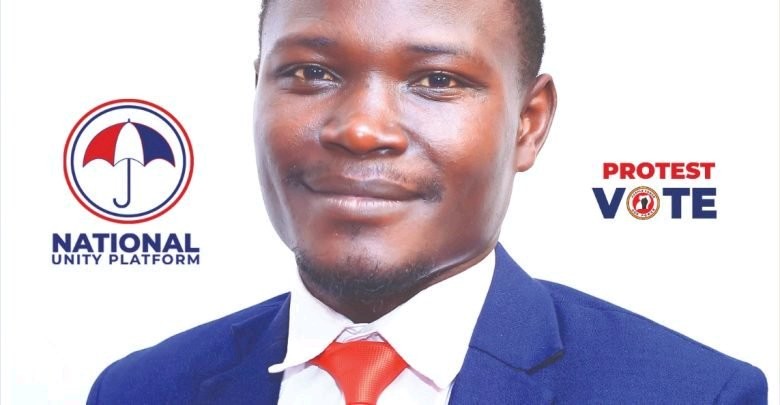
In a dramatic twist ahead of Uganda’s 2026 general elections, the Electoral Commission (EC) has disqualified Christopher Ategeka, the National Unity Platform (NUP) candidate for the Buyanja County parliamentary seat. Ategeka, who had been nominated in October 2025 to challenge the incumbent, Finance Minister Matia Kasaija, was dealt a significant blow when the EC ruled his nomination invalid due to procedural violations. The disqualification marks a setback for the opposition party, which had high hopes of unseating Kasaija in the upcoming elections.
The controversy arose when Ategeka’s nomination papers were challenged on grounds of non-compliance with the Parliamentary Elections Act. The petition alleged that three of the supporters listed on Ategeka’s nomination form were not verified as registered voters in Buyanja County, which led to the subsequent investigation by the EC. Although Ategeka attempted to replace the names with new individuals, the Commission found discrepancies in the signatures and the alterations to the forms. The EC ruled that while the original signatures had not been tampered with, the substitution of names was in violation of the law, rendering his candidacy void.
The Electoral Commission’s decision followed two hearings in late November and early December, where Ategeka defended his actions, asserting that the individuals who had signed the forms had done so in good faith. However, the EC was unconvinced by his explanations, citing the absence of the original signatures on the updated forms as a clear violation of election law. The ruling left no room for compromise, with the EC concluding that Ategeka’s nomination could not stand under the current legal framework.
This disqualification has sparked an uproar among NUP supporters, with party leader and presidential candidate Robert Kyagulanyi, also known as Bobi Wine, fiercely condemning the decision. Kyagulanyi alleged that Ategeka’s disqualification was politically motivated, claiming that the candidate had been offered a bribe of Shs300 million to withdraw from the race in favor of Kasaija. According to Kyagulanyi, Ategeka’s refusal to accept the bribe and his subsequent disqualification seemed like a direct attempt to weaken the opposition’s chances in Buyanja County.
Adding fuel to the fire, Kyagulanyi pointed out that during the hearings, Ategeka had brought the three individuals in question to confirm that they had indeed signed the nomination papers. These individuals allegedly reproduced their signatures in front of the EC Chairperson, raising further doubts about the legitimacy of the decision to disqualify Ategeka. The NUP leader’s claims have sparked a heated debate about the fairness of the electoral process and the influence of political forces on the EC’s decisions.
Ategeka’s disqualification is not an isolated case. Over recent months, several NUP candidates have faced similar setbacks, with the EC invalidating their nominations based on alleged violations of election laws. This growing trend has led the opposition to accuse the Electoral Commission of being biased and acting under the influence of the ruling government. However, the EC has consistently defended its actions, insisting that all decisions are made in strict adherence to the law, regardless of political affiliation.
For the NUP, the loss of Ategeka represents a missed opportunity in what was expected to be a key battleground for the party in the upcoming elections. Buyanja County, a region that has traditionally been a stronghold for the ruling party, was seen as a crucial area for NUP to gain ground in its quest to challenge the dominance of the Uganda People’s Congress (UPC). Now, with Ategeka out of the race, the opposition will have to regroup and find a new candidate to contest the seat.
As Uganda’s political landscape heats up in the run-up to the 2026 elections, the disqualification of key opposition candidates like Ategeka has only intensified concerns about electoral fairness and political freedom. Whether the NUP can overcome these setbacks and mount a strong challenge to the ruling party remains to be seen, but the party’s leaders are determined to continue fighting for what they claim is a fair and democratic process.