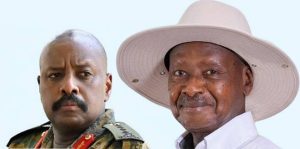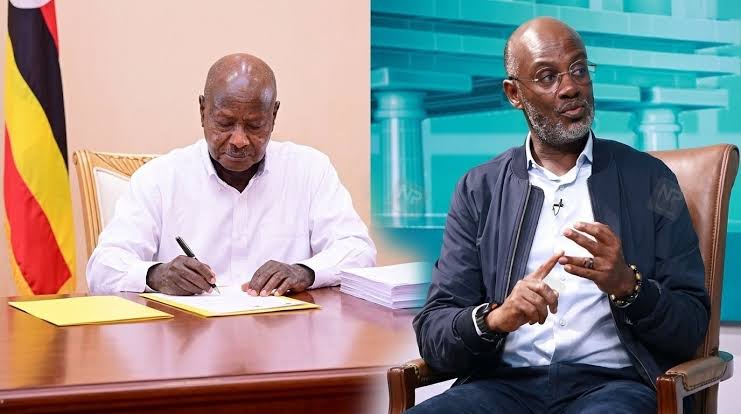
Chief of Defence Forces Muhoozi Kainerugaba has issued a public apology to President Yoweri Museveni following controversial remarks made by journalist and political commentator Andrew Mwenda, stating that the comments were embarrassing, uncharacteristic, and unacceptable.
In his statement, Muhoozi, who also serves as Chairman of the Patriotic League of Uganda (PLU), expressed regret on behalf of the movement and distanced the organization from Mwenda’s remarks directed at the President.
He emphasized that the PLU does not support statements that undermine respect for national leadership and reaffirmed the group’s commitment to unity and discipline within its ranks.
“As Chairman of PLU, I want to sincerely apologize to H.E. the President for the embarrassing, uncharacteristic and wrong words one of our members, Andrew Mwenda, used against you,” Muhoozi stated.

He further clarified that the Patriotic League of Uganda takes internal discipline seriously and will address the matter through its established internal processes.
According to Muhoozi, Mwenda’s remarks do not represent the values or objectives of PLU, which he described as a movement focused on patriotism, national unity, and transformation.
The CDF added that disciplinary action will be taken against Mwenda, signaling that the organization intends to enforce accountability among its members regardless of their status or influence.
“We are going to subject our member to a disciplinary process,” he said, reinforcing the idea that PLU operates under internal rules and standards of conduct.
The statement has attracted widespread attention due to Mwenda’s well-known role as a prominent political analyst and his history of outspoken commentary on governance and leadership in Uganda.
Political observers note that the apology also reflects ongoing efforts by PLU leadership to maintain a close and stable relationship with the administration of President Museveni.
Muhoozi reiterated that the relationship between the National Resistance Movement (NRM) and the Patriotic League of Uganda remains strong and stable despite the incident.
He described the NRM/PLU alliance as an important partnership that continues to support national development, political stability, and youth mobilization across the country.
The remarks have been interpreted by analysts as an attempt to contain political tension and reinforce unity among allied political structures.
Mwenda, who has often publicly commented on government policy and leadership decisions, has in the past generated debate through his critical assessments of political developments.
However, Muhoozi insisted that internal differences or disagreements should not weaken the broader goals of national transformation and unity.
He stressed that PLU remains committed to discipline among its members and will not tolerate conduct that undermines its principles or leadership structure.

The apology also highlights the growing visibility of PLU as a political and mobilization platform closely linked to Uganda’s current leadership dynamics.
Observers say the public statement reflects both a disciplinary message and a political reassurance aimed at strengthening ties within the ruling establishment.
As discussions continue across political circles, the incident has further fueled debate about freedom of expression, political loyalty, and internal accountability within emerging political movements in Uganda.
The situation underscores the sensitive balance between political commentary and organizational discipline in Uganda’s evolving political landscape, where influential figures continue to shape public discourse and national debate.