President Yoweri Museveni has announced a new cabinet for the 2026–2031 term, a political move that has quickly attracted public attention and stirred debate across Uganda’s political and online spaces.
While cabinet reshuffles are not unusual in Ugandan politics, this particular one has gained extra attention because of the personalities involved and the recent history of public exchanges between some of the appointed officials.
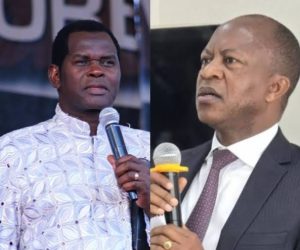
One of the most talked-about appointments is that of Dr Chris Baryomunsi, who has been retained in government and appointed Minister of Health.
His return to such a key docket has surprised some political observers, especially considering the recent tensions he had been involved in with senior figures in the country’s leadership.

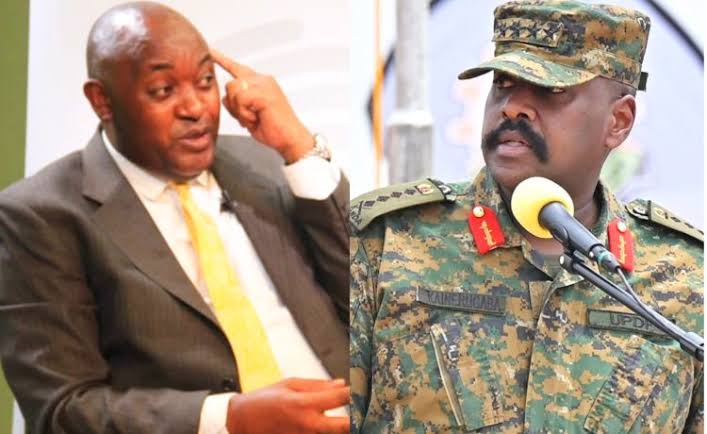
Much of the public discussion has centered on his past online exchange with Chief of Defence Forces Gen Muhoozi Kainerugaba.
The two figures reportedly engaged in a heated verbal confrontation on social media platform X, which later escalated into a wider political talking point among supporters and critics alike.
The disagreement became widely known after Baryomunsi was reported to have described Gen Muhoozi as having “Peter Pan syndrome,” a phrase used to describe an adult who is seen as unwilling to mature or take responsibility.
Although the term is clinical in origin, its use in a political context was widely interpreted as a personal jab rather than a medical observation.
That remark did not go down well with supporters of the General, and it quickly triggered a wave of reactions online. Social media discussions intensified as different political camps weighed in, turning what began as a personal exchange into a national conversation about respect, leadership conduct, and political communication.
In response, Gen Muhoozi reportedly issued strong statements on X, warning that Baryomunsi would face consequences for his comments. He suggested that such remarks about him and his family were unacceptable and indicated that there would be political repercussions.

At one point, Muhoozi is said to have gone further, stating that Baryomunsi should apologise or face consequences, adding that holding a ministerial position did not guarantee protection from accountability in his view. These statements fueled even more public attention, with supporters on both sides amplifying the exchange online.
Against this backdrop of tension, the announcement of the new cabinet by President Museveni came as a surprise to many who had followed the online dispute. Contrary to earlier threats and speculation circulating on social media, Baryomunsi was retained in cabinet and assigned the Health Ministry portfolio.
This outcome was interpreted by some analysts as a sign that presidential decisions on cabinet appointments ultimately override personal disputes or social media disagreements, regardless of how high-profile they become. It also highlighted the separation between online political rhetoric and formal government decision-making processes.
In the same reshuffle, Dr Ruth Aceng, who previously served as Minister of Health, was moved to the Ministry of ICT and National Guidance. The changes reflected a broader reorganisation of key ministries in the new cabinet structure.
The reshuffle also affected several other senior government positions, with new appointments and reassignments aimed at shaping the administration for the coming term. These changes have continued to generate discussion among political commentators about the direction and priorities of the new government lineup.
Adding another layer to the political conversation, individuals associated with Gen Muhoozi’s Patriotic League of Uganda were also appointed to ministerial positions. Figures such as Balaam Barugahara were among those named in the new cabinet, further intensifying public debate about political alliances and influence.
Supporters of the reshuffle have described it as a strategic effort to balance different political interests within government while maintaining stability ahead of the new term. They argue that such appointments reflect the need for inclusion and political cohesion at the highest levels of leadership.

However, critics view the situation differently, arguing that the earlier public confrontation between Gen Muhoozi and Dr Baryomunsi exposed deeper tensions within Uganda’s leadership circles. They suggest that such disputes, when made public, risk undermining the image of unity within government institutions.
Others have focused less on the personalities involved and more on what the reshuffle signals for key sectors such as health, ICT, and national administration. For them, the real question is how effectively the new cabinet will deliver services to citizens.
As the new ministers prepare to assume their roles, attention remains fixed on how past political disagreements will influence working relationships within cabinet. Observers say that while public exchanges may fade from headlines, the dynamics they reveal often continue to shape political interactions behind the scenes.
For now, the spotlight remains on Dr Baryomunsi’s return to the Health Ministry and whether he will focus purely on policy delivery or continue to find himself entangled in political and personal controversies that have increasingly played out in the public domain.