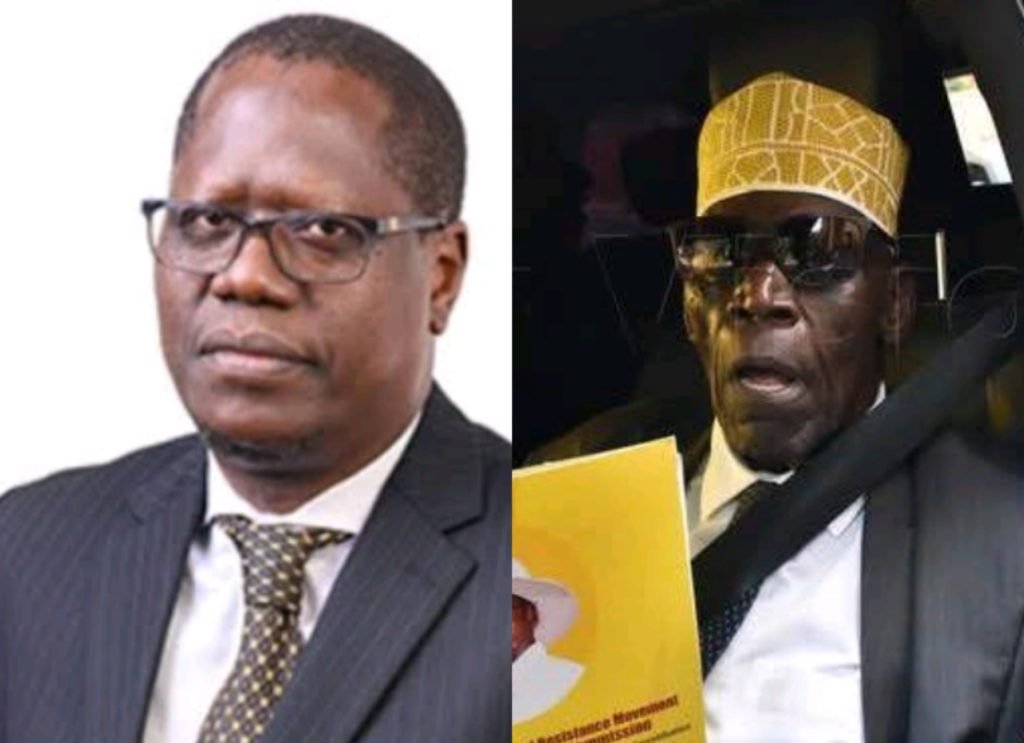
President Yoweri Museveni has appointed Siraji Musa Ali as Minister of State for Works and Transport, marking a major political transition within one of Uganda’s most influential political families. The appointment comes at a time when veteran statesman Moses Ali has officially exited frontline Cabinet leadership after decades of service in government.
Siraji Musa Ali was unveiled as part of Museveni’s newly announced 2026–2031 Cabinet lineup, taking over responsibilities within the influential Works and Transport ministry, one of the government’s most strategic and politically sensitive institutions.
His appointment immediately attracted national attention because it coincided with the omission of Gen Moses Ali from the new Cabinet, effectively ending the veteran politician’s long-running presence at the center of Uganda’s executive leadership.
For decades, Moses Ali stood among the most recognizable and powerful figures in Uganda’s political landscape. He served as First Deputy Prime Minister and Deputy Leader of Government Business in Parliament, making him one of the highest-ranking Muslim leaders within the ruling government.

The veteran politician also remained one of the strongest political voices from the West Nile region and played a major role in shaping political dynamics there for many years under the National Resistance Movement administration.
Before fully integrating into government, Moses Ali led the Uganda National Rescue Front (UNRF), a rebel movement that later reconciled with President Museveni’s administration after years of armed conflict and instability in northern Uganda.
Following reconciliation, Moses Ali became one of the key pillars of the NRM government and was credited with helping stabilize West Nile politics during periods of political uncertainty and post-conflict recovery.
His departure from Cabinet therefore marks the end of a significant political era, considering his long service record stretching across multiple governments and major national transitions.
The rise of Siraji Musa Ali is now being viewed by political observers as part of a carefully managed generational transition designed to maintain the family’s influence within Uganda’s political system, particularly in the West Nile region.
Analysts believe Museveni’s decision reflects a broader strategy of preserving long-standing political alliances while gradually introducing younger leaders connected to influential political families into national leadership structures.

To many supporters of the ruling party, Siraji’s appointment ensures continuity and political stability within West Nile, where the Moses Ali family has remained politically influential for decades.
Critics, however, argue that the appointment further highlights the growing trend of political succession within elite families, where relatives of senior government figures continue inheriting influential leadership positions.
Although Siraji Musa Ali has maintained a relatively lower national profile compared to his father, he has in recent years increased his involvement in regional mobilization activities and National Resistance Movement political structures.
His growing participation in political affairs across West Nile reportedly strengthened his visibility within government circles ahead of the latest Cabinet reshuffle announced by President Museveni.
The Ministry of Works and Transport, where Siraji now serves, remains one of the largest and most politically important ministries in Uganda due to its direct involvement in infrastructure development and national connectivity projects.
The ministry oversees major road construction programs, transport regulation, railway development plans, and implementation of several large-scale infrastructure projects considered central to Uganda’s economic growth agenda.

Siraji Musa Ali’s appointment also places him at the center of ongoing public debates surrounding the controversial Express Penalty System, road safety enforcement, and concerns about transport management across the country.
Political analysts say his performance in the ministry will likely be closely monitored because the Works docket directly affects millions of Ugandans through public transport policies, road expansion programs, and national infrastructure investments.
For many residents in West Nile, the appointment represents both pride and reassurance that the region will continue maintaining strong representation within the highest levels of government despite Moses Ali’s departure from Cabinet.
The transition from father to son therefore symbolizes more than just a Cabinet appointment. It reflects the changing face of Uganda’s political establishment, where younger leaders connected to veteran politicians are increasingly stepping into powerful government positions while preserving long-established political networks.