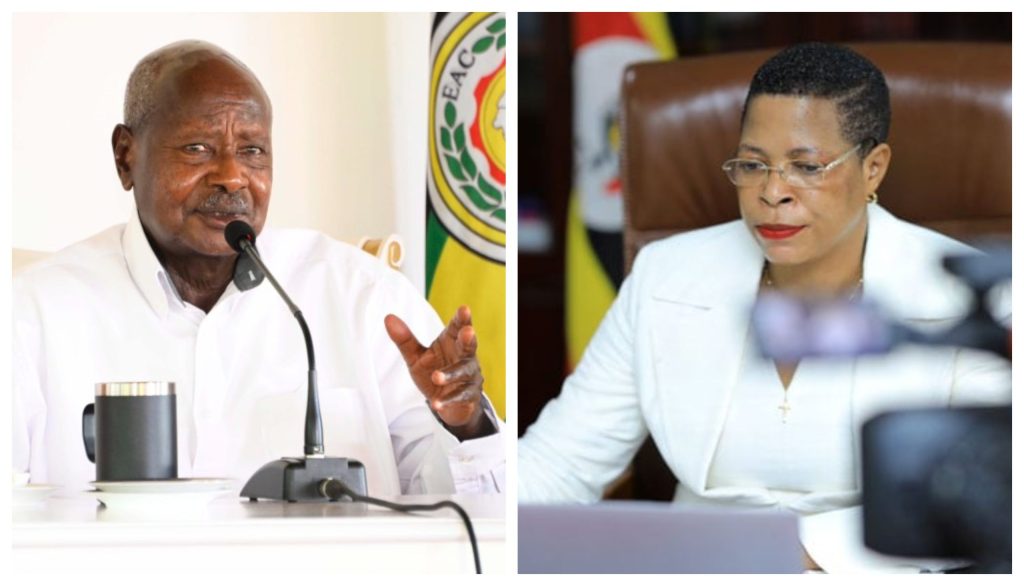
The political atmosphere in Uganda has recently been filled with intense discussions and mixed reactions following emerging allegations about the earnings and influence of the Speaker of Parliament, Anita Among.
While some claims remain unverified, the conversation has quickly captured the attention of citizens, analysts, and political observers across the country.
Reports circulating in political circles suggest that the Speaker could be earning as much as 500 million Ugandan shillings per month.
However, the exact amount has not been officially confirmed, leaving many Ugandans questioning the transparency of salaries and benefits awarded to top parliamentary leaders.
The issue gained more attention after comments made by former Member of Parliament Odonga Otto.
He raised concerns that the real earnings of the Speaker and the Deputy Speaker are not clearly known by the public, despite their powerful positions within government.
According to Otto, the lack of publicly available information about the remuneration of top parliamentary leaders has created a sense of uncertainty.

Many citizens believe that leaders who manage national institutions should operate with complete transparency, especially when public funds are involved.
Beyond the debate about salary, discussions have also focused on the structure through which the Speaker’s benefits are determined. Critics argue that there may be a conflict of interest within the system because those responsible for determining the benefits are closely connected to the parliamentary leadership itself.
In Uganda’s parliamentary system, the Parliamentary Commission plays a major role in determining benefits and administrative structures within Parliament. However, some analysts argue that the Speaker also has influence over the same framework, which has raised questions about accountability.
At the center of these debates is the growing political influence of Anita Among within Parliament and the broader political landscape. Since assuming the role of Speaker, many observers say her authority and visibility have steadily increased.
Some political analysts believe that her leadership style has allowed her to build strong relationships across different political groups. This includes members of the ruling party, opposition politicians, and independent members of Parliament.
Political commentator Anderson Burora previously suggested that after the 2021 general elections, the Speaker began strengthening her political networks within Parliament. According to his claims, the strategy involved building alliances that could support her leadership position in the future.
Such alliances, according to the analyst, may include cooperation across party lines. This approach has reportedly allowed the Speaker to maintain support from a wide range of legislators despite political differences.
Another prominent voice in the debate is political commentator Andrew Mwenda. During a discussion with veteran journalists, he also raised concerns about the growing influence of the Speaker within different institutions.
Mwenda argued that powerful political figures often rely on networks of loyalty and support to strengthen their positions. According to him, such strategies are not unusual in politics but can sometimes raise concerns about concentration of power.
During the same discussion, Mwenda spoke alongside respected media figures Charles Onyango-Obbo and Robert Kabushenga, where they explored how influence and political alliances shape leadership within Uganda’s institutions.
Some of the claims discussed during these conversations suggest that the Speaker has built strong connections across different parts of government. However, many of these allegations remain matters of political opinion rather than proven facts.
Observers say that Anita Among’s political rise has been one of the fastest and most notable developments in Uganda’s recent political history. Within a short period, she has moved from being a relatively lesser-known politician to one of the most powerful figures in the country.

In the hierarchy of Uganda’s leadership, the Speaker of Parliament is widely considered one of the most influential offices. The position is often regarded as the third most powerful role in government after the President and the Vice President.
Because of this level of authority, the actions and decisions of the Speaker are always closely watched by the public and political actors alike. Any debate about the role naturally attracts national attention.
At the same time, internal political competition is beginning to emerge as the next election cycle slowly approaches. Some analysts believe that new alliances and rivalries are forming within the political landscape.
There are also reports suggesting that figures associated with Norbert Mao could be among those interested in influencing the future leadership of Parliament. Such possibilities have added even more tension to the ongoing discussions.
Despite these debates and criticisms, the ruling National Resistance Movement continues to support the current Speaker’s leadership in Parliament. This backing plays a major role in maintaining stability within the institution.
Ultimately, many political observers believe that the future direction of the Speakership may depend heavily on the position of the country’s long-serving president, Yoweri Kaguta Museveni, whose influence within the ruling party and national politics remains extremely strong.
As Uganda moves closer to another political cycle, debates about power, transparency, and leadership in Parliament are likely to continue. For many citizens, these discussions represent a larger question about accountability and the future direction of governance in the country.