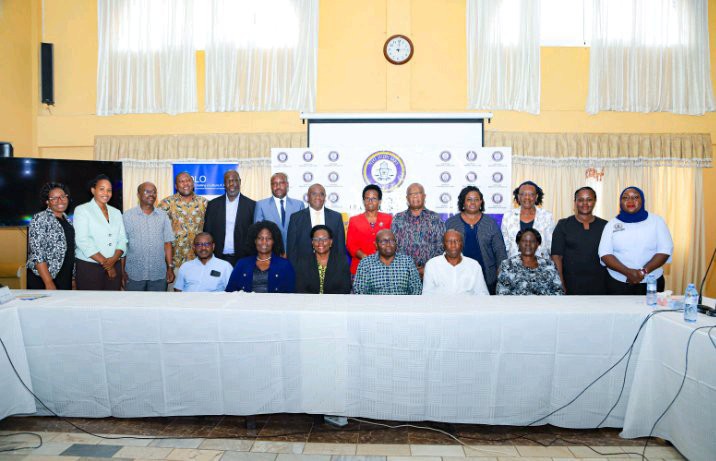
Deputy Chief Justice Dr. Flavian Zeija has called on all Justices of the Court of Appeal and Constitutional Court to take the lead in promoting Alternative Dispute Resolution (ADR) and other judicial innovations aimed at ensuring timely justice delivery.
Dr. Zeija’s message was conveyed by Justice Geoffrey Kiryabwire during the closing of a five-day induction and training program for Court of Appeal Justices, held at the Imperial Golf View Hotel in Entebbe. He reminded his fellow Justices that their duties extend beyond merely correcting judicial errors; they are also responsible for safeguarding legal precedents, interpreting the Constitution, and upholding the rule of law.
“One of the key areas discussed during this induction was the role of Alternative Dispute Resolution in expanding access to justice,” Zeija said. “Courts around the world are shifting toward mechanisms that not only resolve disputes but also repair relationships, maintain partnerships, and reduce litigation costs.”
He emphasized that ADR—including mediation, reconciliation, arbitration, and negotiation—complements the court’s traditional adjudicatory role by offering litigants more participatory, cost-effective, and restorative means of resolving conflicts.
“As appellate Justices and potential mediators, we must encourage the use of mediation in cases before us. Let us take the lead in the ADR movement, inspiring others to embrace these practices, which will help reduce case backlogs,” Zeija added.
In addition, he stressed the importance of Court of Appeal Justices spearheading the implementation of the Electronic Court Case Management Information System (ECCMIS), virtual hearings, and digital filing systems. “Technology boosts not only the speed of work but also enhances the integrity of the judicial process through improved record-keeping, timely access to case files, and better communication with court users,” he concluded.
The induction program, which began on Monday, was organized by the Judiciary Training Institute (JTI) in collaboration with the Uganda Revenue Authority (URA) and the International Development Law Organization.