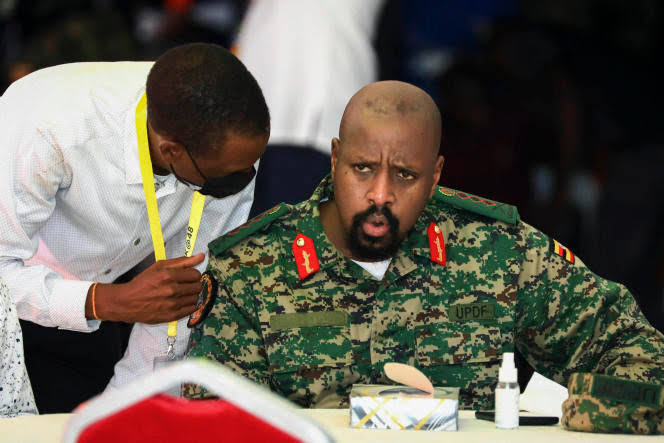
Gen. Muhoozi Kainerugaba, Commander of the Uganda People’s Defence Forces (UPDF) and son of President Yoweri Museveni, has issued a sharp warning to Iran, following recent hostile statements directed at Israel.
Speaking publicly, Gen. Muhoozi made it clear that any rhetoric about harming Israel’s population would not be ignored and could be viewed as a provocation toward Uganda and the African continent as a whole.
He emphasized that threats aimed at “our relatives in Israel” are considered a direct affront, not only to Israelis but also to Africans with familial or historical ties to the region.
The general stated that such provocative language amounts to “looking for trouble” with Africa, signaling that Uganda and other African nations would respond decisively if necessary.
This comes amid a backdrop of escalating tensions in the Middle East, where Iran has long taken a hostile stance toward Israel through both rhetoric and support for proxy groups in the region.
Gen. Muhoozi’s comments represent a notable shift from standard diplomatic language, reflecting Uganda’s firm commitment to defending the dignity and safety of Africans abroad.
Analysts suggest that these remarks highlight African leaders’ growing concern about the potential spillover of Middle Eastern conflicts into Africa.

Uganda, under President Museveni, has maintained strong diplomatic and trade ties with Israel, including in areas such as technology, security cooperation, and military training programs.
Gen. Muhoozi drew attention to the moral and cultural connections between Africans and their relatives in Israel, framing threats against them as threats against the broader African identity.
He stressed that targeting African-linked communities abroad would not be tolerated. “We do not take lightly the targeting of our brothers and sisters anywhere in the world. Africa is watching,” he said.
The statement aligns with Uganda’s historical commitment to defending African interests globally and echoes the Pan-African principle of protecting communities connected by heritage and ancestry.
While maintaining diplomatic relations with many nations, Gen. Muhoozi’s warning signals a firm posture toward countries that engage in hostile rhetoric against allies or communities with African heritage.
Regional experts suggest that Uganda may adjust its foreign policy in response, particularly regarding Iran’s influence in Africa and its support for armed groups in the region.

Uganda has historically played a proactive role in international diplomacy, often mediating conflicts and advocating for African unity in the face of global geopolitical pressures.
By publicly addressing Iran, Gen. Muhoozi reinforces Uganda’s stance that threats to Africans abroad are unacceptable and will be confronted decisively.
His remarks also resonate with the broader African diaspora, who closely monitor developments in the Middle East due to familial, religious, and historical connections.
Observers note that the warning reflects both personal conviction and strategic messaging, highlighting the intersection of leadership, national security, and Pan-African solidarity.
While largely rhetorical, the statement underscores Uganda’s seriousness in protecting communities linked to Africa against external threats.
As tensions persist in the Middle East, Gen. Muhoozi’s declaration serves as a cautionary note to Iran and a reaffirmation of Uganda’s commitment to defending the interests of Africans worldwide.
This strong stance is likely to influence both regional diplomacy and Uganda’s engagement with global partners, particularly in matters concerning African security and solidarity.