A fresh political debate has been ignited following remarks by Norbert Mao regarding power-sharing and political agreements within Uganda’s leadership structure.
His statement has drawn attention to the dynamics between ruling and partner parties.
Mao emphasized that the agreement between his party and the ruling government is not informal but clearly documented in writing.
He stressed that such agreements are meant to guide cooperation and should be respected by all parties involved.
According to Mao, the written agreement even includes provisions that allow for the introduction of various topics, including key leadership positions. This, he argued, creates room for inclusivity and dialogue.
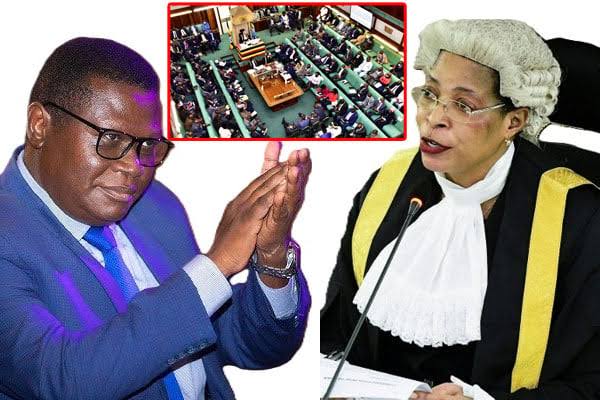
He questioned why it would be considered harmful for the ruling National Resistance Movement to support or consider a candidate from a partner political party for the position of Speaker of Parliament.
Mao’s remarks suggest that political partnerships should go beyond symbolic gestures and extend into meaningful power-sharing arrangements. He believes that such cooperation strengthens democracy.

The idea of a partner party presenting a Speaker candidate has stirred mixed reactions among political observers. Some see it as a progressive step toward inclusive governance.
Others, however, argue that the Speaker position is highly strategic and often closely guarded by the ruling party. This makes Mao’s proposal both bold and controversial.
As leader of the Democratic Party, Mao has consistently advocated for dialogue and collaboration across political divides. His latest statement reinforces that stance.
He maintains that honoring written agreements is essential for building trust in politics. Without trust, he warned, partnerships can quickly break down.
Mao also framed his argument as being in the best interest of Uganda, not just his party. He suggested that inclusivity in leadership can lead to more balanced decision-making.
The position of Speaker of Parliament is one of the most influential roles in Uganda’s governance system. It oversees legislative processes and plays a key role in shaping national policy.
By raising this issue, Mao has brought attention to how such positions are allocated. It has sparked wider conversations about fairness and representation in government.
Some analysts believe his statement is a strategic move to test the strength of the agreement between his party and the ruling establishment. It may also be aimed at gaining political leverage.

At the same time, supporters argue that Mao is simply calling for what was agreed upon. They see his position as a matter of principle rather than politics.
The debate also touches on the broader issue of coalition politics. As alliances become more common, questions about power-sharing are likely to increase.
Critics, however, caution that too much fragmentation in leadership positions could lead to inefficiency. They argue that stability must also be considered.
Despite differing views, Mao remains firm in his argument. He continues to insist that considering a candidate from a partner party does not harm the country in any way.
His comments have also prompted discussions within political circles about the future of partnerships in Uganda. Many are watching closely to see how the ruling party will respond.
The situation highlights the importance of clear agreements and mutual respect in political cooperation. It also shows how leadership decisions can influence public confidence.
As the debate unfolds, Mao’s message remains clear: written agreements matter, and inclusive leadership should not be feared but embraced for the benefit of Uganda.