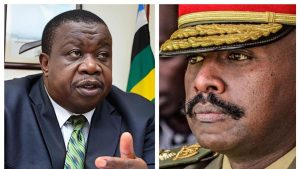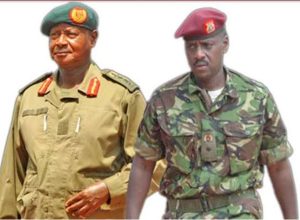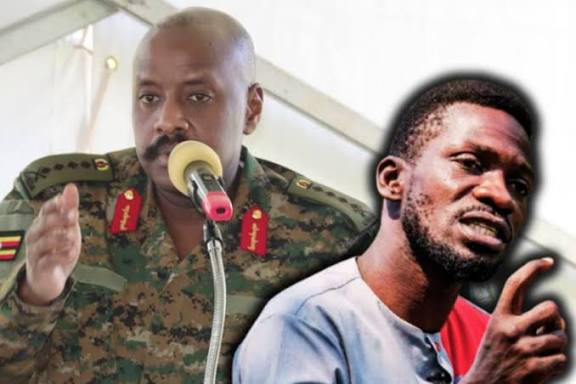
Uganda’s political scene has once again been shaken after a strong statement attributed to General Muhoozi, a senior military figure, claiming that security forces have arrested more than 2,000 people he described as “hooligans.” According to the message, these individuals were allegedly expected to be used for disruptive activities.
The statement, which quickly spread on social media and political platforms, has drawn sharp reactions from different groups across the country. Supporters of the government see it as a sign that security agencies are alert and in control of the situation.
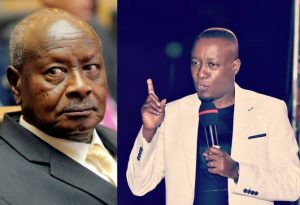
In his words, Gen Muhoozi suggested that these arrests were connected to plans by political actors to cause unrest. He directly linked the situation to “Kabobi,” a name often used by critics and supporters when referring to opposition leader Robert Kyagulanyi, also known as Bobi Wine.
The claim of over 2,000 arrests is significant and has raised questions about the scale of the alleged operation. Many citizens are wondering where the arrests took place and what specific charges the suspects may be facing.
Security-related statements like this usually increase public attention and anxiety. Whenever large numbers of arrests are mentioned, families and communities begin to worry about the safety and rights of those detained.
Government supporters argue that the country must be protected from chaos. They say that if there was a plan to use groups to cause violence, then security forces had a responsibility to act early and prevent possible disorder.

On the other hand, opposition supporters have expressed doubt and concern. They question whether the people arrested were truly involved in criminal plans or if they were ordinary citizens caught up in political tension.
Human rights advocates often emphasize that every arrest should follow the law. They stress that suspects have the right to know the charges against them and to receive fair treatment while in custody.
The use of the word “hooligans” in political language also adds fuel to the debate. Some people feel such terms can be used broadly and may label individuals without proper proof.
Uganda has experienced periods of political tension in the past, especially during election cycles and times of protest. In such moments, strong security messages tend to shape the national mood.
Political analysts note that statements from senior military leaders carry a lot of weight. They can signal the direction security operations may take and influence how both citizens and politicians behave.
At the same time, the opposition has long accused the state of using security forces to silence dissent. These fresh remarks are likely to deepen that mistrust between political sides.

For many ordinary Ugandans, the main concern is stability. People want to go about their daily work, run businesses, and care for their families without fear of violence or unrest.
Religious leaders and civil society groups often call for calm in such situations. They urge both the government and opposition to avoid actions or words that could lead to confrontation.
There is also the issue of information. The public often relies on official statements, but without detailed reports, rumors can spread quickly and create confusion.
International observers sometimes watch such developments closely, especially when they involve large-scale arrests connected to politics. They often focus on whether legal standards are followed.
The coming days may bring more clarity about the arrests. Authorities may release further details, while opposition leaders may respond with their own statements.
Political language can either cool tensions or make them worse. Strong words may energize supporters but also increase fear among others.
In the end, many citizens hope that security, justice, and respect for rights can exist together. Uganda’s stability depends not only on force but also on trust, dialogue, and the rule of law.