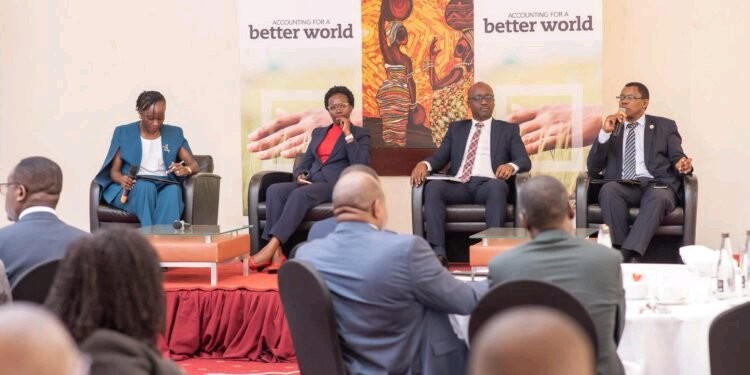
Leaders from Uganda’s corporate, regulatory, and policy sectors gathered recently under the banner of ACCA Uganda for a groundbreaking dialogue on embedding sustainability at the core of business practice. The high-level roundtable, part of ACCA’s global sustainability month, aimed to explore how companies can create lasting value for people, the planet, and profits simultaneously.
Charlotte Kukunda, Country Manager for ACCA Uganda, emphasized that the session sought to shift mindsets among decision-makers. “Sustainability is no longer a side conversation—it is now central to how we measure performance, report impact, and define success,” she said. The forum brought together CEOs, audit firm leaders, government representatives, and international accounting figures to discuss practical ways to integrate sustainability into corporate strategy.
Kukunda explained that sustainability extends far beyond environmental concerns, encompassing social equity, gender balance, partnerships, peace initiatives, and community welfare—all closely aligned with the United Nations’ Sustainable Development Goals. She stressed that long-term value creation requires companies to operate responsibly and ensure that financial success does not come at the expense of societal or environmental health.
The roundtable featured ACCA Global Council President Melanie Proffitt, who urged Ugandan accountants and business leaders to rethink how success is defined. “True sustainability means reorganizing economic activity so that people, communities, and the planet prosper alongside profits. Businesses must create value for all stakeholders, not just shareholders,” she said.
Proffitt highlighted ACCA’s global efforts to equip professionals with sustainability expertise, including a redesigned qualification launched in 2025 that emphasizes ethical decision-making, future-ready skills, and sustainable business practices. She also pointed to the ACCA Professional Sustainability Diploma, a program designed to build advanced competencies in sustainability reporting, assurance, and strategy.
The discussion also tackled Uganda’s readiness to align with international sustainability standards, including IFRS S1 and S2. Derick Nkajja, CEO of the Institute of Certified Public Accountants of Uganda (ICPAU), highlighted ongoing initiatives to close knowledge gaps, providing training for accountants, auditors, project managers, and board members. “The key is to start—whether that’s disclosing your roadmap or embedding sustainability into your operations,” he said.
From a financial sector perspective, Dr. Patricia Ojangole, Managing Director of Uganda Development Bank, called for a holistic approach to sustainability. She cautioned against superficial measures like isolated green projects, emphasizing that businesses must integrate economic, social, and environmental goals into core operations to achieve meaningful impact.
Joseph Ssekabira, Associate Director of Risk Advisory at Deloitte Uganda, warned that “greenwashing” is no longer acceptable. Companies must back every sustainability claim with clear data, linking environmental and social initiatives to strategic outcomes, financial performance, and risk management. He noted that enhanced global standards now provide a framework for comparability, transparency, and accountability in reporting.