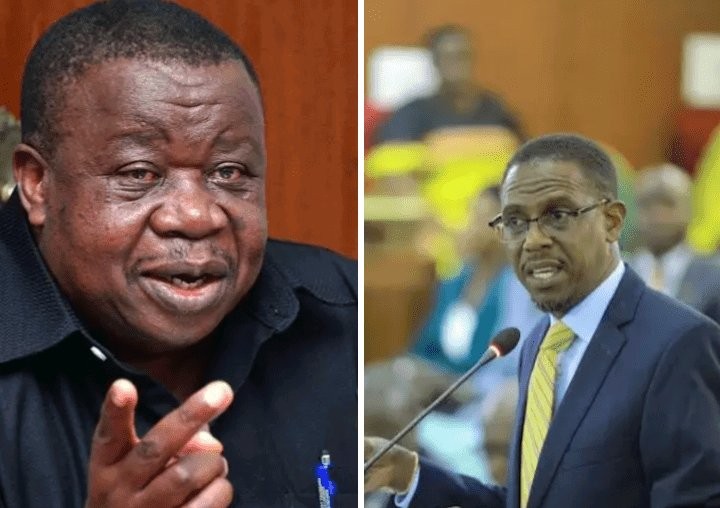
Internal Affairs Minister Maj Gen Kahinda Otafiire has publicly clashed with Attorney General Kiryowa Kiwanuka and junior Agriculture Minister Bright Rwamirama over the ownership of Njeru government stock farm land in Buikwe District, accusing them of misrepresentation and political maneuvering. The land, long coveted by top officials and private interests, has become the center of a heated dispute within the Cabinet.
The confrontation follows a recent presidential directive in which President Museveni ordered the Attorney General to coordinate with the Ministry of Lands to annul all fraudulent land titles on government property in Njeru. The President emphasized that no one would be shielded from scrutiny—including Gen Otafiire himself—and that anyone who benefited from illegal allocations must face the consequences.
Gen Otafiire, however, has firmly rejected claims against his ownership, insisting that he acquired the land legally using personal resources. He described any suggestion that he benefited improperly as “baseless and politically motivated.”
In his remarks, Otafiire directly accused Kiwanuka and Rwamirama of misleading the President and attempting to manipulate the process for their own interests. He characterized their actions as a deliberate effort to challenge his legal claim and tarnish his reputation.
Otafiire did not stop at words. He issued a stern warning that should any attempts be made to cancel his land title, he would pursue the matter through the courts, signaling a potentially high-profile legal showdown between a senior Cabinet member and government institutions.
Observers note that the Njeru land has long been a flashpoint in Uganda’s political and administrative circles, with overlapping claims creating a complicated environment of competing interests. This dispute underscores broader concerns about transparency and governance in the management of public assets.
While neither the Attorney General nor the junior Agriculture Minister has publicly responded to Otafiire’s allegations, sources indicate that legal and administrative reviews are underway, with officials assessing the legitimacy of all existing titles in line with presidential instructions.
The unfolding conflict is being closely watched across the country, as it raises critical questions about accountability, land rights, and the limits of political influence in Uganda. Many analysts suggest that the resolution of this case could set a significant precedent for how contested government land is managed in the future.