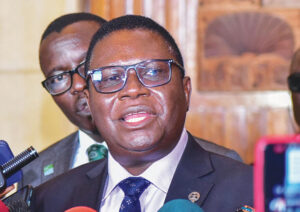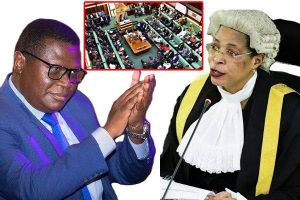
Uganda’s political atmosphere is heating up as competition for the next Speaker of Parliament intensifies ahead of the formation of the 12th Parliament. At the center of the debate is Norbert Mao, who has strongly voiced his expectations for the kind of leadership the country needs.
Mao, who also serves as Minister for Justice and Constitutional Affairs, has made it clear that the next Speaker should be someone focused on service delivery rather than personal enrichment.
Speaking to journalists in Kampala, he emphasized that the Speakership is a position of national importance, not an opportunity for individual financial gain or personal advancement.
His remarks were firm and direct as he warned against leaders who might treat high public office as a way to accumulate wealth instead of serving citizens.
He stated that Uganda needs a Speaker who is committed to making a difference in people’s lives, not one driven by what he described as selfish interests.

According to Mao, leadership in Parliament should be guided by integrity, accountability, and a strong sense of responsibility toward the nation.
He stressed that the debate around who becomes Speaker should focus on competence and values, rather than speculation about wealth or personal background.
His comments come at a time when public interest in the Speakership race is growing, with many political actors positioning themselves for key roles in the new Parliament.
Mao himself is also part of this evolving political conversation, with discussions around his leadership style and political decisions attracting both support and criticism.
Addressing some of the criticism directed at him, Mao responded to claims that he joined government for financial reasons. He dismissed such suggestions as unfair and overly simplistic.
He explained that he was appointed Minister in 2021 and questioned the idea that someone could remain patient for such a long time if motivated only by money.
He further pointed out that he comes from a humble background but has built a long professional career, including decades of legal practice and academic achievement.

Mao highlighted his educational qualifications, including degrees in law and dispute resolution, to show that his career has been built on long-term effort rather than sudden financial ambition.
He argued that poverty has never defined or limited his purpose in life, insisting that his motivations are rooted in service rather than survival.
At the same time, Mao issued a warning to those criticizing him personally. He suggested that he would not hesitate to respond if attacks against him continue.
His comments added a tense edge to an already competitive political environment, where leaders are increasingly speaking out as the Speakership race draws closer.
Observers say Mao’s statements are part of a broader attempt to define the values that should guide the next Parliament and its leadership.
By focusing on integrity and accountability, he appears to be positioning himself as a reform-oriented voice in the ongoing debate.

Meanwhile, attention is growing across the country as the new Parliament prepares to take shape, with over 500 elected MPs expected to take oath soon.
The election of the Speaker and Deputy Speaker is expected to be one of the first major decisions of the new legislative term.
As the race continues to develop, Mao’s message has added a clear challenge to all contenders: leadership must be about service, not self-interest.
His remarks have sparked discussion among political analysts and citizens alike, many of whom are closely watching how the Speakership contest will unfold in the coming weeks.