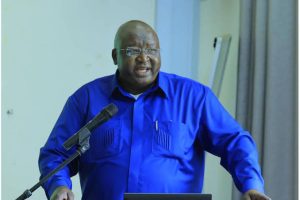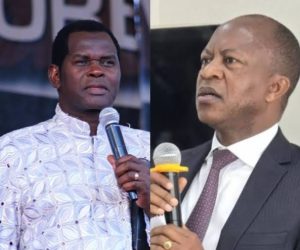
Political discussions about the future leadership of Uganda have intensified after veteran journalist Andrew Mwenda reportedly shared claims about possible succession plans within the country’s top leadership.
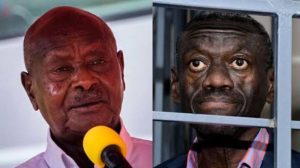
According to Mwenda, members of the family of President Yoweri Kaguta Museveni are believed to be considering two senior military figures as possible successors when the long-serving leader eventually leaves office.
The two individuals mentioned in the discussion are the president’s son, Muhoozi Kainerugaba, and his younger brother, Salim Saleh.
Mwenda claimed that within certain circles close to the presidency, these two figures are often mentioned when conversations about the country’s future leadership arise.
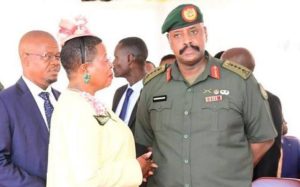
General Muhoozi Kainerugaba, who is widely known as the first son, has built a strong public profile over the past few years. His influence has grown both within the military and in national political conversations.
Meanwhile, General Salim Saleh, the younger brother of President Museveni, is another respected figure within Uganda’s military and political establishment. He has been involved in the country’s security and political affairs for many years.
According to Mwenda’s claims, some officials at State House reportedly believe that General Saleh could be one of the most suitable individuals to take over leadership if the current president eventually steps down.

However, Mwenda also suggested that during the several interactions he has personally had with General Saleh, the general appears largely uninterested in becoming president.
This observation has raised questions about whether Saleh would actually accept such a role if the opportunity ever arose.
Despite this, Mwenda claims that within certain internal discussions, Saleh’s name still appears high on the list of individuals considered capable of maintaining political stability.
At the same time, General Muhoozi Kainerugaba continues to attract attention because of his growing visibility and influence in national affairs.
Over the years, Muhoozi has commanded elite military units and maintained a strong following among some sections of the population, particularly among younger supporters.
As these discussions continue, Mwenda also mentioned another powerful political figure whose influence is reportedly causing concern in some political circles.
That figure is the Speaker of Parliament, Anita Among, who has become one of the most influential leaders in the country’s political system.
Mwenda claimed that Among’s increasing political strength could potentially affect future political calculations within the ruling establishment.
According to the journalist, the Speaker has managed to build significant influence within the Parliament of Uganda as well as within the ruling National Resistance Movement.
Some observers say her leadership style and ability to maintain strong alliances with many Members of Parliament have helped her consolidate power in the legislative branch.
Mwenda further alleged that the Speaker’s influence may extend into other institutions, including parts of the judiciary, although such claims remain part of ongoing political debate rather than proven findings.
He argued that her influence partly comes from the role she plays in vetting certain officials and managing administrative positions within Parliament.
According to Mwenda’s claims, Parliament controls thousands of jobs, and this has given the Speaker significant political leverage.
He suggested that individuals seeking employment opportunities or political support may sometimes build loyalty networks around powerful offices.
These networks, he argued, can sometimes translate into strong political backing during key national decisions.

Because of this influence, Mwenda claimed that it can be extremely difficult for individuals to challenge the Speaker politically or legally.
He further alleged that cases involving powerful political figures often face complex dynamics within the legal system.
However, it is important to note that many of these claims remain allegations and opinions expressed within political discussions rather than verified conclusions.
Uganda’s political environment has often been shaped by speculation about succession due to the long tenure of President Museveni, who has ruled the country for decades.
As a result, any statements about possible successors naturally generate intense public debate and media attention.
Political analysts say that discussions about future leadership are likely to continue as the country gradually moves toward another election cycle.
Ultimately, the question of who may eventually lead Uganda remains uncertain, and the final decision will likely depend on political developments, party dynamics, and the choices made by the country’s leadership in the years ahead.