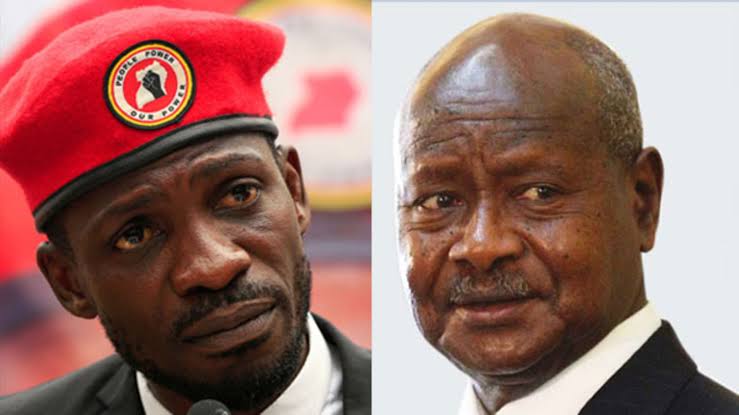
The political atmosphere in Uganda has once again become a topic of intense discussion following fresh claims made by a self-proclaimed seer.
These statements have stirred debate across the country, especially among supporters and critics of the current government.
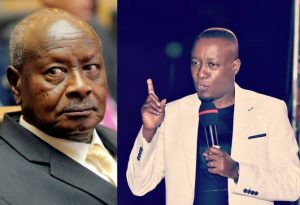
Hajji Jaffari, who describes himself as a spiritual guide with supernatural insight, recently made bold remarks about President Yoweri Museveni.
According to him, the president is currently facing mental pressure due to the uncertain whereabouts of his main political rival.
At the center of this discussion is Bobi Wine, whose real name is Kyagulanyi Ssentamu.
He has remained a strong and vocal figure in Uganda’s opposition politics, often challenging the government on various issues.

Jaffari claimed that it is difficult for any leader to feel at ease when they cannot clearly see or monitor their opponent.
In his view, the absence of Bobi Wine from the public eye has created uneasiness at the highest level of leadership.
He explained that in politics, visibility is important. When an opponent is out of sight, it becomes harder to predict their next move, making the situation more tense and uncertain for those in power.
According to Jaffari, even though life in Uganda appears normal on the surface, with businesses running and internet services restored, there are deeper concerns within the government. He suggested that things may not be as calm as they seem behind the scenes.
He further stated that President Museveni may not be worried about other opposition figures as much as he is concerned about Bobi Wine. This is because Bobi Wine has continued to claim victory in past elections and remains influential among many citizens.
Jaffari also mentioned Kizza Besigye, a long-time opposition leader. He claimed that Museveni is less concerned about him because of his current situation, suggesting that he is under tight control by state authorities.
In contrast, Jaffari described Bobi Wine as unpredictable and difficult to contain. He used the term “rabadoba style” to explain how the opposition leader has managed to avoid constant surveillance and maintain his political presence.
These claims have sparked mixed reactions among Ugandans. Some people believe that the statements reflect the reality of political tension, while others dismiss them as mere speculation without evidence.
Jaffari also introduced a spiritual angle to his claims. He said that while political leaders may have their own plans, there is a higher power that ultimately decides the future of the nation.
He suggested that even though President Museveni may be preparing to continue leading the country for years, there could be unexpected challenges along the way. According to him, such challenges could arise from within the government itself.
The seer warned of possible internal disagreements among top officials in both the government and the military. He claimed that these disagreements could lead to instability before the situation eventually settles down.
Despite these warnings, Jaffari expressed hope that Uganda would eventually return to stability. He said that after any period of uncertainty, the country would move forward and its people would continue with their lives.

These remarks came shortly after reports that Bobi Wine had left the country through Rwanda. His departure added more speculation about his next political steps and future plans.
Before leaving, Bobi Wine had reportedly promised to return after certain national events. This statement has kept his supporters hopeful and attentive to any developments regarding his movements.
For many Ugandans, the situation highlights the ongoing tension between the government and opposition leaders. It also shows how political uncertainty can create different interpretations among citizens.
Some analysts believe that such statements from figures like Jaffari can influence public opinion, especially among people who strongly believe in spiritual or prophetic guidance.
Others argue that political matters should be handled through clear facts and official communication rather than predictions or personal beliefs. They stress the importance of focusing on verified information.
In the end, this story reflects a larger picture of Uganda’s political landscape. It is a mix of leadership, opposition, belief systems, and public perception, all shaping how events are understood.
As the country continues to watch these developments, one thing remains clear: the relationship between power and opposition will always attract attention, debate, and strong opinions from all sides.