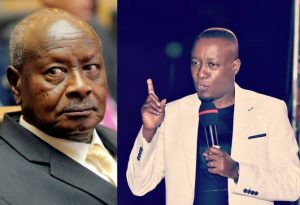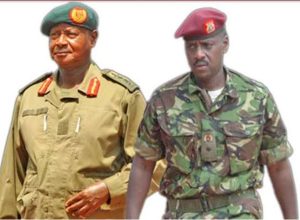
Uganda’s political conversation has taken another dramatic turn following a controversial remark attributed to Chief of Defence Forces Gen Muhoozi Kainerugaba about opposition leader Robert Kyagulanyi Ssentamu, also known as Bobi Wine. The statement, which quickly circulated online, has stirred laughter in some circles and anger in others.
According to the widely shared comment, Gen Muhoozi allegedly said he had heard that Bobi Wine was “hiding under a toilet.” The unusual wording has shocked many people, with some questioning whether it was meant as a joke, an insult, or a serious claim.
Bobi Wine is the leader of the National Unity Platform (NUP) and a well-known government critic. Because of his strong political influence, especially among young Ugandans, any comment about him from top security officials quickly becomes a national talking point.
Many observers say the remark appears more like political ridicule than official communication. They argue that leaders holding powerful offices are expected to speak carefully, especially when referring to political opponents.
Supporters of Bobi Wine have strongly rejected the claim. They say it is meant to embarrass and belittle him in the eyes of the public rather than address real political issues affecting citizens.
Some citizens, however, treated the statement humorously, turning it into jokes and memes on social media. Platforms like X, Facebook, and TikTok were soon filled with posts reacting to the strange choice of words.
Political analysts warn that such remarks can reduce serious national discussions into personal attacks. They say when politics turns into mockery, important debates about development, governance, and democracy are pushed aside.

Others believe the comment reflects the growing tension between the opposition and sections of the security establishment. Over the years, Bobi Wine has accused security agencies of targeting him and his supporters.
Bobi Wine’s movements have sometimes been restricted in the past, with security forces blocking rallies and public gatherings. Because of this history, some of his supporters fear such statements may signal deeper political pressure.
Legal experts point out that public leaders must be mindful of their words. Statements that cannot be verified can easily fuel rumors, misinformation, and unnecessary public panic.
At the same time, government supporters argue that political leaders, including those in opposition, often face criticism and harsh words. They see it as part of the rough nature of politics.
Still, many Ugandans say they would prefer to hear leaders discuss solutions to economic challenges, youth unemployment, and rising living costs rather than trading insults.
The comment has also drawn attention to the growing use of social media by powerful figures to make political statements. Unlike formal speeches, online remarks can be brief, emotional, and easily misunderstood.

Communication experts say leaders’ online comments can carry as much weight as official statements. Because of their influence, even a single sentence can shape national debate.
Some civil society groups have urged political actors to lower the tone of public discourse. They warn that constant verbal attacks can increase division in an already polarized environment.
For Bobi Wine’s supporters, the remark may strengthen their belief that he is being unfairly targeted. They often view negative statements about him as attempts to weaken his public image.
On the other side, critics of Bobi Wine argue that he too has used strong language in the past against government officials, showing that political exchanges in Uganda are often heated from both sides.
Observers say moments like this show how emotional Uganda’s political landscape has become as the country moves closer to future elections. Every statement now seems to carry political weight.
Whether the comment was serious or sarcastic, it has clearly captured national attention. It has once again placed Bobi Wine and Gen Muhoozi at the center of public debate.
In the end, many citizens hope that political leaders will shift focus from personal remarks to national priorities. Ugandans, above all, want peace, stability, and leadership that addresses their daily struggles.