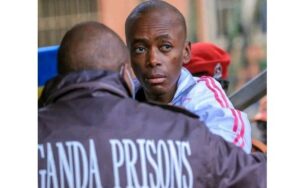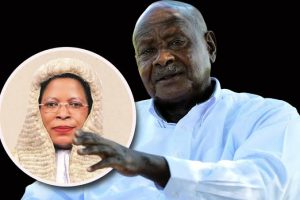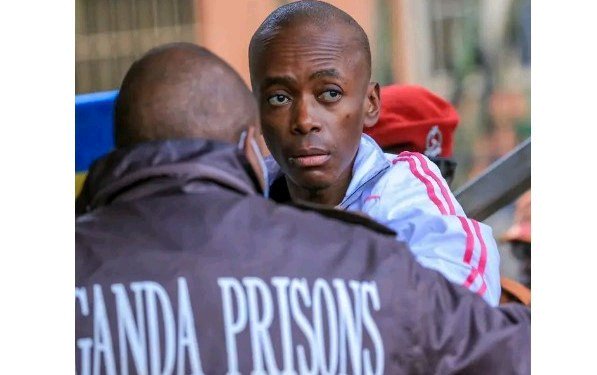
The trial of Christopher Okello Onyum, accused of the brutal murders of four children at the Ggaba Early Childhood Development Centre, has taken a significant turn as new medical evidence was presented in court.
Dr. Charles Kajoba, a medical professional from Murchison Bay Upper Prison, testified that the accused, Okello Onyum, is mentally stable and fit to stand trial. However, Dr. Kajoba also revealed that Okello suffers from sickle cell disease, a condition that has been part of his medical history for several years.
According to Dr. Kajoba’s testimony, Okello’s mental state is stable, and he is not suffering from any mental illness that would impair his ability to understand the charges against him or participate in the trial. “He has a history of sickle cell disease.
He was treated and is now in a good state of mind,” Dr. Kajoba confirmed. This statement refutes earlier claims made by the defense, which had raised questions about Okello’s mental health and whether he was fit to stand trial for the murders.
The mention of sickle cell disease adds another layer of complexity to the case. While Okello’s mental state is deemed stable, his medical condition is a matter of concern, particularly because sickle cell disease can have serious health implications, including pain crises, organ damage, and potential mental strain due to chronic illness.

The court was not provided with any direct evidence linking the disease to Okello’s alleged actions, but the information could play a role in understanding his state of mind and how it might have influenced his behavior.
In addition to the medical testimony, the court also heard from a landlord who had rented an apartment to Okello in Kyanja, Katumba village. The witness described the circumstances under which Okello came to rent the property, noting that the accused initially claimed to be living in the United States.
However, Okello later changed his story, stating that he had been staying in Ggaba. This inconsistency in Okello’s narrative may raise questions about his credibility and intentions, as well as his possible connection to the alleged crimes.
The landlord testified that Okello had signed a tenancy agreement on March 16, 2026, which allowed him to occupy the house. However, the witness later became involved in the case when he was alerted by village defense authorities about the alleged killings in Ggaba.
The landlord recounted an alarming conversation with Okello, where the accused reportedly confessed to killing children at a school in Ggaba. According to the landlord, Okello asked him to come to the house and retrieve the spare keys. When the landlord arrived, police had already surrounded the property, and Okello was in handcuffs.
This moment in the trial adds another piece to the puzzle of Okello’s actions leading up to the murders. The fact that Okello had reportedly confessed to the landlord before his arrest raises questions about his state of mind at the time of the killings. It also suggests that he may have been aware of the severity of his actions, although it remains unclear whether his medical condition had any role in his decision-making process.

The landlord also testified that Okello had previously claimed he had lost the keys to the house, which prompted police to accompany him during the search. During the search, authorities reportedly discovered a range of items in the house, including two laptops, a flash drive, documents, knives, two mobile phones, and two American passports.
These items were taken as evidence and documented by the police. The presence of these items in Okello’s home could suggest that there is more to his background and activities than initially thought, potentially pointing to a larger criminal network or hidden motives.
Despite the landlord’s testimony, Okello’s defense team objected to the validity of the tenancy agreement, arguing that the witness was neither the author nor a signatory of the document and therefore could not provide credible testimony about its authenticity. The defense’s challenge highlights the ongoing legal complexities in the case and the battle over what evidence can be presented to the court. The matter is still under review, with the court set to continue hearing arguments on the validity of the tenancy agreement and its relevance to the ongoing case.
As the prosecution builds its case against Okello, the details of his alleged actions on the day of the murders remain a focal point. Prosecutors claim that on April 2, 2026, Okello visited the Ggaba Trading Centre in Makindye Division, Kampala, with the intention of seeking admission for his child at the Ggaba Early Childhood Development Centre. However, he was reportedly told to return later. Okello allegedly returned shortly afterward, paid the required fees, and then, in a shocking act of violence, attacked the children at the centre.
The victims of the attack were identified as Eteku Gideon, Keisha Agenorwoth Otim, Sseruyange Ignitius, and Odeke Ryan. These children, who were all between the ages of 18 months and two and a half years, were tragically murdered during the attack. The brutality of the crime has shocked the nation, leading to widespread public outrage and a call for swift justice. The trial has captured the attention of Ugandans across the country, as the search for answers continues.

Preliminary investigations have revealed that Okello had paid the required fees for his child’s admission to the daycare facility, only to later commit the horrifying act of violence. This detail suggests that Okello’s actions may have been premeditated, as he had reportedly returned to the facility with the intent to carry out the killings shortly after completing the necessary formalities. The timing and circumstances surrounding the murders continue to be scrutinized by both the prosecution and the defense.
As the trial progresses, questions surrounding Okello’s motives, mental state, and medical history will continue to be debated in court. The testimony regarding his history of sickle cell disease and his mental stability will likely play a key role in shaping the final outcome of the case. Both the prosecution and the defense will need to carefully present their arguments and evidence to persuade the court as to whether Okello should be held criminally responsible for the deaths of the four children.
For the families of the victims, the trial represents a long-awaited opportunity for justice. The pain and loss they have experienced cannot be erased by any legal decision, but they hope that the court will provide answers and accountability for the horrific tragedy that took the lives of their young children. The road to justice may be long and complex, but the families remain hopeful that the legal system will deliver a fair and just outcome.
As the court hearings continue, it is clear that this case will have far-reaching implications for Uganda’s criminal justice system. The role of medical testimony, the challenges surrounding the validity of evidence, and the complex nature of the case are all factors that will influence the final verdict. As the trial moves forward, the nation waits anxiously for the conclusion of one of the most shocking and tragic cases in recent memory.