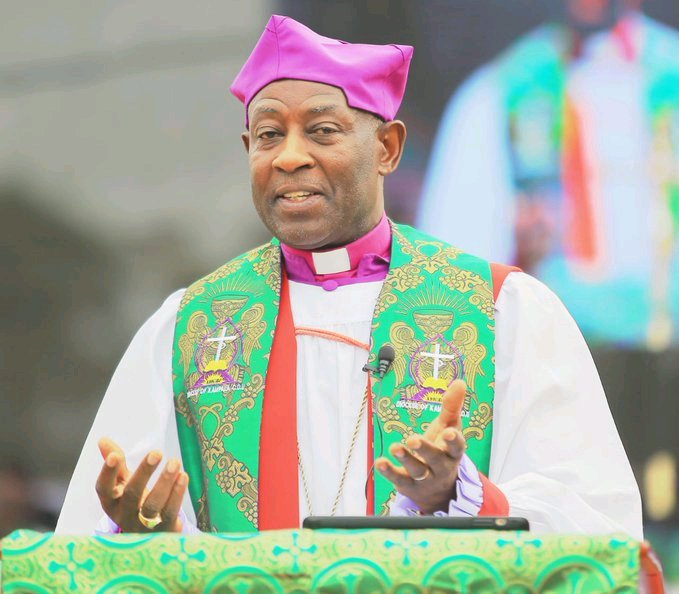
The Archbishop of the Church of Uganda, Dr. Stephen Samuel Kaziimba Mugalu, has openly challenged the government’s decision to halt payments of allowances to medical interns, describing the move as unjust and short-sighted. His remarks came during a high-profile religious ceremony in Kampala.
Presiding over the ordination and installation of Deacons, a Priest, and Canons at All Saints’ Cathedral on Sunday, Archbishop Kaziimba spoke passionately about the critical role of medical interns in Uganda’s healthcare system. He called on authorities to reconsider the suspension, emphasizing the human cost of the decision.
“You cannot claim to have Shs 158 billion to purchase cars for Members of Parliament and then say you lack Shs 28 billion to pay medical interns, citing economic strain,” Archbishop Kaziimba stated, highlighting what he described as a misalignment of national priorities.
He further stressed that while senior doctors are often absent from hospitals, it is the medical interns who shoulder the bulk of day-to-day clinical work, referring to their contributions as the “donkey work” that keeps the healthcare system functioning.
The government’s new policy, approved by Cabinet in October 2024, will see medical interns completing their training without receiving the current monthly allowance, a change that takes effect in August 2026. This adjustment will extend the duration of medical education to six years, altering the traditional pathway for medical graduates.
Medical professionals have expressed serious concerns about the policy. Dr. Frank Asiimwe, President of the Uganda Medical Association, warned that withholding allowances could compromise the quality of medical training and undermine healthcare delivery in public hospitals.
Currently, medical interns receive a monthly allowance of Shs 2.5 million, an increase from Shs 1 million in 2021 following a presidential directive. The move to remove this support has triggered widespread debate about the government’s commitment to sustaining essential medical services.
Archbishop Kaziimba’s intervention underscores the growing tension between public expenditure decisions and the needs of frontline healthcare workers. His appeal serves as a call for policymakers to reassess priorities and ensure that those who safeguard public health are not left unsupported.