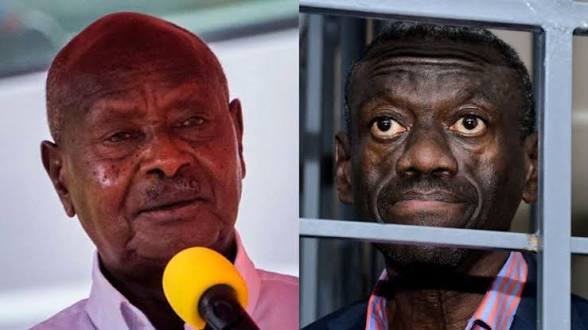
Political tension has once again emerged in Uganda following strong statements made by opposition leader Kizza Besigye during a court session related to his ongoing treason case.
Besigye, a four-time presidential candidate, warned that he may stop appearing in court if what he described as unfair treatment against the defence team continues during the proceedings.
The opposition figure is currently facing treason charges together with his political ally Hajj Obeid Lutale Kamulegeya and Denis Oola.
The three suspects are being tried before the High Court of Uganda, a case that has attracted significant public and political attention across the country.
According to court information, the trio has been in custody since November 2024 as investigations and legal preparations surrounding the case continue.
On Thursday, they appeared before Emmanuel Baguma for a court session mainly intended to organise and schedule the next stages of the trial.
However, the session quickly turned tense after lawyers representing the accused raised concerns about the conduct of the prosecution team.

The defence argued that prosecutors had failed to comply with a previous court directive requiring them to disclose all witnesses and evidence before the trial begins.
Such disclosure is a key part of the legal process because it allows defence lawyers to prepare their arguments and challenge the prosecution’s claims effectively.
Leading the defence team is Martha Karua, a prominent legal expert from Kenya who strongly criticised the manner in which the prosecution handled the latest development.
Karua explained that the defence had come to court expecting the judge to review whether both parties had complied with earlier instructions and to set dates for the trial.
Instead, the prosecution presented a new application seeking permission from the court to conceal the identity of one of its witnesses.

The defence team said they were shocked because they had not been properly served with the application before the court session began.
According to Karua, the document had been filed only a day earlier but had already been scheduled for hearing, leaving the defence with little time to study it.
She further revealed that several lawyers representing the accused had not even seen the application before entering the courtroom.
Another defence lawyer, Erias Lukwago, reportedly received the documents late in the evening at his chambers after 6:30 pm.
The defence argued that such handling of the application created the impression that the prosecution was being given preferential treatment in court.
As the arguments continued, Besigye personally addressed the court from the dock and voiced his dissatisfaction with the situation.
He warned that if the court continues to treat the defence unfairly, he and his colleagues may decide to stop attending future court sessions.
In response, Justice Baguma directed the prosecution to formally serve the defence lawyers with the application and granted them two weeks to prepare their response before the case resumes.